
On August 4, 2026, the nuclear regulator STUK issued a positive safety assessment for the Onkalo nuclear waste repository in Eurajoki, on Finland’s west coast. Following its review, STUK concluded that Posiva’s facility meets the requirements of the Finnish Nuclear Energy Act. Consequently, the government can now make a decision regarding the requested operating license, which would cover operations through the end of 2070. The Ministry of Economic Affairs intends to submit the proposal for the decision in the autumn. However, even after receiving a license, Posiva may not begin storing fuel assemblies until STUK separately confirms operational readiness. Onkalo would be the world’s first deep geological repository for spent nuclear fuel to reach this stage of the licensing process.
Nuclear waste repository relies on multiple safety barriers
The nuclear waste repository employs a multi-barrier principle. Posiva first encapsulates spent fuel elements in iron and copper canisters. These canisters are then surrounded by bentonite, while the stable bedrock forms an additional barrier. STUK therefore emphasizes that safety does not depend on any single material or component.
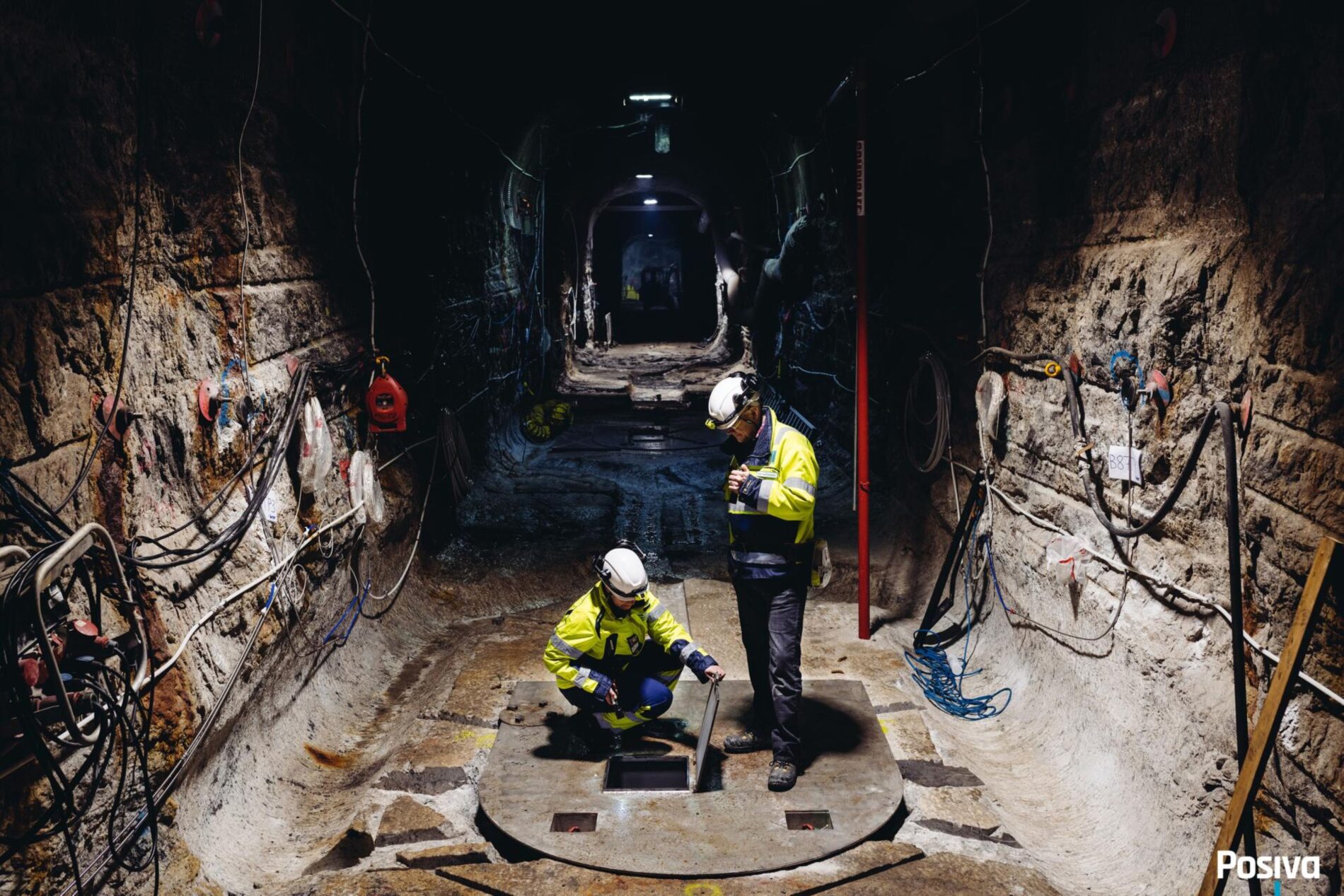
Image: ©Posiva
However, the authority did not merely assess the facility’s future operation; it also examined safety over very long timeframes. Since 2000, STUK and external experts have invested more than 250 person-years in regulatory oversight and the licensing review. Furthermore, the authority evaluated whether Posiva’s organization is adequately prepared for operations.
Government approval for Onkalo operations still pending
However, this positive assessment does not yet constitute an operating license. The Finnish government will decide on the license based on a proposal from the Ministry of Economic Affairs. Even then, STUK must re-verify that all prerequisites for safe operation are met. Consequently, Posiva is prohibited from storing any spent fuel prior to this final inspection.
Posiva continues to aim for operational readiness by the end of 2026. However, the company must first complete further tests and commissioning activities. This applies primarily to the encapsulation plant and the underground facilities. Additionally, STUK may require further measures if the final inspections reveal a need for remedial action.
Finland Reaches a Globally Unique Licensing Milestone
The deep geological repository for nuclear waste is designed to house spent fuel assemblies from the Olkiluoto and Loviisa nuclear power plants. The actual disposal area is located approximately 430 meters below the surface. Currently, the Onkalo facility comprises around ten kilometers of tunnels, with plans to construct an additional 40 kilometers in the long term. This places Finland at the forefront of global efforts regarding the deep geological disposal of spent nuclear fuel.
Finland has been working on this solution for more than four decades. Nevertheless, the requested operating license expires at the end of 2070, meaning it does not automatically cover the facility’s entire future lifecycle. Consequently, STUK requires an initial periodic safety assessment to be conducted no later than ten years after the license is granted. Furthermore, Posiva must align its long-term safety case with the specific disposal system actually deployed. Regulatory oversight thus remains a central component of the Finnish approach, even after operations potentially begin.
Author: Blackout News
Sources: Stuk (04.08.26) – Finnish Goverment (04.08.26) – Posiva (04.08.26) – NucNet (04.08.26)