
A 148-meter-tall gravity energy storage system is set to be located in Rudong, eastern China, by 2026; it mechanically stores surplus electricity generated from renewable sources. The facility, built by Energy Vault, has a power output of 25 megawatts and a capacity of 100 megawatt-hours. It operates by using surplus electricity to lift heavy composite blocks and lowering them again when needed; generators then convert the resulting movement back into electrical energy. However, long-term, independent operational data regarding wear and tear, maintenance costs, and long-term economic viability is currently lacking.
Gravity storage systems use height instead of lithium
The basic principle resembles that of a pumped-storage power plant, but solid mass replaces water. During periods of low demand, electric motors power the lifting system to raise the weights. When electricity demand rises later, the masses are lowered in a controlled manner to drive generators. This allows electrical energy to be stored without the use of chemical battery cells.
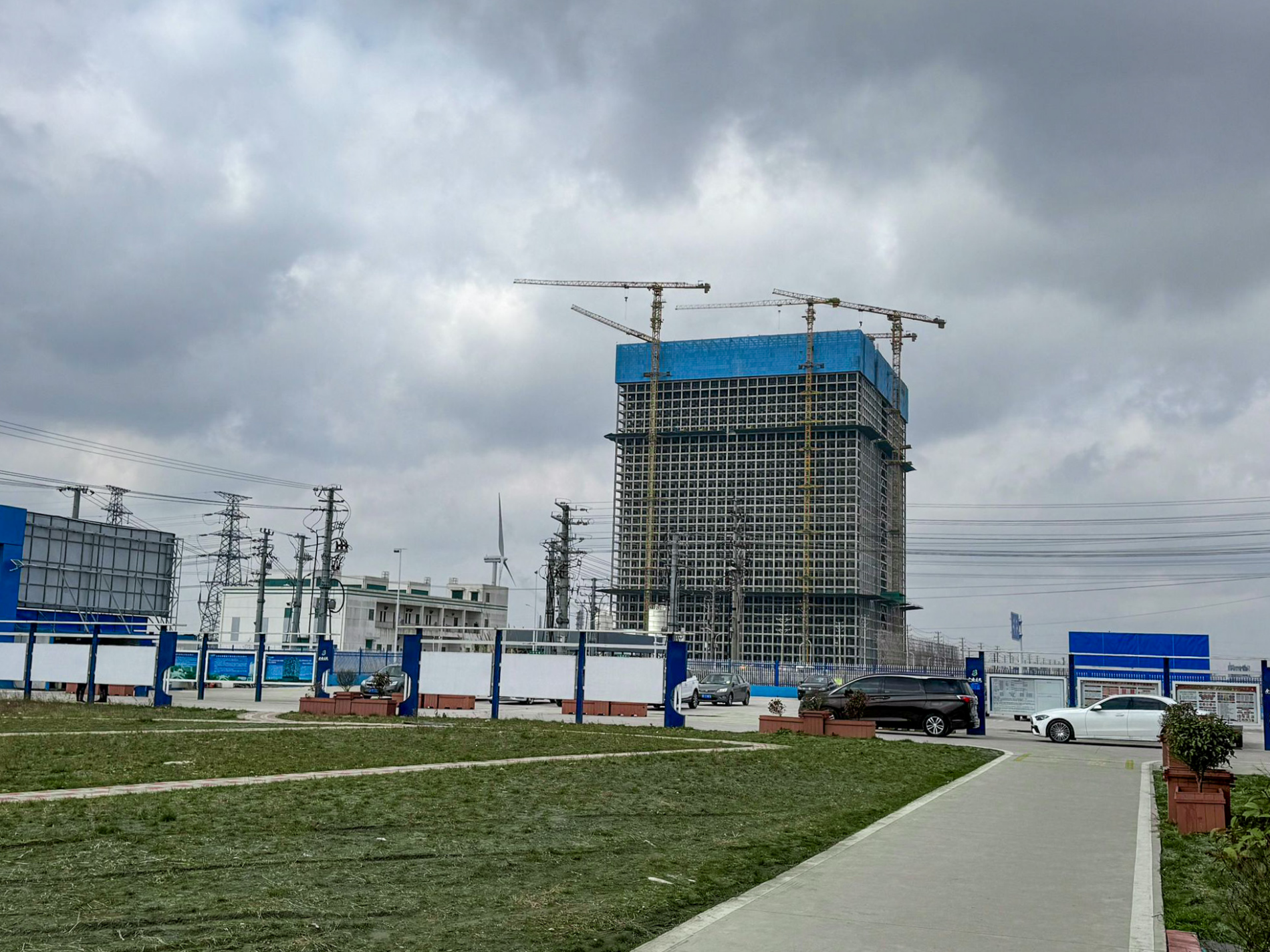
Image: ©Energy Vault
Energy Vault constructed the system right next to a wind farm and in close proximity to the Chinese power grid. This allows the storage facility to shift the timing of energy supply—particularly from fluctuating wind power generation. According to the company, the target round-trip efficiency is over 80 percent; citing test results, Focus reports a figure of up to 83 percent.
100 MWh provide four hours of power at full capacity
With a capacity of 100 megawatt-hours, the gravity storage system can supply 25 megawatts of power for four hours. This makes the facility particularly suitable for balancing supply and demand within a single day. However, this capacity is insufficient for extended periods of low wind and solar output. Consequently, the tower does not replace seasonal reserves or power plants with significantly larger energy storage capabilities.
A key difference compared to lithium-ion batteries lies in the storage medium itself. The elevated masses do not lose their potential energy through chemical degradation and do not experience conventional self-discharge. Energy Vault also projects an operational lifespan of around 35 years. That said, modern battery storage systems typically achieve higher efficiency rates than the mechanical system in Rudong.
Mechanical wear determines economic viability
In the case of gravity-based energy storage, therefore, economic success is not determined solely by capacity and efficiency. Motors, lifting mechanisms, pulleys, guides, and other mechanical components must withstand numerous load cycles over the years. However, independent long-term data from a commercial facility of this scale is still lacking.
Nevertheless, China continues to pursue this technology, linking it to its massive expansion of renewable energy. For instance, Energy Vault cites a second Chinese project in Zhangye with a power output of 17 megawatts and a capacity of 68 megawatt-hours. At the same time, there is notable ambiguity regarding the operational status of the Rudong facility. Energy-Storage.news described the plant as operational in May 2026, whereas Energy Vault currently still lists the project status as “Commissioning.” Thus, while the gravity storage system functions as a real-world grid project, reliable long-term data on costs and reliability remain pending.
Author: Blackout News
Sources: Focus (28.08.26) – Energy Vault (Stand: 28.08.26)