
Wiesbaden – Hesse’s deficit rose to 15 billion euros in the 2025 financial report, more than doubling within a single year. Finance Minister Alexander Lorz presented the figures on August 14 and announced further cost-cutting measures in light of this development. Higher personnel costs and additional provisions for pensions and healthcare benefits are placing a particularly heavy burden on the budget. At the same time, Hesse’s economic output contracted by 0.2 percent in real terms in 2025. Consequently, the financial situation is becoming increasingly strained ahead of deliberations on the 2027 state budget.
Personnel costs rise by nearly ten billion euros within a year
Personnel expenses increased from 16.7 billion to 26.4 billion euros. Contributing factors included, among other things, a two-stage salary adjustment totaling 10.56 percent. In addition, provisions for pensions and healthcare allowances grew by 11.5 billion euros in 2025 alone. Consequently, the impact on the balance sheet extends far beyond just current salaries.
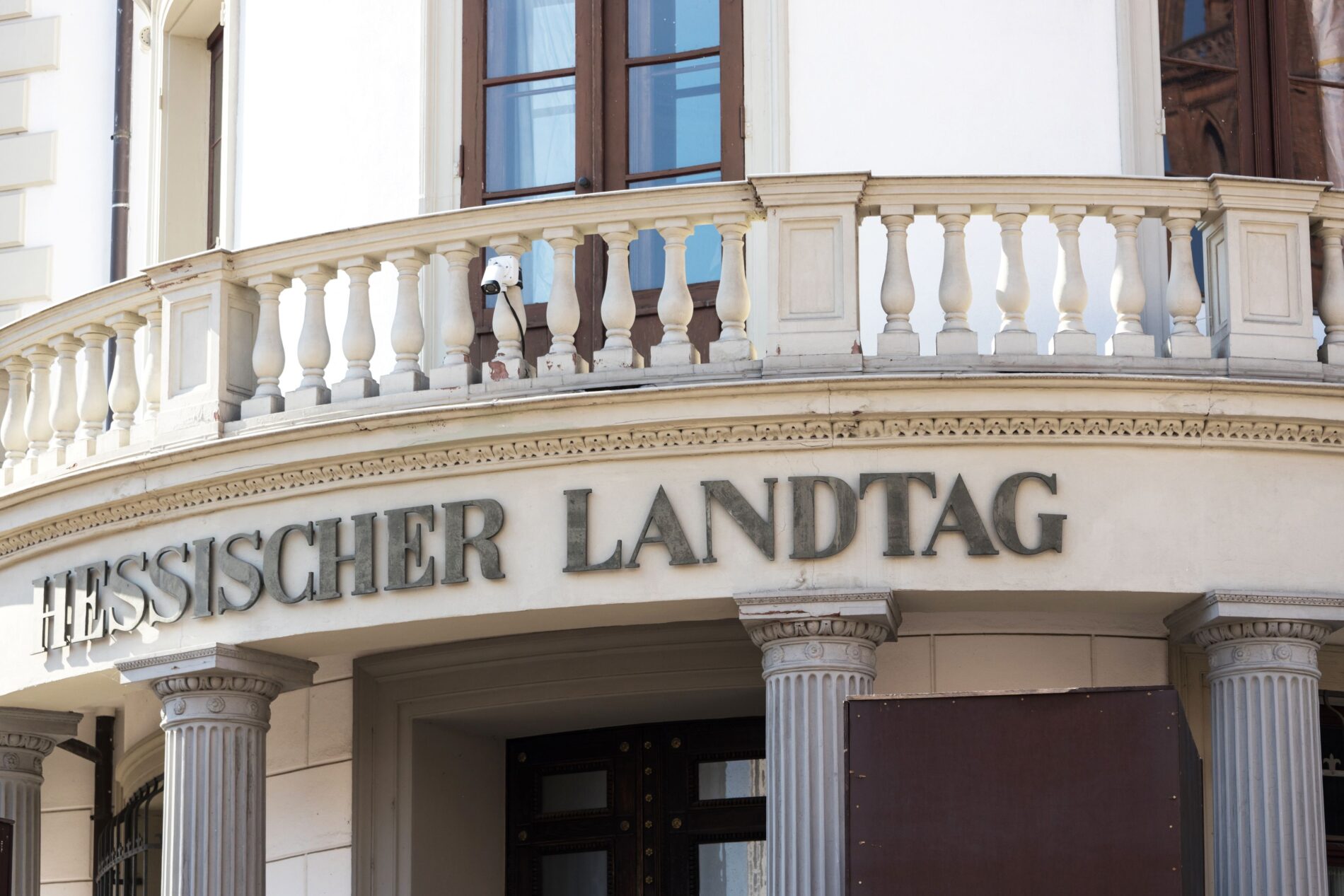
Image: Shutterstock
However, the annual deficit of €15 billion does not equate to an equivalent amount of new borrowing. Hesse also prepares its accounts using commercial accounting principles, which factor in long-term obligations. In reality, the state incurred approximately €1 billion in new budgetary debt in 2025. Hesse’s deficit thus primarily illustrates the extent to which future obligations are weighing on the state’s balance sheet.
Hesse’s deficit coincides with a weak economy and lower tax revenue forecasts
Economic trends are also exacerbating the situation. Hesse’s gross domestic product (GDP) fell by 0.2 percent in real terms in 2025, whereas Germany’s economy as a whole grew by 0.2 percent. Furthermore, the Ministry of Finance projects tax revenues of only around €27.8 billion for 2026—€365 million less than anticipated in the October 2025 tax estimate.
At the same time, the state’s debt obligations are rising. According to the 2025 annual report, loan-based debt increased by €2.1 billion to €46.4 billion. By contrast, fixed assets grew by only €700 million, reaching €36.16 billion. Consequently, the deterioration of the balance sheet cannot be attributed solely to additional investment.
Cost-cutting measures have so far proven insufficient to achieve a balanced budget
Finance Minister Lorz therefore intends to scrutinize existing expenditures more closely and exercise greater restraint regarding new commitments. The budget already projects new borrowing of just under €1.9 billion for 2026. At the same time, expected tax revenues are falling short of earlier forecasts. Consequently, Hesse’s deficit is likely to play a central role in the deliberations on the 2027 budget as well.
This financial weakness is not limited to the state government, however. In 2025, Hesse’s core municipal budgets recorded a combined financing deficit of €2.4 billion. By the end of 2025, their debt stood at approximately €18.5 billion—an increase of 10.6 percent compared to the previous year. As both the state and municipalities face the need to fund rising expenditures, the scope for launching new programs is narrowing.
Author: Blackout News
Sources: Hessen Finanzen (14.08.26) – Hessenschau (14.08.26) – Hessen Statistik (11.08.26)