
Berlin, July 2026: The Chancellery is refusing to give a clear answer regarding a possible warning about the Nord Stream attack. AfD MP Anna Rathert asked whether foreign intelligence agencies had informed Wolfgang Schmidt—the Head of the Chancellery at the time—prior to the explosion. She also sought to know why Germany did not subsequently implement additional protective measures for the pipelines. The Federal Government has provided no response—neither publicly nor in classified form—nor has it deposited any information with the Bundestag’s classified information office. Consequently, MPs are unable to verify whether a warning was received or how Berlin handled the matter. On September 26, 2022, explosions near Bornholm destroyed three of the four pipeline strings.
Chancellery Refuses Even Confidential Oversight
The letter bears the signature of Thorsten Frei, the then-Head of the Chancellery. The Chancellery cites the national interest and the need to protect cooperation with foreign intelligence agencies. Furthermore, it argues that even disclosing information to a limited circle of recipients could allow inferences to be drawn regarding sources and the state of intelligence. The refusal, it states, should be interpreted as “neither a confirmation nor a denial of the matter in question.”
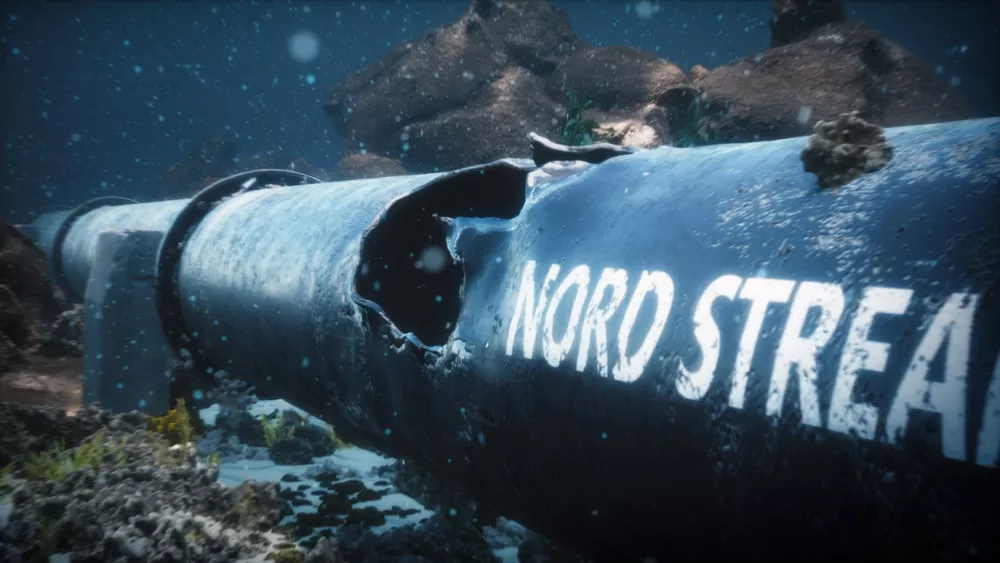
Image: Shutterstock
This justification shields the government from committing to a definitive position. While a simple “no” could also potentially reveal the extent of intelligence knowledge, the Chancellery fails to explain why details regarding its own actions must also remain classified. Berlin could disclose whether authorities were considering additional surveillance, a naval presence, or other precautionary measures without identifying a partner intelligence agency. It is precisely this total refusal to disclose information that necessitates independent oversight. However, it does not prove that Germany actually received a warning.
Reports Describe Chain of Warnings Involving MIVD and CIA
Since 2023, media reports have described a potential chain of warnings originating in the Netherlands, passing through the US, and reaching Germany. According to these reports, the Dutch military intelligence agency (MIVD) received information about a Ukrainian plan and informed the CIA. The US agency reportedly briefed German and other European authorities in June 2022. In 2026, Cicero reported that the information had also reached Wolfgang Schmidt via the BND (German Federal Intelligence Service). Schmidt allegedly dismissed the tip-off as a “tall tale.” However, there has been no official confirmation of this account to date.
Criminal proceedings have since reached a more concrete stage. On June 30, 2026, the Federal Public Prosecutor’s Office filed charges against Ukrainian national Serhii K., accusing him of playing a leading role in the bombing and committing a war crime against civilian objects. According to the indictment, Ukrainian military personnel acted on behalf of state authorities and used a chartered sailing yacht. The court has yet to examine these allegations. Furthermore, the indictment does not address what information German authorities possessed prior to the attack.
Parliament’s ability to scrutinize government actions is limited
To date, the Bundestag lacks an investigative committee with comprehensive powers to access files and summon witnesses. On May 21, 2026, the other parliamentary groups rejected a motion to this effect tabled by the AfD during the first reading. However, the Bundestag referred the motion to the relevant committee for further deliberation. Consequently, the scope for political review remains more restricted than that of the criminal investigation. In particular, this limits the ability to scrutinize potential early warnings and the protective decisions made at the time.
The Chancellery is entitled to protect sources, methods, and foreign partners. However, such protection must not automatically exempt every government action from parliamentary oversight. A refusal to provide information does not constitute proof that a warning was issued; yet, it also deprives the public of the opportunity to evaluate a clear denial. The more Berlin remains silent, the more urgent the need becomes for controlled disclosure to authorized Members of Parliament. Ultimately, the crucial questions are not only who blew up the pipelines, but also what the Federal Government knew beforehand and what actions it took subsequently.
Author: Blackout News
Sources: Berliner Zeitung (24.07.26) – INSA (25.07.26) – Statement (25.07.26) – Big News Network (25.07.26) – Ostdeutsche Allgemeine (24.07.26) – Generalbundesanwalt (02.07.26)