
Like cash, but intangible: The European Central Bank (ECB) plans to introduce digital euros that consumers can store on their mobile phones for making payments. This requires an EU-wide legal framework, on which the relevant European Parliament committee is scheduled to vote for the first time on Tuesday. Here is how the digital cash is intended to work:
What is the digital euro?
It is digital cash. The money is not held in a bank account or a securities account, but rather in a so-called digital wallet. In practice, this wallet is a smartphone app where the digital euros are stored. Like banknotes and coins, they are available immediately—even without an internet connection.
Are banknotes and coins going to be abolished?
No. The ECB intends to continue issuing both cash and digital euros. Consumers will be able to use both side by side.
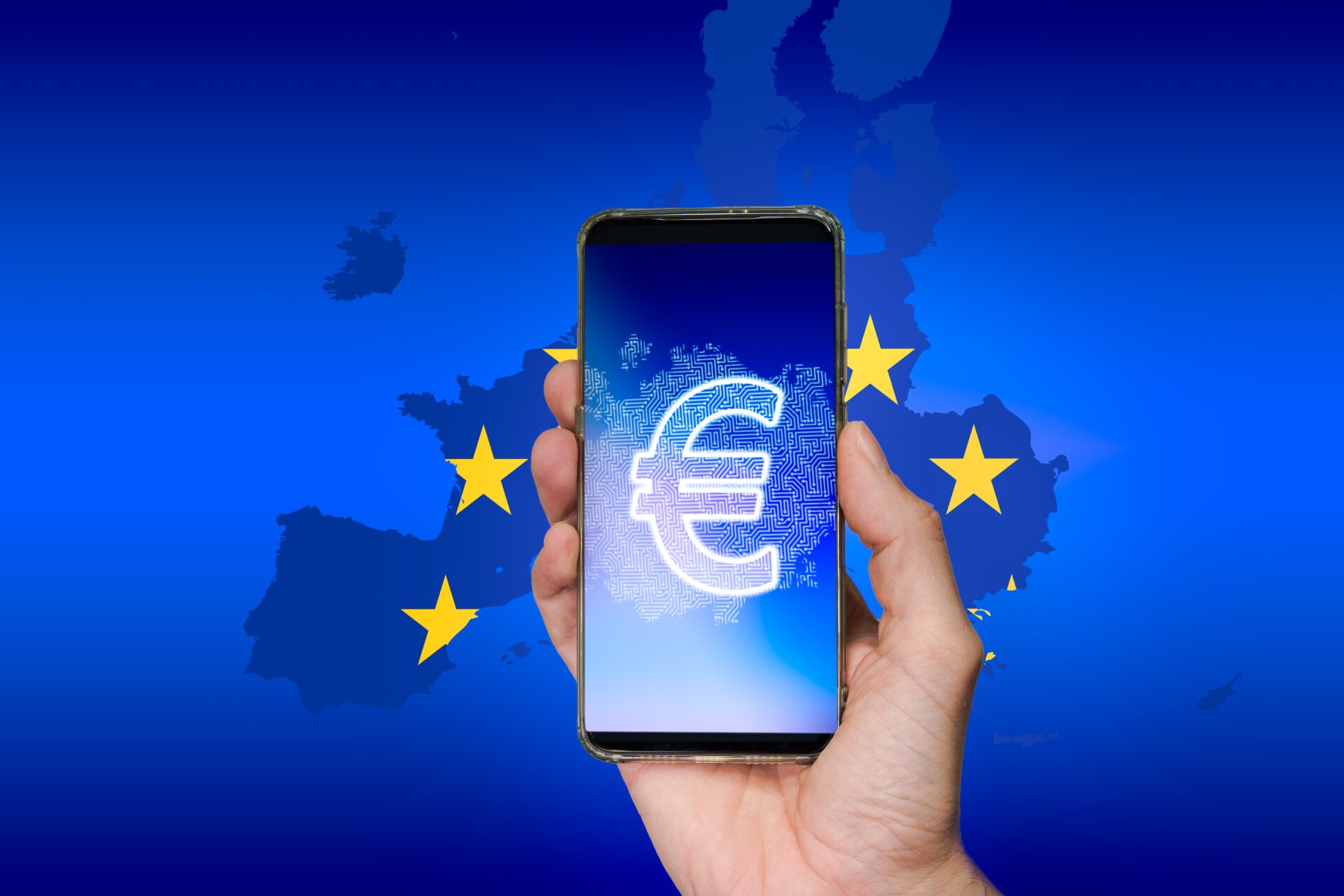
Image: Shutterstock
How do I get digital euros?
Anyone using a banking app can transfer money from their account into a digital wallet. For the bank, the process is identical to the account holder withdrawing cash from an ATM. Consumers can also send digital euros to one another without needing a bank account.
The ECB plans to introduce a cap on digital wallet holdings. This is intended to prevent customers from hoarding digital euros and causing banks to run out of funds.
Where can I use them to pay?
In almost all shops and online. Any merchant that accepts card payments is expected to accept digital euros as well. They are also intended to be available as a standard payment option for online orders.
Don’t we already make many digital payments?
Yes, but a third-party provider is usually involved. With credit and debit cards, this often involves US providers like Visa and Mastercard; with online payments, it involves service providers such as PayPal or Klarna, all of which collect user data.
Digital euros—like physical cash—would be issued directly by the ECB. The EU aims to use this to become less dependent on US service providers.
What happens to my data with the digital euro?
The ECB promises that no data will be stored during offline payments. For online payments, the central bank states it would only have access to anonymized data. Unlike private financial service providers, the ECB is prohibited from using data for commercial purposes.
Banks and law enforcement agencies would—as is currently the case—be able to intervene if there is a suspicion of money laundering or terrorist financing. However, the European Parliament and the Council of the 27 EU member states still need to negotiate the specific data protection rules.
Is the digital euro a cryptocurrency?
No. A digital euro would be backed by the ECB and thus always worth exactly one euro—unlike cryptocurrencies, which are not centrally managed and whose value often fluctuates. Furthermore, digital euros can be used without an internet connection.
When does the ECB plan to introduce the digital euro?
That depends on the pace of negotiations. According to the ECB, it is preparing to issue the first digital euros starting in 2029.
Author: AFP – jhm/ilo
Sources: AFP Press Portal