
A commentary by our author Klaus Bastian:
On August 27, 2026, European Commission President Ursula von der Leyen addressed the issue of approximately €10 trillion in private savings before French business leaders. “Unfortunately, these savings are sluggish,” she said at the La REF business conference hosted by the employers’ association MEDEF. She also lamented that “a significant portion of European savings is invested outside our continent.” Europe must therefore “now put this money to the service of its businesses.” At the same time, the EU is making it more difficult for Swiss and other third-country banks to conduct direct business with EU customers through new regulations. The political and regulatory influence on the use of private savings is growing.
Savings are becoming a financing reserve for European policy
Von der Leyen explicitly links savings to the Savings and Investment Union. Brussels aims to use this to channel more private capital into European companies and capital markets. According to her, the proposed measures could unlock up to €470 billion in additional investment. This includes securitization as well as new rules for banks, insurance companies and financial market supervision.
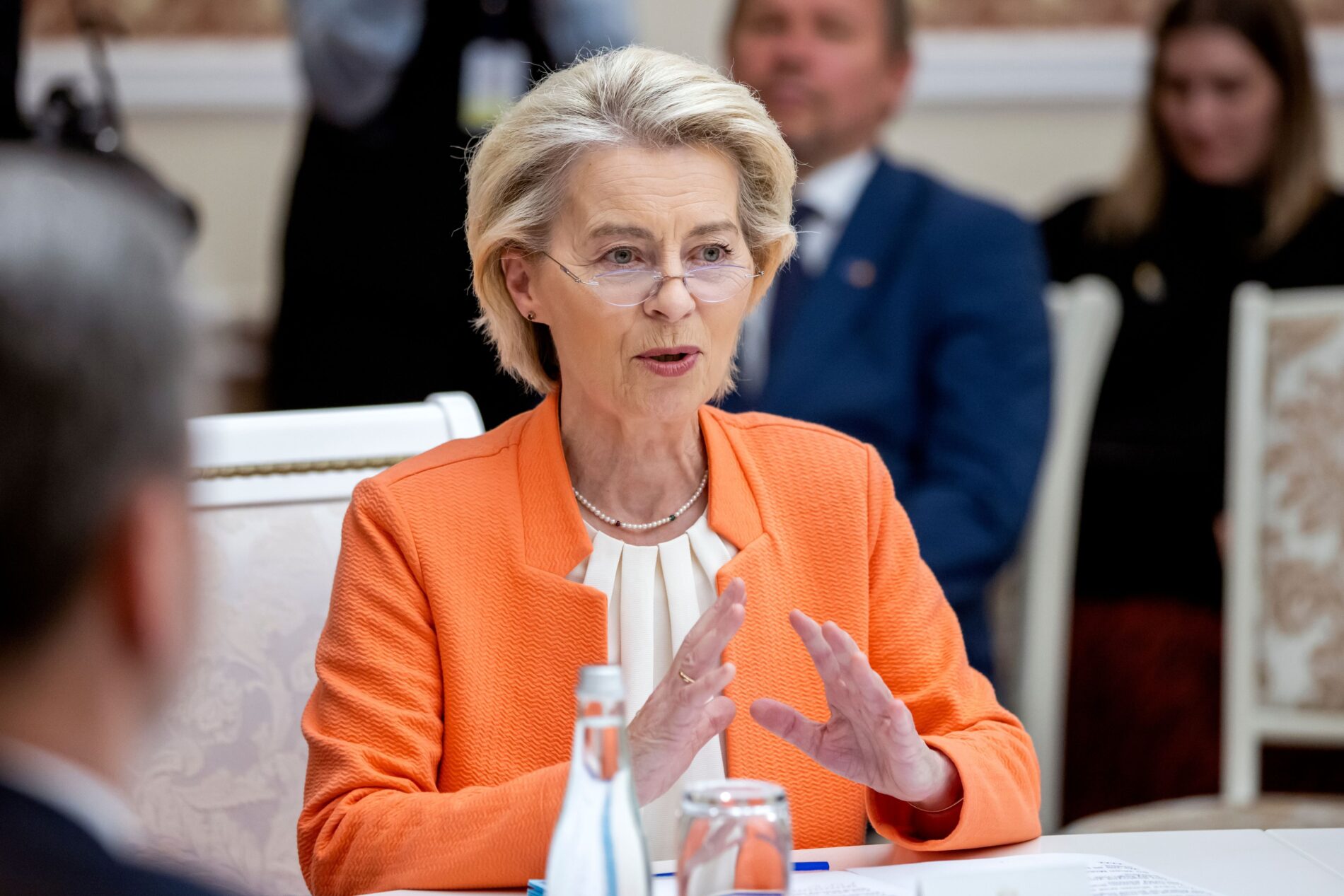
Image: Shutterstock
This political perspective, however, is by no means self-evident. The money belongs to private households, not the European Union. Citizens deliberately hold deposits as reserves, for real estate, their retirement savings, or simply for security reasons. Nevertheless, Brussels is increasingly treating these assets as a source of capital for its own economic and investment objectives. This is precisely where the fundamental conflict lies between private wealth decisions and political capital control.
The EU is simultaneously making it more difficult for capital to flow to Swiss banks
The timing of this is therefore noteworthy, given the proximity to new rules for banks outside the EU. Under CRD VI, banks in third countries must, in principle, operate an authorized branch in the European Union for certain core business activities. This includes, among other things, deposits, loans, and guarantees. Contracts concluded before July 11, 2026, are generally protected. However, the new regulations will apply more comprehensively from January 11, 2027. Swiss banks, in particular, will be affected by this regulation. Many smaller institutions are unlikely to establish a separate branch in every relevant EU member state. Therefore, opening accounts may become more difficult for EU citizens, while existing foreign accounts will generally remain legal. Reverse solicitation remains possible if the customer alone initiates contact. Nevertheless, in practice, the regulation hinders opportunities to transfer savings from the EU banking system to banks in third countries.
First keep capital in Europe, then exert greater control
The EU officially justifies CRD VI with the aim of uniform supervision and financial stability. The directive does not explicitly state preventing capital flight or keeping citizens’ assets within the EU as objectives. However, its economic impact extends beyond this. The more difficult it is for banks in third countries to directly serve EU customers, the fewer options there are outside the European banking system. In this sense, the regulation can act as a first step toward keeping more private capital within the European financial area. This is precisely what gives von der Leyen’s statement added significance. On the one hand, she explicitly laments that European savings are being invested outside the continent. On the other hand, the EU is creating regulatory hurdles for banks that could allow citizens to keep their capital outside the EU system. At the same time, tax incentives, investment products, and new rules are intended to channel more money into European capital markets. There is currently no question of confiscation. However, Brussels is increasingly viewing private wealth as a strategic resource for its economic objectives. Savers are still free to decide for themselves, but policymakers are working to make the choice easier and more attractive for them.
Author: Klaus Bastian – Blackout News
Sources used: Exxpress (02.09.26) – The European Conservativ (01.09.26) – Stuttgarter Zeitung (28.08.26)