
A critical analysis by our author Klaus Bastian
Since mid-2026, the Federal Motor Transport Authority (KBA) has been calling upon approximately 200,000 randomly selected vehicle owners nationwide to participate in a survey on vehicle usage. The owners contacted are asked to report their vehicle’s odometer reading on two specific dates and provide additional information regarding usage. Officially, the authority justifies the initiative by citing traffic planning, bridge load analysis, accident research, emissions, and energy consumption. While participation is voluntary, a federal agency is nonetheless collecting personal vehicle data from the central vehicle register and supplementing it with specific mobility details. Precisely for this reason, the issue goes beyond mere statistics; it also concerns the boundaries of state data collection.
Odometer readings: Vehicle data becomes a state-recorded mobility attribute
The KBA (Federal Motor Transport Authority) already holds data on vehicle owners and the vehicles themselves. Now, however, data on distance driven is being added to the mix. This transforms the record of a registered vehicle into a more detailed usage profile. The authority then knows not only who owns a car but also the extent to which that vehicle has been used over a specific period.
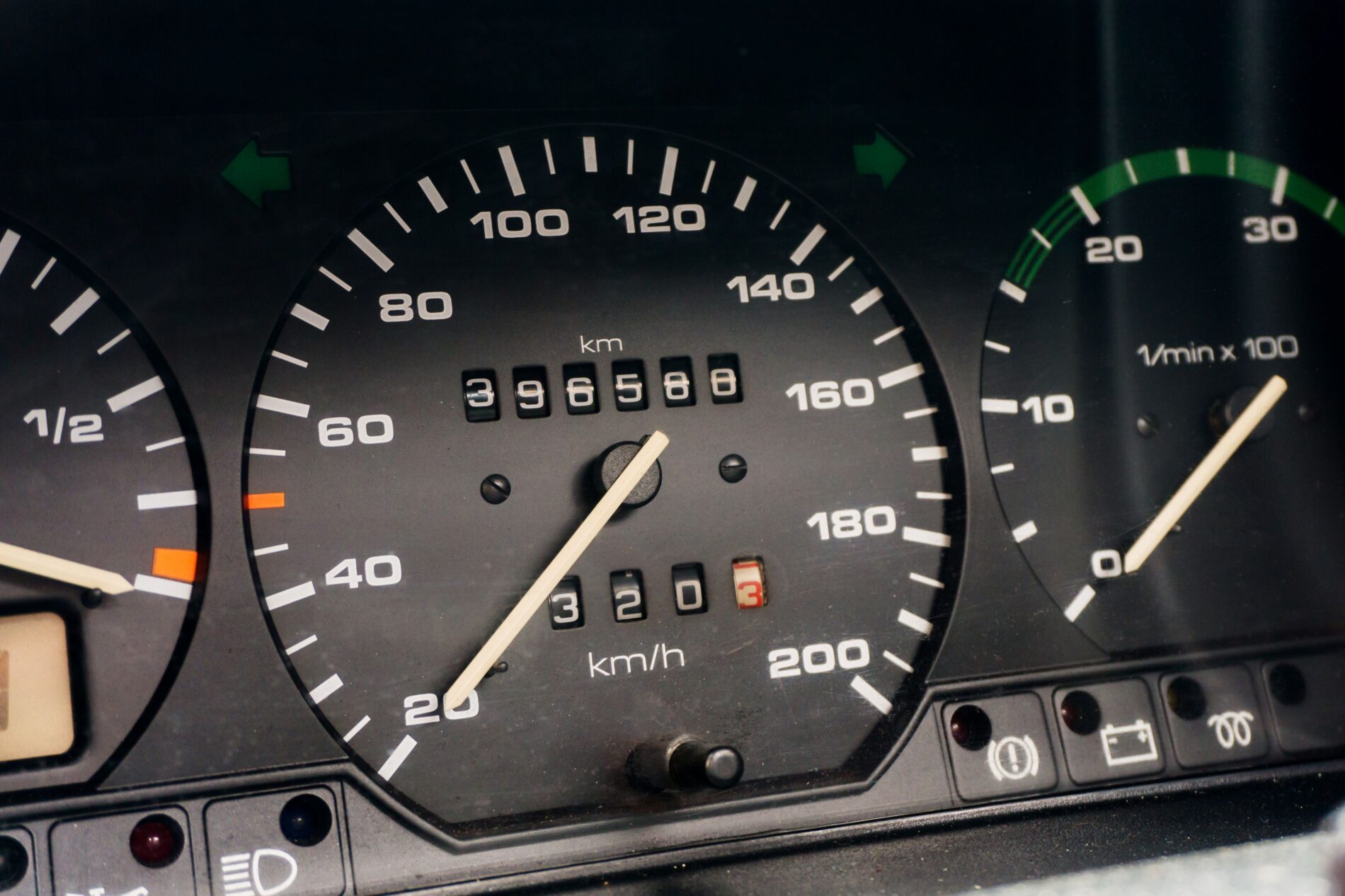
Image: Shutterstock
The authorities cite data protection and the voluntary nature of the scheme. Nevertheless, the core issue remains sensitive. The vehicle data does not originate from an anonymous roadside survey; it is linked to specific vehicle owners listed in a federal registry. The second odometer reading makes it possible to measure actual mileage. This provides the federal government with an additional layer of personal mobility information.
Data protection is no substitute for political oversight
Data protection rules limit data collection, but they do not address the underlying political question—because personal data is generated regardless. The federal government points to purpose limitation, the GDPR, and data deletion schedules. Such assurances are intended to be reassuring, yet they do not alter the fact that the state is collecting new data on private mobility.
When it comes to mobility data, simply pointing to future deletion is insufficient, as the critical step occurs beforehand. An authority calls upon owners to report vehicle usage data, while traffic counts are simultaneously being conducted at hundreds of locations. Consequently, the state’s database regarding road traffic is expanding on multiple levels at once.
Statistics Can Lead to Regulation
The official objectives sound matter-of-fact. Better mobility data aids in road construction, infrastructure upgrades, and accident research. However, this same data is also suitable for other policy purposes. Anyone with precise knowledge of mileage can more easily implement pricing schemes later on—affecting toll models, climate levies, access restrictions, or new charges for high-mileage drivers.
The odometer reading is therefore more than just a technical figure; it could become the basis for future traffic management. Currently, the federal government requests this information on a voluntary basis. In the future, connected vehicles could transmit such data automatically. This is precisely where the critical question of control arises. The current situation is not one of total surveillance, but rather the next stage in state-led monitoring of mobility.
Author: Klaus Bastian – Blackout News
Sources: Kraftfahr-Bundesamt ( Stand: 07.07.26) – t-Online (01.07.26) – Bild (06.07.26) – Techbook (06.07.26)