
A commentary by our author Klaus Bastian
Bridges, railway stations, and roads in Germany are now visibly falling into disrepair: the Carola Bridge in Dresden remains out of commission for years following its partial collapse in 2024, the North Bridge in Bonn has been completely closed due to structural damage, and the completion of the “Stuttgart 21” project is being pushed further into the future. Commuters, freight companies, businesses, local authorities, and taxpayers are paying the price, as every closure consumes time, money, and trust. Despite special funds and record investments, detours, blocked traffic arteries, and interminable construction periods define daily life.
Bridges are becoming monuments to state failure
The Carola Bridge in Dresden exemplifies this loss of control. On September 11, 2024, a section of the bridge spanning approximately 100 meters collapsed into the Elbe River. No one was killed, yet a key traffic artery vanished from the cityscape.
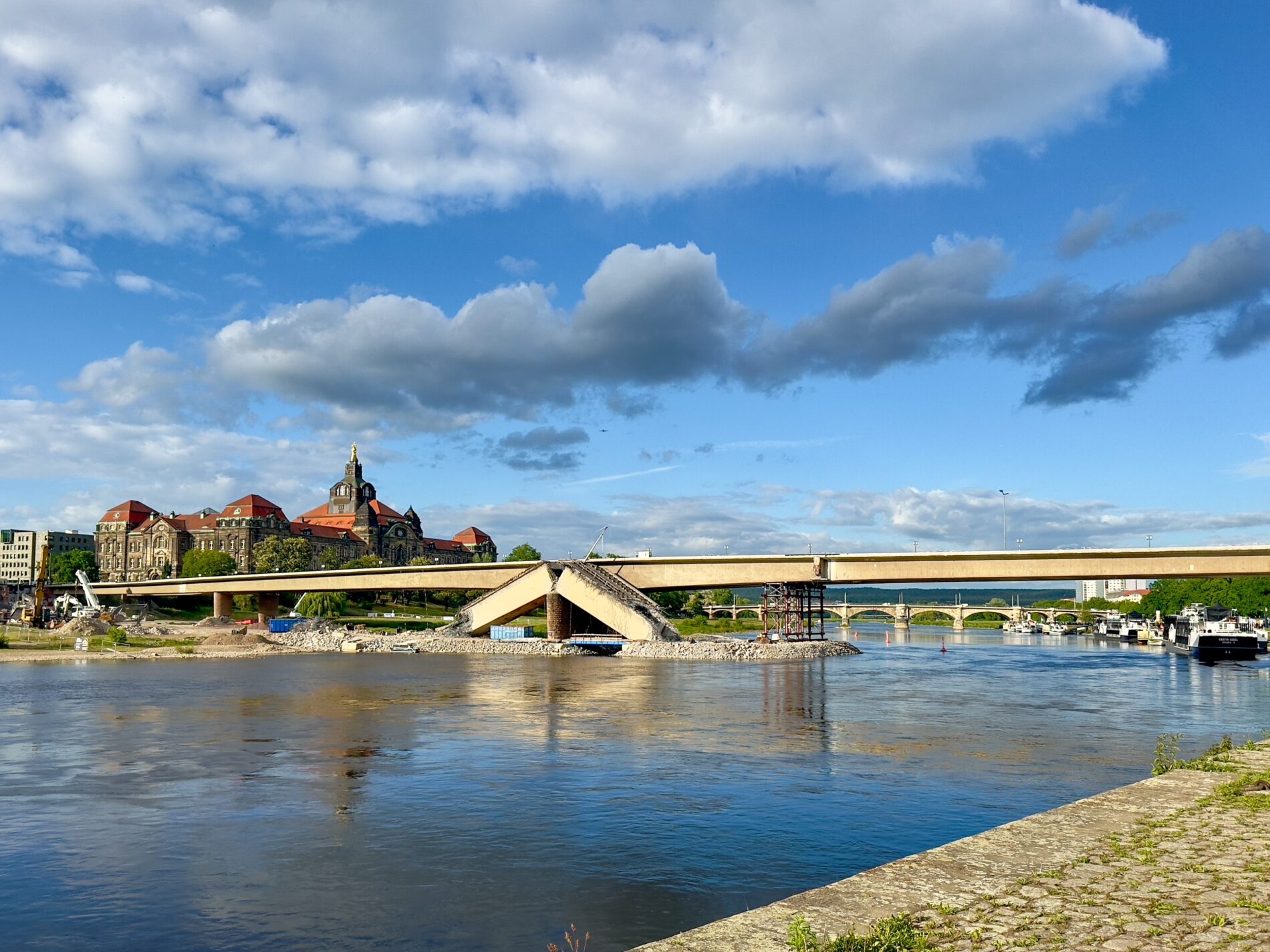
Image: Shutterstock
According to current plans, construction of the replacement structure is not set to begin until 2028, with completion scheduled for 2031. This means a gap of nearly seven years between the collapse and the replacement—even though the cause of the damage has long been known.
A growing list of closures from Bonn to Frankfurt
Bonn, too, reflects this “new normal.” The A565’s North Bridge was fully closed on June 3, 2026, after experts discovered severe structural damage. Tens of thousands of vehicles used this link daily, so the closure is hitting commuters and businesses hard.
Other cases reinforce this picture. The Zeller Bridge near Bad König was closed in 2025 due to cracks in the concrete. In Frankfurt, Mörfelder Landstraße remains closed until an estimated 2029 due to a bridge replacement project, while the Mainbrücke Hochheim faced prolonged restrictions following additional damage.
Genoa builds; Germany postpones
The comparison with Genoa is particularly uncomfortable. Following the collapse of the Morandi Bridge in August 2018, the new San Giorgio Bridge was built in just about 15 months—from the start of construction to its opening. Italy acted while in shock, yet it also acted with urgency.
In contrast, when faced with similar infrastructure failures, Germany primarily produces schedules. First come the expert assessments, then the debates over jurisdiction, and finally, new target dates. It is precisely this contrast that reveals just how paralyzed the country now appears to be.
Why the country is crumbling despite special funds
The federal government points to the special fund established for infrastructure and climate neutrality. Yet the crucial question is not how impressive the total sum sounds; what matters is how much funding actually reaches roads, railways, and bridges.
The German Economic Institute (IW) criticizes the fact that, within the transport sector, billions are simply being shifted from the core budget into this special fund. Thus, infrastructure decays not merely due to a lack of funds, but also because of budgetary window-dressing, a loss of focus on priorities, and paralyzing procedures. New debt is no substitute for the speed of construction.
Stuttgart 21 Illustrates the Cost of Paralysis
Stuttgart 21 has come to symbolize this same malaise on a massive scale. The new central station is not slated to open until the end of 2031, with other sections to follow by 2033. Consequently, what began as a promise of modernization has turned into a monument to spiraling costs and missed deadlines.
Cost projections now stand at around 14.5 billion euros; by comparison, early estimates seem to belong to a different era. Dragging out projects over decades destroys public trust in political planning.
This Decay Is Politically Driven
Germany needs no more lofty rhetoric about accelerating progress. The country needs clear priorities, designated individuals held accountable, and tangible consequences for failed projects. As long as bridges remain missing for years, no investment package looks convincing on paper.
A state that recognizes the vital arteries of its transport network yet fails to repair them quickly is politically rotting before the eyes of its citizens. Commuters witness this every morning. Business owners see it in their supply chains—while the political establishment merely manages the decay.
Author: Klaus Bastian – Blackout News
Sources: Die Welt (06.07.26) – The Spectator (06.07.26) – WDR (23.06.26) – SWR (26.06.26) – Frankfurter Allgemeine (02.08.2020)