
A commentary by our author Klaus Bastian:
Germany is heading into the winter with alarmingly low gas reserves and significantly higher energy prices. By mid-October, gas storage facilities were only 60.1 percent full. At the same time, international supply issues and European import restrictions are further complicating the situation. German energy policy, in particular, appears highly contradictory: natural gas—a resource that is both scarce and expensive—is required for gas-fired power plants to ensure supply when wind and solar power are unavailable, and to stabilize the electricity grid during periods of strain. Consequently, industry, the heating sector, and power generation are all competing for the same energy source. A potential gas shortage could therefore drive up not only heating costs but also electricity prices.
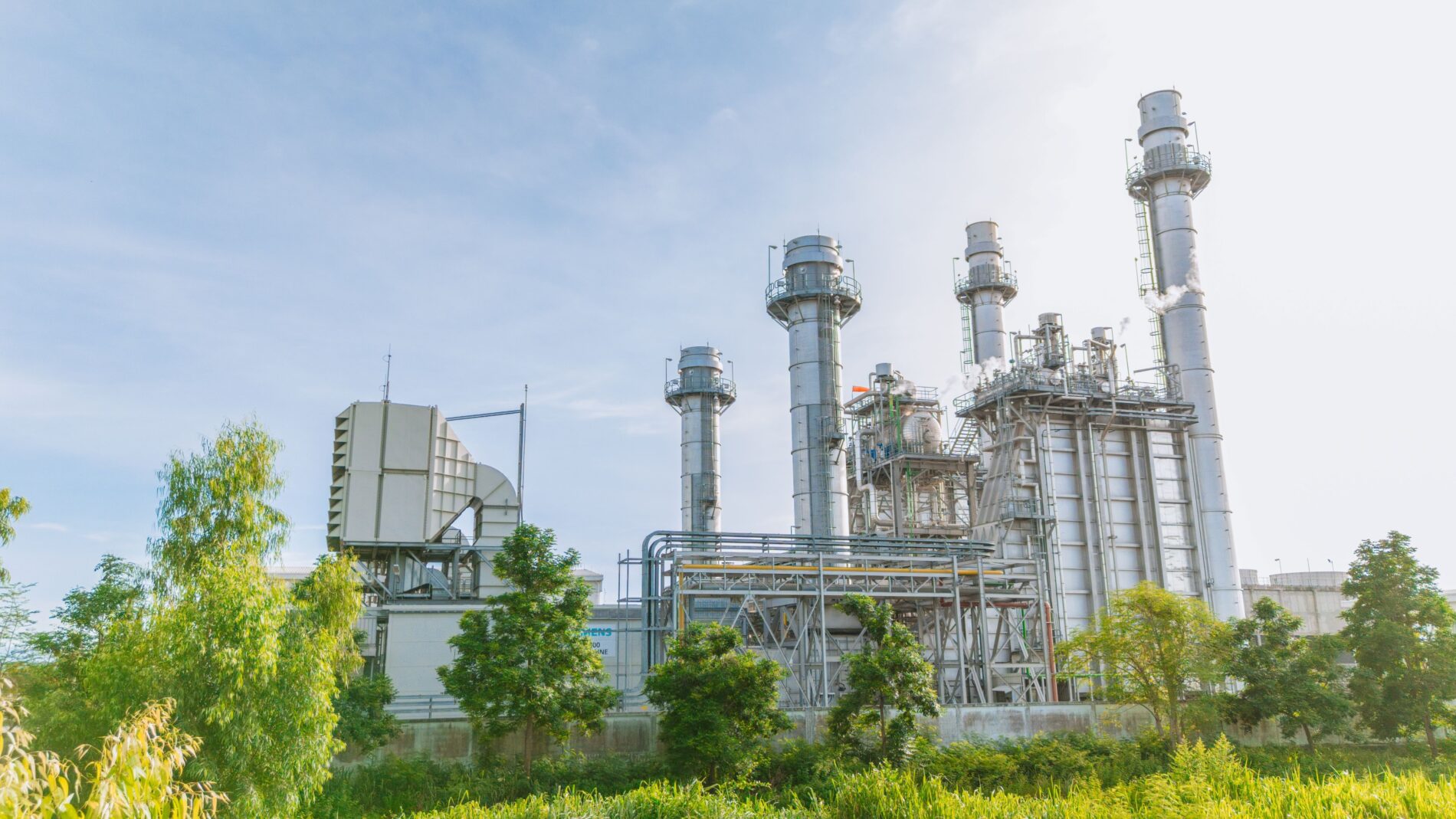
Image: Shutterstock
Gas Shortage Exposes Germany’s Energy Policy Dependency
On October 15, German gas storage facilities were at only 60.1 percent of their capacity. At the same time, European wholesale prices have nearly tripled compared to the end of 2025. While the Federal Network Agency (Bundesnetzagentur) does not currently see an acute threat to supply, these relatively low reserves leave Germany more vulnerable to cold spells and supply disruptions. In the absence of reliable domestic generation capacity, the importance of international gas markets is growing. Consequently, these price trends are hitting an economy that is already struggling with high energy costs.
The contradiction within the electricity system is particularly significant. Germany is increasingly replacing dispatchable power plant capacity with weather-dependent wind and solar installations. Yet, the power grid still requires a reliable, constant supply of electricity at all times. When wind and sun are unavailable, gas-fired power plants and other flexible generators must step in. This creates a reliance on the very energy source that is becoming increasingly expensive to procure. An energy policy that promises affordable electricity must therefore explain why ensuring a secure supply now requires increasingly costly reserves.
Expensive natural gas is used to compensate for shortfalls in wind and solar power
During periods of low wind and solar output—often referred to as a “dunkelflaute” (a lull in renewable generation)—the electricity fed into the grid from wind and solar installations drops significantly. Meanwhile, demand from industry and households remains constant. Gas-fired power plants can quickly make up for this shortfall, but doing so requires large quantities of fuel. Consequently, rising gas prices also drive up the cost of generating electricity from these plants. This becomes particularly problematic when gas-fired plants set the wholesale electricity price; in such cases, expensive natural gas can influence electricity prices far beyond the actual volume of power generated from gas.
The situation becomes even more absurd when it comes to managing grid bottlenecks. In the north, grid operators are sometimes forced to curtail wind power generation because the transmission lines cannot carry all the electricity produced. At the same time, power plants located on the other side of the bottleneck increase their output—a process that may involve gas-fired plants. Under certain grid conditions, Germany ends up paying both for the curtailed renewable energy and for the conventional power used to replace it. While this is done to ensure grid stability, it remains an economically costly arrangement.
Reserve power plants cost billions—while grid expansion consumes further resources
For the winter of 2026/2027, the Federal Network Agency has confirmed a grid reserve requirement of 7,407 megawatts, 2,665 megawatts of which must be sourced from power plants located abroad. Grid operators anticipate that this requirement will rise to 8,274 megawatts by 2028/2029. Although this grid reserve is primarily intended to manage transmission bottlenecks—and does not consist solely of gas-fired plants—the figures underscore a continued reliance on conventional power generation. The expansion of renewable energy has, to date, by no means rendered these backup capacities redundant.
At the same time, the costs associated with electricity transmission are on the rise. Transmission grid charges are set to rise from 2.86 to 3.54 cents per kilowatt-hour in 2027. Without a federal subsidy, they would reach as much as 6.52 cents. Consequently, the government is expected to provide an additional 5.525 billion euros in relief. However, these billions do not vanish from the overall economic ledger; they merely shift the financial burden from grid users to the federal budget. This does not make the energy transition any cheaper—it simply renders the actual cost burden less visible.
Brussels complicates gas procurement, then debates potential exemptions
Compounding the already strained supply situation are new European requirements. Starting in 2027, further restrictions on Russian liquefied natural gas (LNG) imports are set to take effect. At the same time, key exporting nations have raised concerns regarding the documentation requirements mandated by the EU’s Methane Regulation. On October 14, the European Commission proposed delaying certain major import requirements until 2028—a move that still awaits approval from European lawmakers. This creates further uncertainty for long-term procurement contracts. Given the current scarcity of gas reserves, this combination of import restrictions and new regulatory obligations appears particularly problematic from an economic standpoint.
Meanwhile, the German federal government is planning an additional strategic gas reserve of 24 terawatt-hours. According to a draft bill, the costs for this would be covered by a new levy, which could add up to 7.20 euros per year to the costs borne by households. Once again, consumers are being asked to pay for measures intended to ensure security of supply. Yet, natural gas remains indispensable for heating, industrial processes, and electricity generation. Politically announced relief measures lose their impact when, at the same time, new costs are imposed.
The energy transition requires a comprehensive cost assessment, not a constant stream of new subsidies
A recent study by Prognos estimates the investment required to achieve climate neutrality by 2045 at approximately six trillion euros. Of this, only about 65 billion euros per year represent additional investment beyond what would be required under a conventional baseline scenario. Nevertheless, financing the necessary grids, storage facilities, and reserve capacities remains a monumental task. Consequently, the generation costs of individual wind turbines or solar installations are not the only critical factor; electricity must be available at all times and reliably delivered to consumers. As long as this necessitates the use of expensive natural gas, additional power plants, and multi-billion-euro grid infrastructure, policymakers cannot afford to ignore these systemic costs.
German energy policy must therefore be evaluated based on actual total costs and the provision of secure, reliable capacity. The core conflict is clear: Germany aims to reduce its dependence on fossil fuels, yet it continues to rely on natural gas to safeguard its electricity supply. At the same time, grid bottlenecks, reserve capacities, and state financial support drive up the costs of the entire system. While there is currently no actual shortage of gas, the economic risk is already present. For industry, what ultimately matters is not the installed capacity of renewable energy systems, but the availability of affordable electricity at any given hour. Without a rigorous, comprehensive assessment of total costs, Germany risks further eroding its competitive position as a business location and placing an increasing burden on consumers.
Author: Klaus Bastian – Blackout News
Sources: Wall Strreet Journal (19.10.26) – Bundesnetzagentur (16.10.26) – Reuters (14.10.26) – Transnet BW (01.10.26)