
In Ueckermünde, Mecklenburg-Western Pomerania, an iron foundry employing around 300 people is facing closure. On October 16, 2026, the Breyden Group confirmed that the facility will shut down by the end of the year. According to management, high energy costs, expensive transport, increasing competitive pressure from China, and a lack of orders have made the operation unprofitable. The closure of the foundry strikes a blow to a major employer in the Vorpommern-Greifswald region—an area already struggling with structural economic challenges. Minister of Economic Affairs Wolfgang Blank and Mayor Tino Spiegelberg have criticized the decision and are calling for the plant to be kept open. However, there have been no fundamental reforms to improve the conditions for industrial operations in the region. Consequently, negotiations regarding a social plan for the employees are set to begin on October 21.
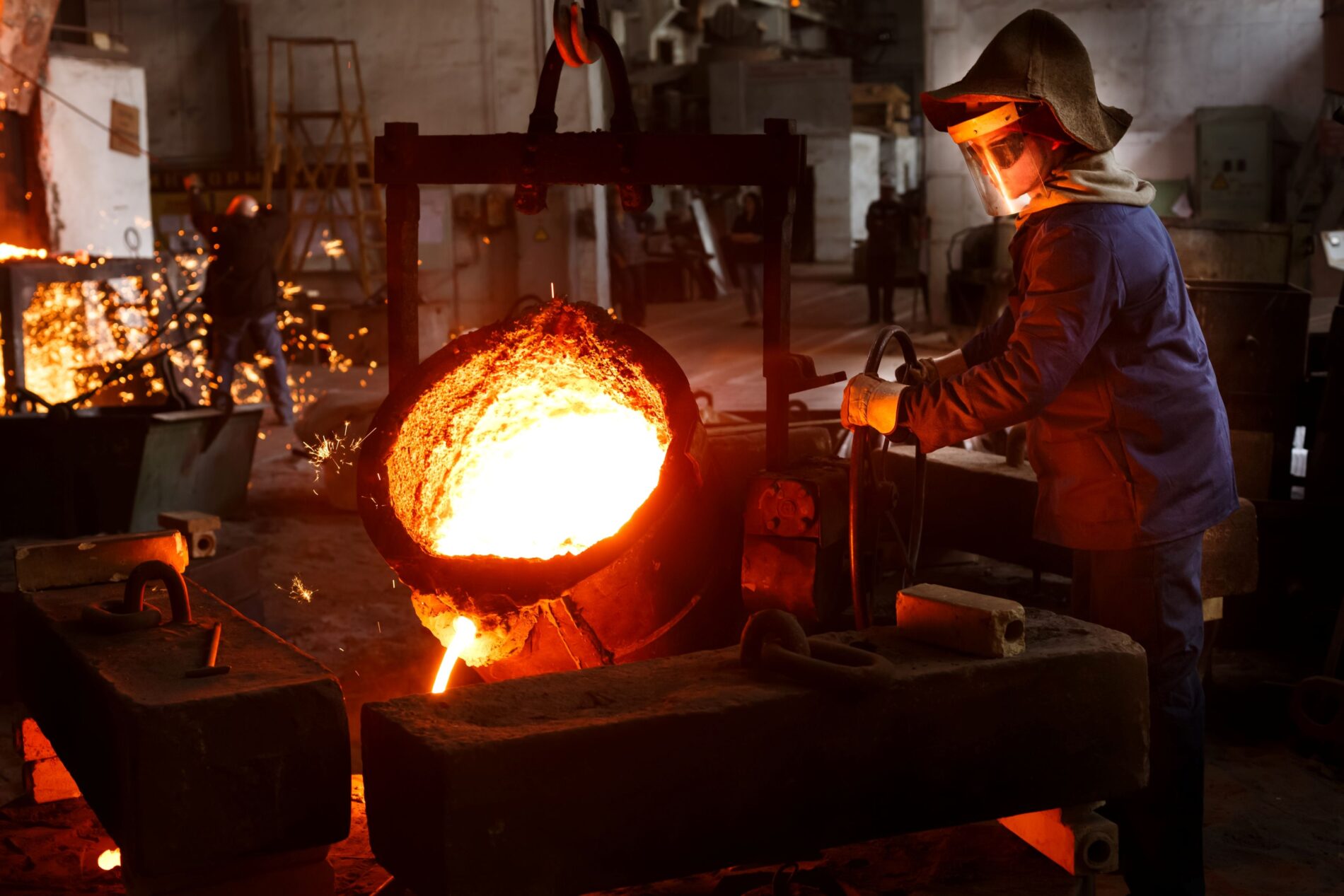
Image: Shutterstock
High energy costs and international competition render production unprofitable
The Breyden Group no longer sees a viable economic future for its iron foundry. Managing Director Sebastian Simon points specifically to high energy and labor costs, as well as growing competition from China. Furthermore, long transport distances increase the cost of procuring scrap metal—a raw material the company requires for its cast components. In this regard, the Ueckermünde site faces cost disadvantages compared to the group’s other facility in Neunkirchen.
The foundry primarily produces components for vehicle braking systems. However, since the beginning of the year, order volumes have been insufficient to keep the plant operating at capacity. Efforts to modernize the facility and secure new customers have also failed to yield adequate results. Consequently, management intends to consolidate production at other locations, with a particular focus on maintaining the foundry in Neunkirchen, in the state of Saarland.
Politicians Decry Plant Closure – Economic Reforms Remain Absent
Wolfgang Blank, Minister of Economics for Mecklenburg-Western Pomerania, has sharply criticized the Breyden Group’s decision. Mayor Tino Spiegelberg, alongside the works council and the trade union IG Metall, is also calling for the plant to remain in operation. However, public demands do nothing to alter the underlying economic causes of the closure; after all, high production costs cannot be made to disappear through political expressions of solidarity. This highlights the contradiction between the political ambition to preserve industrial jobs and the actual conditions at the business location.
This brings the question of political responsibility into sharp focus. High energy prices, levies, and bureaucratic burdens drive up the cost of industrial production in Germany. At the same time, policymakers lament the loss of jobs without having introduced any meaningful improvements for the affected companies. Yet, the federal and state governments hold the primary levers for action. While local officials can act as mediators, they lack the power to unilaterally change nationwide energy levies or the broader legal framework. Consequently, their public appeals to keep the plant open remain largely symbolic, lacking any concrete economic solutions.
Foundry Closure Reveals the Limits of Political Pleas for Rescue
Minister of Economics Blank and Mayor Spiegelberg met with the company’s management as early as October 9. A subsequent meeting in Berlin on October 16 also failed to prevent the decision to close. Nevertheless, the works council and IG Metall intend to work with external experts to develop a plan for continued operations. For such a plan to succeed, however, it would need to resolve existing cost issues and secure a sufficient volume of new orders. Without these prerequisites, continuing operations would hardly be economically viable.
The closure of the foundry thus underscores a fundamental challenge in industrial policy: public outrage over plant closures is no substitute for competitive energy prices or a reliable environment for investment. Political posturing and calls for a bailout may therefore appear as mere grandstanding, provided they are not followed by effective action. At the same time, company management remains responsible for its investment decisions and business strategy. What is now crucial is a robust plan that addresses both the cost structure and the weak order intake.
Around 300 employees face the loss of their professional future
The consequences for the workforce are particularly severe. The trade union IG Metall initially estimated that 283 employees were directly affected; that figure has since risen to approximately 300 jobs at risk. Negotiations for a social plan—covering potential severance packages, a transition agency, and alternative employment options—are scheduled to begin on October 21. Additionally, another vigil protesting the closure is planned for October 19.
One potential prospect is offered by the Silbitz Group in the neighboring town of Torgelow, where an iron foundry manufactures components for wind turbines and marine diesel engines, among other products. The company has already signaled interest in recruiting skilled workers from Ueckermünde. Furthermore, the Torgelow site reports having orders secured through 2030. However, it remains uncertain how many employees might actually be able to make the transition. In any case, this would by no means fully compensate the region for the loss of industrial value creation.
Without better conditions for business, further industrial jobs are at risk of being lost
The case of Ueckermünde illustrates the consequences that a lack of competitiveness can have for individual industrial sites. While politicians call for jobs to be preserved, management points to economic losses and a lack of future prospects. Public appeals, however, cannot generate new orders, nor can they permanently offset production costs that are too high. An effective industrial policy would therefore need to intervene at an earlier stage by improving the economic conditions necessary for investment.
For Ueckermünde, such changes may come too late. The approximately 300 employees must now prepare for the loss of their jobs. At the same time, the region is losing a significant industrial operation, along with its accumulated expertise and local supply chain relationships. Political solidarity cannot compensate for this damage. Ultimately, the decisive factor is whether the federal and state governments can achieve concrete improvements in the conditions for business. Otherwise, political demands to “save” facilities will continue to founder on the same underlying economic problems whenever future plant closures arise.
Author: Blackout News
Sources: Tagesschau (17.10.26) – NDR (17.10.26) – Ostdeutsche Allgemeine (16.10.26)