
A commentary by our author Klaus Bastian
Deindustrialization in Germany is gathering further momentum in June 2026. Volkswagen expects 19,000 departures at its German sites by the end of the year. Gardena is cutting 250 jobs and relocating parts of its production to the Czech Republic. JUWI is also eliminating 280 positions. Zeiss is planning a cost-cutting program but has not yet specified a number of jobs affected. Separately, Carl Zeiss Meditec is reviewing up to 1,000 positions worldwide. However, these announcements represent only the latest snapshot of a prolonged wave of job cuts. Thousands of jobs have already vanished, and further reductions are likely to follow. The federal government has been announcing reforms since taking office, yet so far, it has produced little more than scheduled meetings, summits, and excuses rather than an effective turnaround. The most recent economic summit also concluded without a binding outcome.
Merz attributes his lack of success to prosperity
Friedrich Merz acknowledges that his government’s reforms are proceeding too slowly for many people. Speaking at the Day of Family Businesses, he said: “Transforming a prosperous society is far more difficult than rebuilding a country after war and destruction.” Merz uses this comparison to explain his lack of success so far. The cause does not appear to be a lack of assertiveness on the part of the government; instead, the Chancellor identifies prosperity itself as the obstacle.
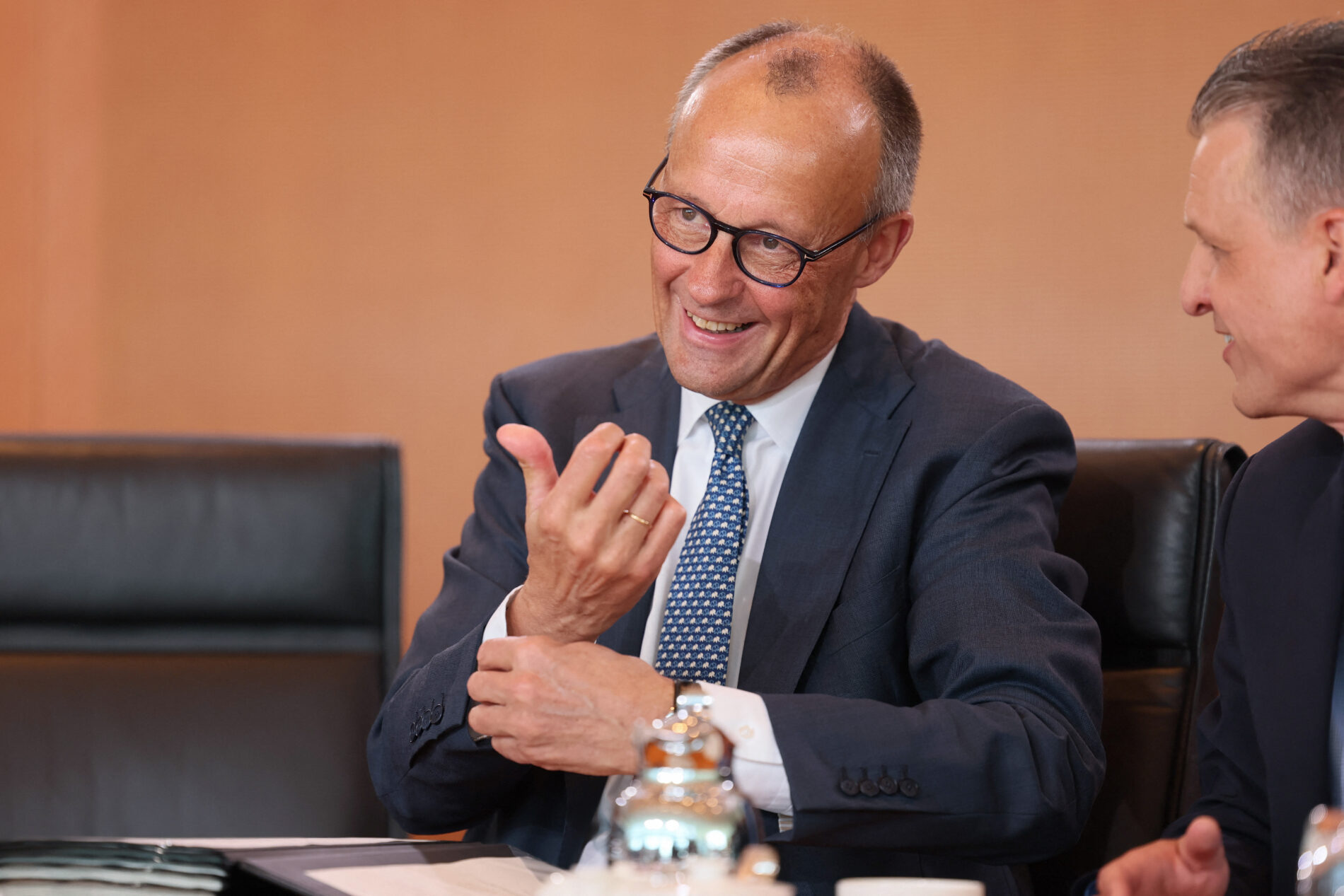
Image: Odd ANDERSEN / AFP
This statement turns political responsibility on its head. A war-torn country is grappling with casualties, hunger, and destroyed infrastructure. Germany, by contrast, possesses functioning institutions, high tax revenues, and a parliamentary majority for reforms. The government ought to capitalize on these advantages. Yet Merz focuses primarily on explaining why change is difficult. Overcoming precisely those difficulties, however, is one of his core responsibilities.
The government lectures citizens and business owners
Merz calls for more work and criticizes the emphasis on work-life balance. He also complains about high rates of sick leave. In doing so, the Chancellor steers the debate toward the behavior of employees. Yet high energy prices, rising social security contributions, and sluggish approval processes are not caused by a desire for leisure time. The government is thus shifting responsibility onto those who bear the consequences of its policies.
Business owners, too, have recently received some remarkable advice. Merz demanded more public support for his agenda, pointing to people he encounters on golf courses on Sundays but never sees on political talk shows. Yet many companies are struggling with costs, regulation, and weak demand. They do not need lectures on communication from the Chancellery; they need conditions that make investing in Germany profitable again.
Deindustrialization extends far beyond current headlines
Recent downsizing programs do not exist in a vacuum. For years, companies have been closing plants, cutting shifts, and relocating production abroad. At the same time, investors are holding back on new projects. Further job losses are therefore likely unless energy prices, levies, and regulatory burdens undergo fundamental change. Germany is consequently gradually losing its industrial base.
The consequences extend far beyond individual workforces. With every site that shuts down, purchasing power, tax revenues, and regional value creation decline. Furthermore, expertise, supply chains, and technological capabilities are lost. Once production has been relocated, it rarely returns. Industrial decline cannot, therefore, be reversed overnight by a future subsidy program.
Summits Are No Substitute for Effective Economic Policy
The most recent economic summit, too, failed to yield any binding decisions. The government, employers, and trade unions discussed taxes, social security contributions, and bureaucracy. Afterward, Merz announced further proposals and future decisions. Once again, a summit ended in political tokenism: new dates and new announcements, but no substantive decision.
The government bears responsibility for energy policy, levies, regulation, and infrastructure. It is precisely these conditions that are driving companies out of Germany or preventing new investment. Yet, measures with rapid, measurable impact are nowhere to be found. Berlin responds with summits, announcements, and new deadlines. While policymakers market their flurry of activity as a reform agenda, companies are cutting jobs and permanently relocating production.
The Government Itself Is Becoming a Competitive Disadvantage
Deindustrialization stems from a multitude of cutbacks, relocations, and missed investment opportunities. However, political inaction exacerbates this process. Those who are aware of the problems and command a parliamentary majority—yet fail to implement an effective solution—cannot indefinitely cite difficult framework conditions as an excuse. Merz explains the stagnation instead of putting an end to it.
Germany does not need more empty rhetoric about growth. It needs lower business costs, reliable energy prices, and faster approval processes. Furthermore, the government must finally translate its reform promises into concrete decisions. If it remains stuck in “announcement mode,” it will do more than merely oversee industrial decline; its own incompetence will become yet another factor undermining Germany’s competitiveness.
Author: Blackout News – Klaus Bastian (KOB)
Sources: FAZ (09.06.26) – Spiegel (11.06.26) – Manager-Magazin (12.06.26) – Reuters (11.06.26) – Heidenheimer Zeitung (10.06.26) – Der Bundeskanzler (11.06.26) – JUWI (09.06.26)