
On Sunday, July 5, 2026, a rotor blade detached from a wind turbine near Aalen-Waldhausen in the Ostalb district. Waldhausen is located east of the main town of Aalen on the Härtsfeld plateau in Baden-Württemberg; the wind farm in question is situated between Waldhausen and Hülen. The blade fell from a hub height of approximately 100 meters and landed next to the tower, though no injuries have been reported so far. In response, the operator, Statkraft, closed off access routes, shut down all its own turbines, and commissioned experts to investigate the cause of the incident.
Wind farm on the Härtsfeld to undergo comprehensive inspection
The site is located on a plateau that has been used for wind energy for years. Statkraft took over the wind farm in 2021, though the seven turbines date back to 2006 and 2007. Repowering plans are also underway for Waldhausen, as six new turbines are intended to replace the old ones.
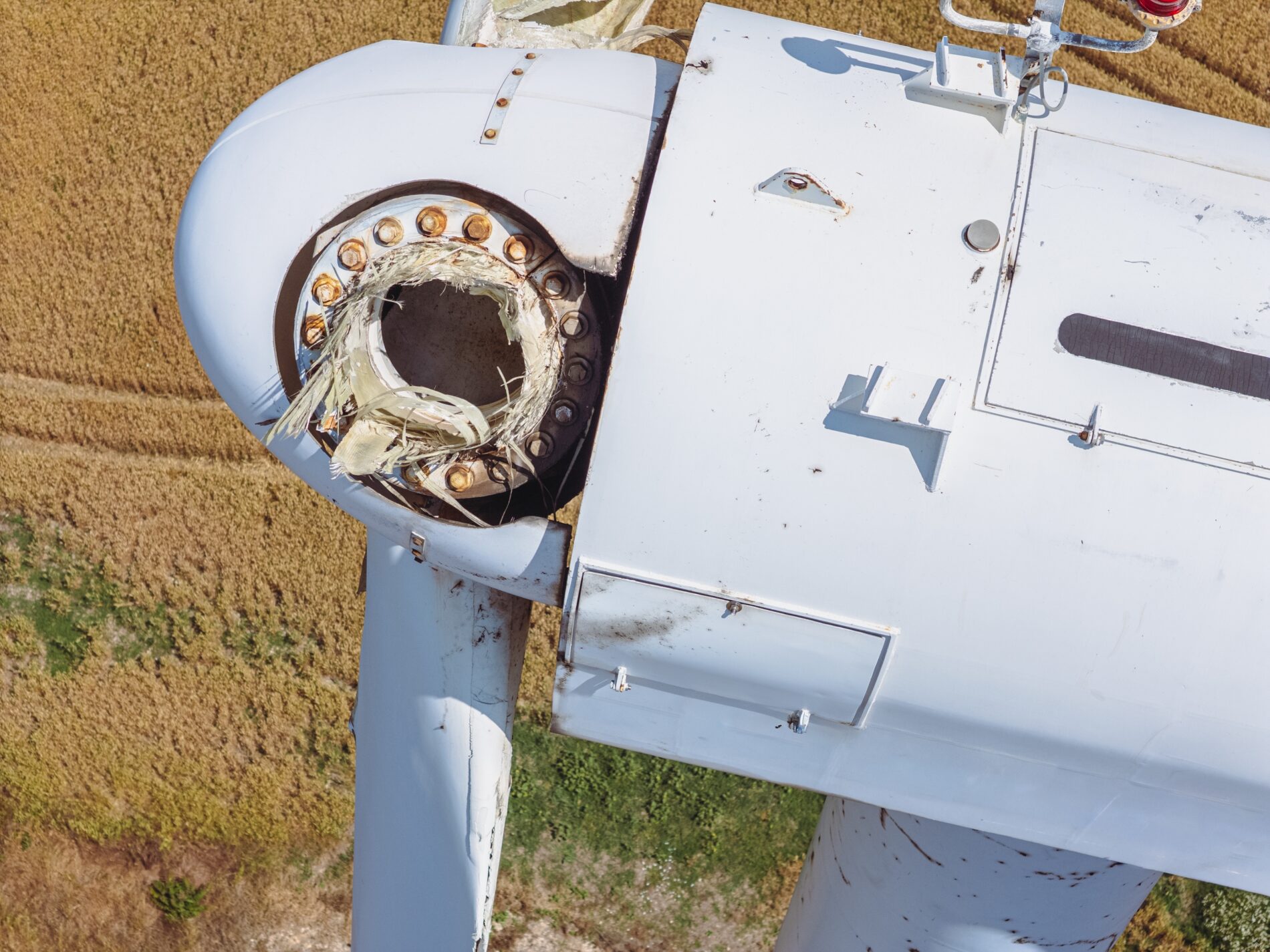
Representative image: Shutterstock
Following the loss of the blade, six turbines automatically shut down, according to the operator. However, a seventh turbine could not be stopped remotely. Consequently, a team shut it down manually on-site on Monday morning. Access roads remained closed while technicians checked for debris and potential secondary damage.
Accident highlights gaps in tracking major damage
This incident is not an isolated case, even though such damage remains rare. Industry-related damage statistics record at least 134 major incidents involving wind turbines in Germany since 2005. These include 67 fires, 30 instances of rotor blades breaking off, 9 collapsed turbines, and 5 cases where the nacelle and blades fell to the ground. The TÜV Association also points to approximately 50 cases of serious damage annually.
However, these figures represent minimum values. Unlike traffic accidents, there is no comprehensive official record of wind turbine accidents in a nationwide public database. Police systematically document traffic accidents, and the Federal Statistical Office subsequently publishes detailed data. In contrast, the overall picture regarding wind turbines is pieced together from operator reports, notifications from authorities, media coverage, and industry research.
Fires and tower collapses intensify safety concerns
Fires are among the most common types of major damage to wind turbines. They often affect the nacelle, the machinery housing, or the rotor area; however, fire departments are usually unable to actively reach these fire sites. Emergency responders therefore cordon off the danger zone and often allow the turbine to burn out in a controlled manner. Burning or glowing debris can also fall to the ground, posing a risk to the surrounding area.
Mast or tower collapses occur much less frequently but have particularly severe consequences. When a tower buckles or a nacelle falls, large debris fields are created. Consequently, roads, farm tracks, and railway lines must be closed as a precautionary measure. For the operator, a complex technical inspection follows, as the foundation, tower segments, and grid connection may also be affected.
Experts must determine the cause in Waldhausen
The specific cause in Waldhausen remains undetermined. Statkraft identifies authorities, independent experts, and the technical operations manager as parties involved in the investigation. Technicians also collected fiberglass fragments found on the site following the collapse. The final expert report must therefore clarify whether materials, operation, maintenance, or external factors played a role.
The operator points to maintenance carried out in accordance with manufacturer specifications and legal regulations. According to regional reports, the most recent assessment for continued operation took place on January 21, 2026. Statkraft stated: “We will communicate confirmed findings as soon as they are available to us.” However, this incident—particularly with older turbines—highlights the importance of having traceable damage data and transparent inspection reports.
Repowering boosts capacity but doesn’t answer every question
The accident has occurred at a site already facing a technological overhaul. Statkraft plans to decommission the existing turbines at the Waldhausen wind farm and install six Vestas V172 models. Together, these are expected to generate around 43 megawatts of power, whereas the current setup has a calculated capacity of 14 megawatts.
The old turbines supply electricity to approximately 6,000 households, while the new ones are intended to power more than 25,000. Repowering therefore significantly increases electricity generation. However, it does not address the need to analyze the current incident, as increased capacity does not automatically answer the question of how systematically Germany records and evaluates major wind turbine accidents.
Author: Blackout News
Sources: Schwäbische Post (06.07.26) – Statkraft (06.07.26) – TÜV Verband(Stand 07.07.26) – Juwi (Stand:07.07.26)