
In July 2026, Germany is experiencing a new wave of financial crises among hospitals. Since 2022, 85 hospital operators—spanning 102 locations—have filed for insolvency, some for the second time. High wage, energy, and material costs are colliding with limited revenues and the high expense of maintaining on-call services. “We are currently witnessing an uncontrolled collapse of the system,” warns Robin Uhlmann, a chief physician in Bingen. Furthermore, the new statutory health insurance (GKV) austerity law is darkening the outlook for 2027 and beyond. Consequently, patients face the prospect of longer travel distances, smaller emergency departments, the closure of entire hospital sites, and the loss of local healthcare access.
Collapse Hits Hospitals Large and Small
The Heilig-Geist-Hospital in Bingen filed for insolvency again in May. More than 90 percent of its patients arrive as emergency cases. Yet, the hospital receives an average of only around 35 euros per outpatient case. At the same time, it must maintain staffing, CT scanning capabilities, and a trauma room around the clock. Personnel costs for medical staff rose by approximately ten percent over two years, whereas revenues increased by only about three percent.
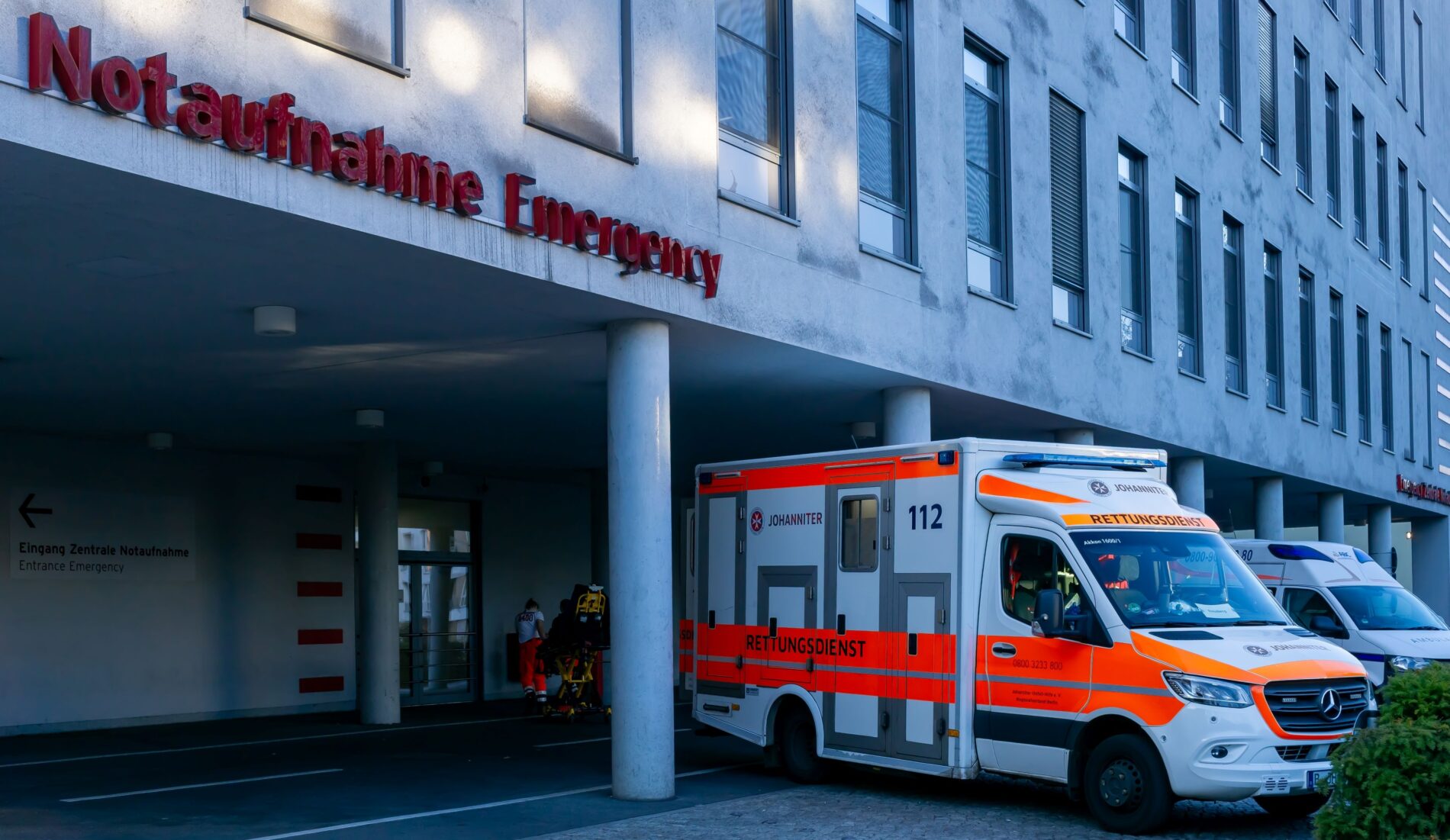
Image: Shutterstock
However, the crisis is by no means limited to small hospitals. The operator of Marienhospital Stuttgart filed for insolvency proceedings under self-administration in June. The hospital has around 760 beds and treats approximately 30,000 patients annually. Nevertheless, management plans to cut around 100 full-time positions. The Baden-Württemberg Ministry of Health also fears further insolvencies; even hospitals that are vital for local healthcare provision could find themselves in financial distress.
Restructuring in Brake ends in closure
Meanwhile, efforts to save St. Bernhard Hospital in Brake, Lower Saxony, have failed. On July 7, the clinic announced the cessation of hospital operations, affecting around 350 employees. Despite undergoing insolvency proceedings under self-administration, no viable model for the future could be found. However, the collapse of a facility affects more than just its workforce; other hospitals must take on additional patients, while emergency services face longer travel distances.
These cases do not follow a uniform pattern. Some hospitals scale back their services, while others cut staff or close completely. In Bingen, the insolvency administrator is considering reducing the number of planned beds from 132 to between 30 and 50. Additionally, the emergency care unit might significantly limit its operating hours. While such restructuring measures preserve certain services, patients lose the comprehensive care previously available at the site.
The new cost-cutting law could accelerate this trend
The insolvencies currently underway arose prior to the new Statutory Health Insurance Contribution Rate Stabilization Act; therefore, they cannot be directly attributed to that legislation. However, the Bundestag and the Bundesrat passed the package on July 10. Starting in 2027, it is intended to curb the growth of healthcare spending. By 2030, around three-quarters of the financial relief is expected to come from healthcare providers. At the same time, hospitals must shoulder the burden of steadily rising wages and operating costs.
DKG head Gerald Gaß therefore warns of a three-year wave of insolvencies. He estimates that one-third of hospitals could disappear during this period. Basic and standard care facilities in rural areas are considered particularly at risk. Emergency departments, maternity wards, and pediatric units could be the first to cut back or discontinue services. Consequently, the financial collapse of individual hospitals would directly alter regional healthcare provision. Thus, the warning issued by Uhlmann in Bingen reflects a problem that has long since become nationwide.
Author: Blackout News
Sources: Welt (14.07.26) – Bild (14.07.26) – Tagesschau (08.07.26) – St. Bernhard Hospital (07.07.26)