
Volkswagen has once again initiated a recall in the US due to a fire risk associated with the high-voltage battery. The recall affects 22,524 ID.4 electric vehicles from the 2023 to 2026 model years. The company had previously recalled more than 44,000 ID.4 vehicles in the US due to potential battery fires. In the current recall, battery cells can overheat dangerously under certain charging conditions, creating a risk of a thermal chain reaction that could lead to a vehicle fire. The exact cause of the fault remains unknown. Consequently, affected owners are currently restricted to charging their vehicles to a maximum of 80 percent. A definitive repair solution is not yet available.
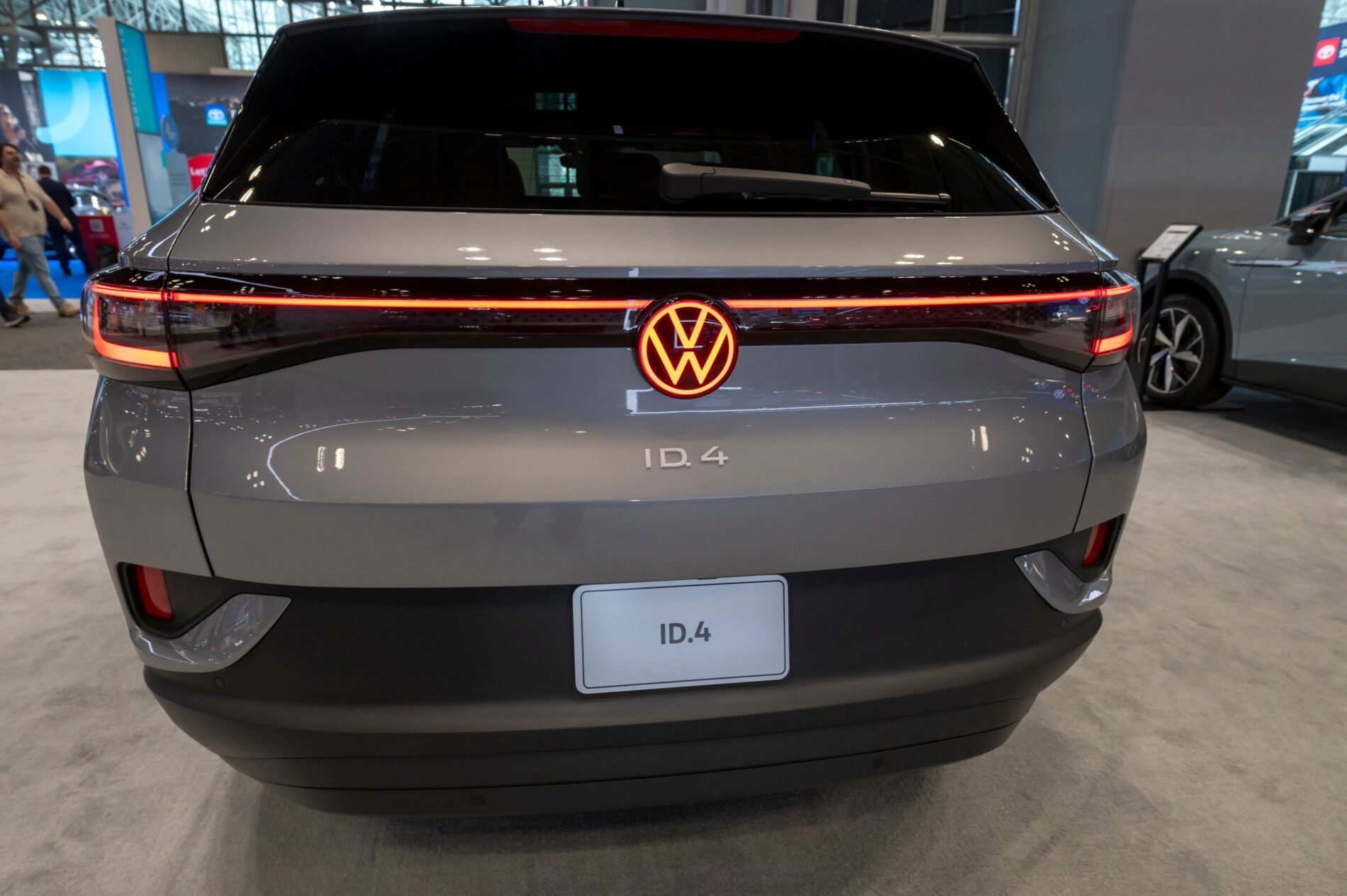
Image: Shutterstock
VW Recall Due to Potential Fire Risk – Cause Remains Unclear
The U.S. National Highway Traffic Safety Administration (NHTSA) has designated this action under number 26V630, while Volkswagen uses the internal recall code 93EX. The recall affects vehicles manufactured between January 2023 and February 2025. The battery cells were supplied by SK Battery America; however, Volkswagen has not yet conclusively identified the specific technical defect.
Current findings indicate that the risk arises from the interaction between certain charging profiles and a high battery state of charge. If the charge level exceeds 80 percent, a thermal chain reaction can be triggered under unfavorable conditions. This causes individual battery cells to heat up, potentially damaging neighboring cells as well. In the worst-case scenario, this can lead to an uncontrollable battery fire. Volkswagen therefore recommends limiting the state of charge as a precautionary measure.
Already 22 complaints – Volkswagen estimates defect rate at 0.1 percent
Between January 2024 and August 2026, Volkswagen recorded a total of 22 such complaints in the US. However, this figure does not necessarily represent 22 confirmed vehicle fires. The manufacturer estimates that around 0.1 percent of the recalled vehicles actually exhibit the relevant defect. Mathematically, this equates to approximately 23 vehicles. Nevertheless, the recall covers all 22,524 identified vehicles as a precautionary measure.
A particularly problematic aspect is the continued lack of a repair solution. Volkswagen has been investigating the fault since June 2026. In September, the product safety committee finally decided to initiate a voluntary recall. However, the manufacturer had not yet been able to determine the root cause by that time. Consequently, affected customers must for the time being accept a limitation on their usable battery capacity.
Previous recalls already affected more than 44,000 ID.4 vehicles in the US
As early as January 2026, Volkswagen had to launch two other recall campaigns in the US due to battery issues. At that time, the measures affected a combined total of 44,551 ID.4 vehicles. The manufacturer identified the cause of the fault as incorrectly positioned electrodes within certain battery cells. Those cells had also been supplied by SK Battery America. In the current VW recall, however, it remains unclear whether a comparable manufacturing defect is involved.
Additionally, in the spring, Volkswagen recalled nearly 100,000 electric cars across various group models worldwide due to potential battery problems. This included vehicles destined for the German market. The affected battery modules could cause issues such as reduced driving range and warning messages. Furthermore, certain defects posed a risk of fire. Volkswagen therefore planned for software updates, battery checks, and, where necessary, the replacement of individual modules.
Customers face reduced range – repair appointment still pending
The current charging limit reduces the usable battery capacity by one-fifth compared to a full charge. Consequently, assuming the same driving style, the vehicle’s range is lower than it would be with a fully charged battery. Volkswagen also plans to enable an automatic 80 percent charge limit for vehicles with the appropriate technical specifications. Additionally, warning notices will inform owners of necessary precautions. However, this does not replace a permanent technical fix for the defect.
Volkswagen intends to notify affected vehicle owners in the US about the safety risk in writing starting November 27, 2026. Further notifications will follow once a repair solution becomes available. The affected vehicle identification numbers (VINs) have been verifiable via the NHTSA since October 6. The current recall specifically applies to vehicles in the US market; a corresponding new recall for German ID.4 models has not yet been confirmed. However, these recurring battery issues demonstrate how difficult it is to retrospectively isolate manufacturing defects in high-voltage battery systems.
Author: Blackout News
Sources: Elektrive (09.10.26) – NotebookCheck (09.10.26) – DrWeb (09.10.26)