
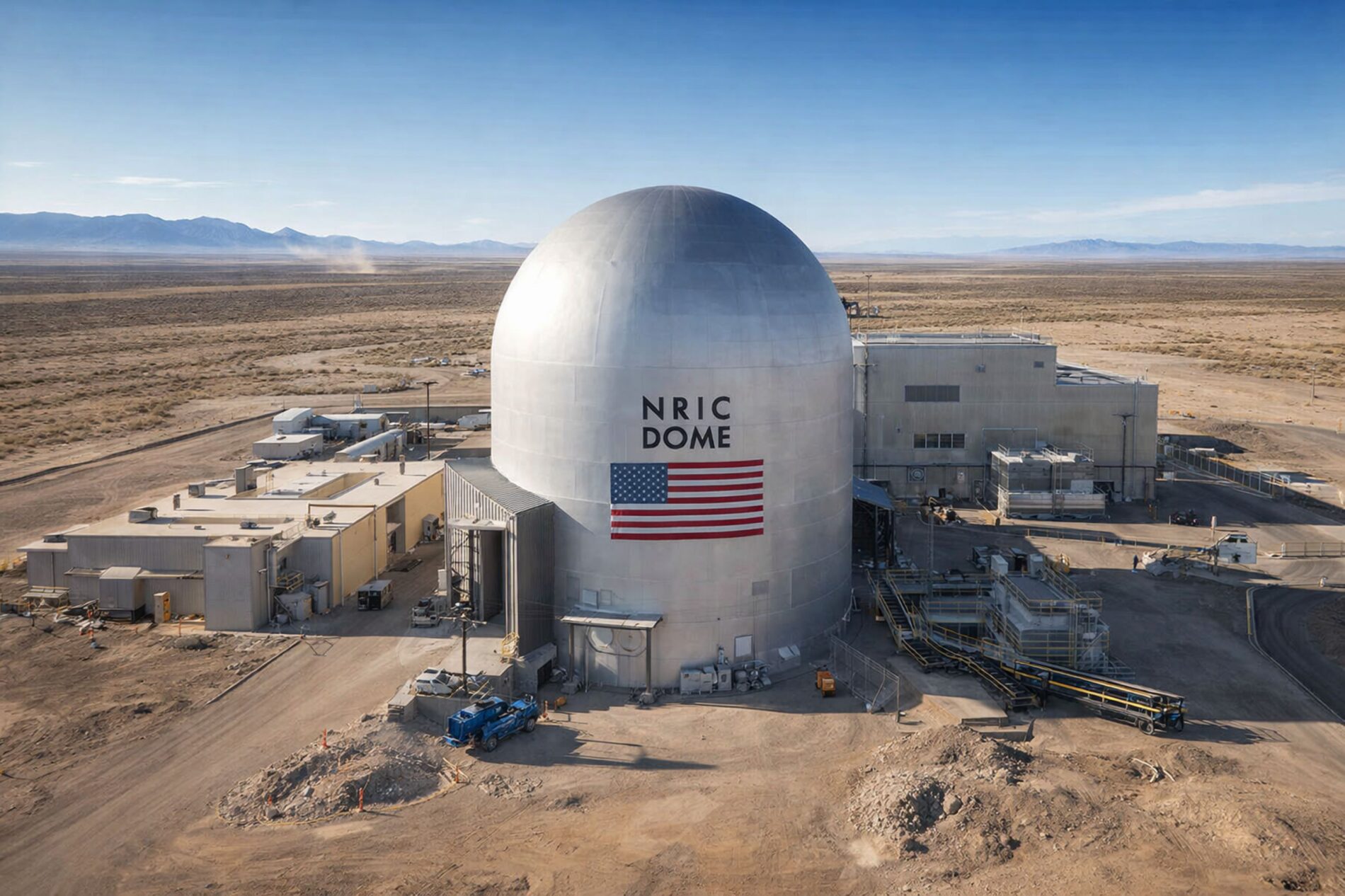
A new test facility for mini nuclear reactors, DOME, has gone into operation in the US state of Idaho. For the first time, the US has created a place where developers can test mini nuclear reactors under real-world conditions. This is crucial for regulatory approvals, as authorities require reliable data on performance, safety, and operational behavior. This very evidence has often been lacking until now, which is why many projects remained stuck in early stages for years. The Idaho National Laboratory and the National Reactor Innovation Center are behind the project. Policy targets from 2025 further accelerated the development. The new infrastructure is intended to shorten approval processes, identify risks earlier, and bring advanced reactors into practical use more quickly. (focus: 13.04.26)
Test Facility Aims to Accelerate Approvals for New Reactors
Computer simulations alone are insufficient for new reactor concepts. Authorities require data from real-world tests to reliably assess safety and performance. Without this data, however, approvals often drag on for years. This is precisely where DOME comes in, as developers can test their technology there under operational conditions. The results are also directly incorporated into the approval processes. This allows for earlier identification of viable concepts and those that fail.
Support from Washington is correspondingly strong. The US Department of Energy sees the facility as a strategic building block for future energy policy. “The DOME test facility will be a cornerstone of the strategy to restore US leadership in advanced nuclear technologies,” says Energy Secretary Rian Bahran. INL Director John Wagner also emphasizes the speed of the project. “We are accelerating the next generation of nuclear innovators from concept to demonstration at a pace the industry hasn’t seen in decades,” says Wagner. According to INL, completion has therefore been brought forward by almost a year.
Microreactors are intended to provide reliable and flexible electricity
Microreactors are significantly smaller than conventional nuclear power plants. They generate up to 20 megawatts of thermal power and are therefore suitable for smaller cities, industrial plants, or remote regions. Their major advantage lies in their predictable energy production, whereas wind and solar power plants depend on the weather. Furthermore, such a reactor can be built more quickly than a large power plant. Interest is therefore growing, particularly in areas where a continuous electricity supply is essential.
The test facility in Idaho is intended to take this market to the next level. Companies can apply for testing slots, with technical maturity and planned approvals being key criteria. However, the companies themselves finance their trials. A first project is already confirmed: Radiant plans a one-year test run. This will be the first time nuclear fuel is used in the facility, and performance data will be collected, allowing for technical adjustments to be made directly during operation.
Old Reactor Dome Converted for New Nuclear Technology
DOME did not require a completely new containment structure. Instead, the project utilizes an existing dome that previously housed an experimental reactor. This saves time and money because existing infrastructure could be reused and specifically adapted. At the same time, the site is gaining a new role in American nuclear technology. A former reactor facility is now becoming a platform for new developments.
This is precisely where the practical value of the test facility lies. Companies gain a place where they can move their concepts from the development stage to reality more quickly. “We built this facility so that companies can rapidly translate their innovative concepts into practical demonstrations,” explains Brad Tomer of the National Reactor Innovation Center. If the model proves successful, microreactors could be brought online more quickly and provide a more reliable power supply at sensitive locations.