
Thyssenkrupp Marine Systems (TKMS), based in Kiel, plans to relocate parts of its submarine construction to Spain due to the global arms boom. The move was announced in April 2026 after the company and the Spanish shipyard Navantia signed a letter of intent. The impetus is the sharply increased demand for naval projects, while available shipyard capacity in Europe is simultaneously becoming scarce. The focus is on the potential production of German submarines at Spanish sites. The biggest risk factor lies in overstretched production structures, which could stifle new orders. The consequences therefore range from the relocation of individual construction phases to a new division of labor within the European defense industry. (focus: 20.04.26)
Submarine demand is growing faster than capacity
The security situation in Europe and beyond has been driving up demand for naval vessels for years. Many nations are investing more heavily in their fleets while simultaneously focusing on modern technology and faster delivery times. This is increasing the pressure on shipyards, suppliers, and skilled workers. TKMS is therefore responding with closer cooperation with Navantia to unlock additional capacity.
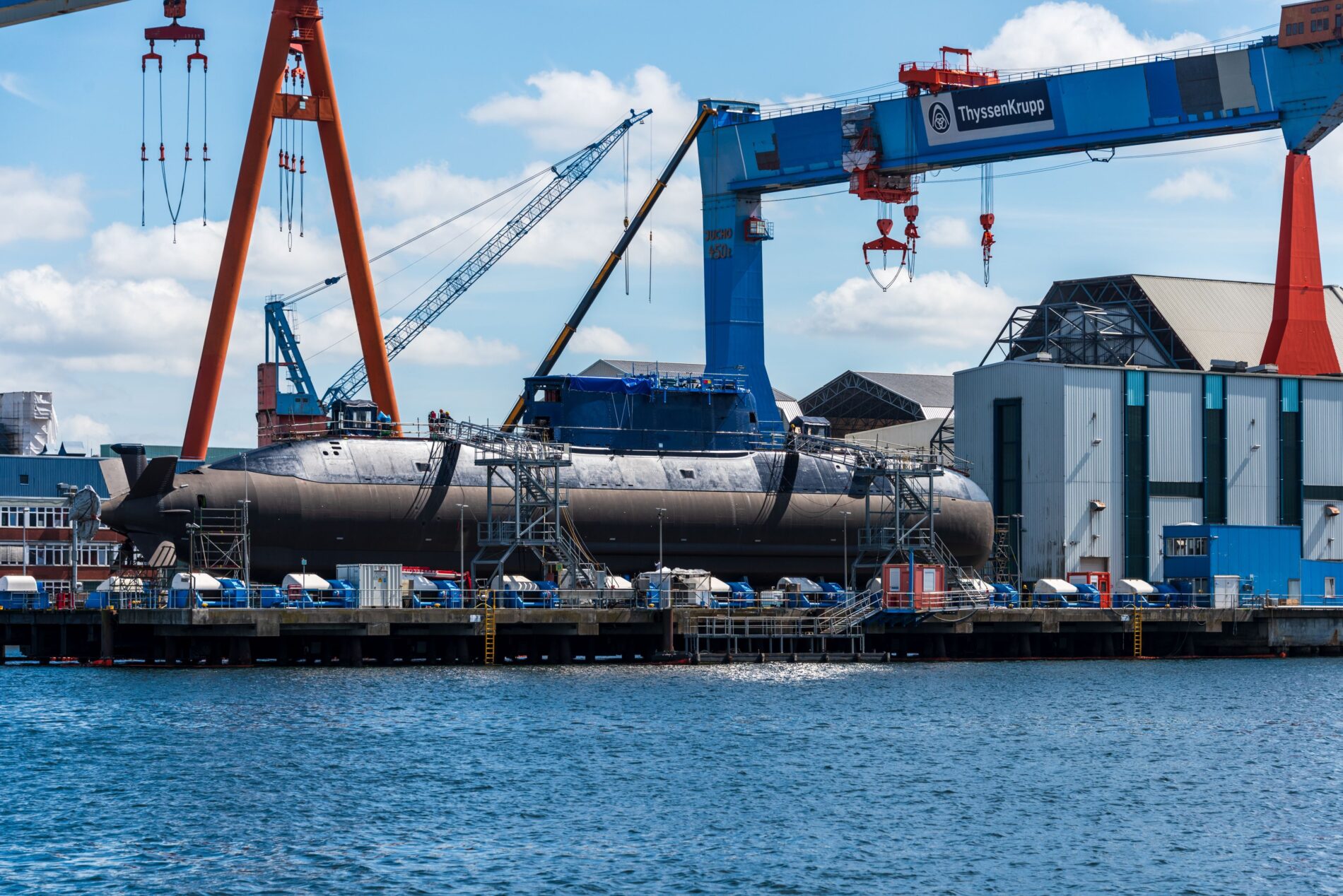
For the company, this move is strategically important because its order backlog has already reached enormous proportions. TKMS is working on, among other things, twelve U212CD-class submarines for Germany and Norway. Furthermore, bids for additional major contracts from other countries are pending. As a result, existing sites are reaching their limits more quickly, while new projects must be prepared in parallel.
Spain is intended to relieve Thyssenkrupp Marine Systems’ production and accelerate projects
The planned collaboration with Navantia could lead to German developments also being built in Spain in the future. This would allow TKMS to diversify its production and simultaneously alleviate bottlenecks in its own production network. For the Spanish side, this opens up additional industrial opportunities in a growing market. Both companies are therefore focusing on closer coordination in construction, development, and potential capacity utilization.
However, this move has not only operational significance but also political implications. On the one hand, the relocation can accelerate the construction of naval projects and thus reduce deadline pressure. On the other hand, parts of the value chain are shifting abroad, which is likely to be closely monitored in Germany. One thing is already clear: Submarine construction will be more widely distributed in Europe because the modernization is growing faster than the existing capacities.
The arms boom is permanently changing Europe’s shipyards
TKMS’s decision fits into a larger trend in the industry. Europe’s defense industry is reorganizing its production because national sites alone can barely handle many large orders anymore. Cross-border cooperation is therefore becoming more important, while traditional manufacturing structures are losing significance. For TKMS, Spain is thus not just an alternative option, but a potential building block for future growth.
It remains to be seen which construction phases will actually be moved to Spain and how far the cooperation will ultimately extend. Nevertheless, the company is sending a clear signal to the market. The arms boom is forcing even established German suppliers to adopt new production models. This is precisely why the potential relocation of submarine construction could become a turning point for European naval shipbuilding.