
According to a study, the number of people employed in German industry fell to a ten-year low of just 6.6 million in 2025. The industrial sector’s share of the overall labor market dropped from 22 percent in 2014 to 19 percent, as the service sector and other areas grew during the same period, the Bertelsmann Foundation announced in Gütersloh on Thursday.
As the foundation explained, the number of new hires in the industrial sector has declined much more sharply in recent years than the number of employment relationships ending. Consequently, far fewer new employees have entered the manufacturing sector than the number of vacancies arising.
This serves as “a warning signal for future employment trends,” stated Luisa Kunze, the foundation’s labor market expert. What is needed, she noted, is “a revival of labor demand in the industrial sector and greater dynamism in the labor market.”
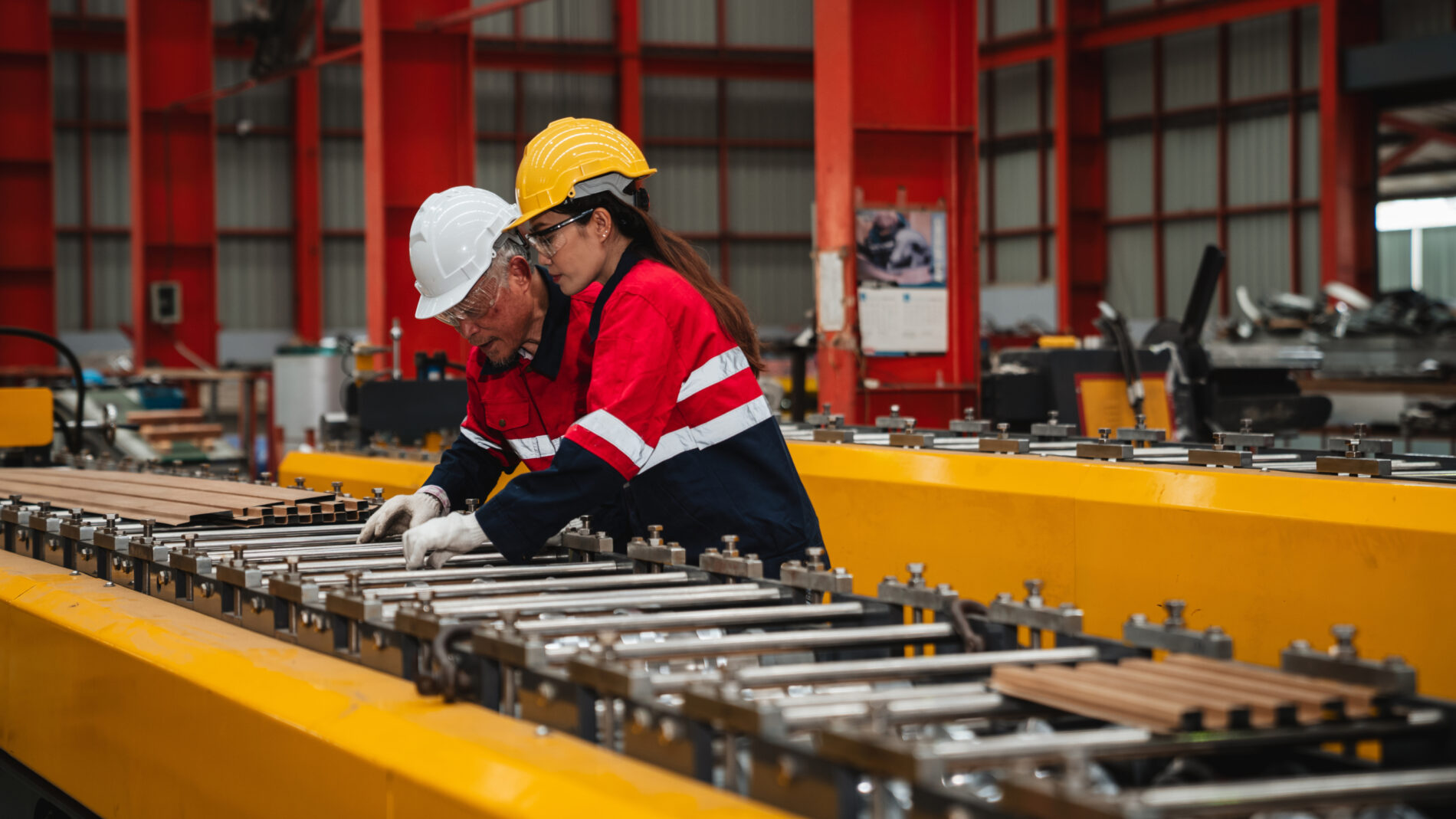
Image: Shutterstock
According to the study carried out by the German Economic Institute (IW) on behalf of the Bertelsmann Foundation, the number of online job advertisements advertised for jobs in industry also fell. This fell by 161,000 advertisements in 2025 compared to 2019 – also due to a declining number of temporary jobs in the manufacturing sector.
At the same time, according to the foundation, the skills requirements within the industry are changing: in classic manufacturing professions such as raw material extraction or metal processing, the curve has been pointing downwards since 2018. However, production jobs that require complex technical knowledge and skills – such as in mechanical, energy or electrical engineering – are still in demand.
According to the foundation, industrial employment in these occupations rose by five percentage points between 2014 and 2024. “The demands of industrial work are changing—a consequence of the digital and ecological transformation,” explained Gunvald Herdin, the foundation’s labor market expert. He urged that affected workers require qualification and further training. “We must not wait until people are already unemployed to take action.”
The study also found that industrial wages rose significantly more slowly than those in other sectors. As a result, the wage premium in the manufacturing sector has roughly halved, the foundation stated. The gap regarding starting wages shrank from 20 percent to 10 percent over the past decade, while the gap for employees with longer tenure fell from over 16 percent to just under 9 percent.
Author: AFP translated by Blackout News
Sources: AFP Press Portal