
Off the coast of Borkum, damage to a rotor blade is delaying the full launch of “He Dreiht”—Germany’s largest offshore wind farm—by several months. On July 22, a section of a rotor blade broke off a Vestas turbine and fell into the North Sea. Consequently, the manufacturer, Vestas, is investigating the cause and inspecting all 192 rotor blades across the 64 turbines as a precautionary measure. EnBW had originally scheduled full commissioning for late summer; the inauguration, previously planned for September 17, is now set to take place in December instead. The detached fragment also posed a temporary hazard to shipping. The project affected is a €2.4 billion undertaking with a capacity of 960 megawatts and long-term power contracts serving major industrial clients.
Rotor blade damage affects a technical world premiere
He Dreiht marks the first commercial-scale use of the Vestas V236-15.0 MW. Each turbine has a capacity of 15 megawatts, with a rotor diameter of 236 meters. The individual rotor blades are around 115 meters long. Consequently, the investigation concerns not just a single component, but the debut of a new offshore capacity class.
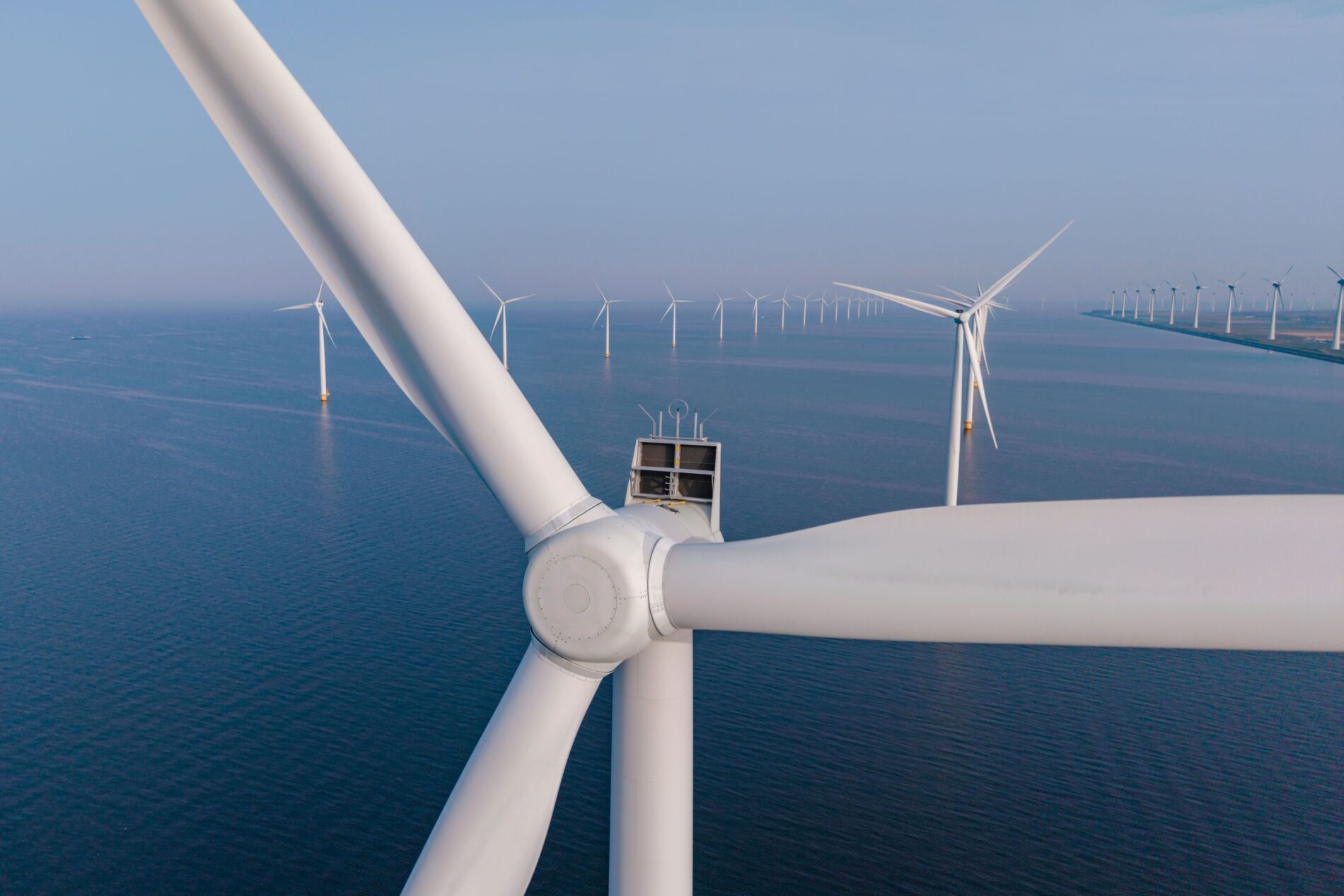
Image: Shutterstock
On August 12, EnBW announced the completion of the installation of all 64 turbines. However, technical and electrical work required for full commissioning was still underway at that time. Vestas was already investigating the damage, while EnBW continued to anticipate full operation by late summer. The postponement to December therefore indicates that the inspection is now directly impacting the project schedule.
Broken-off rotor blade temporarily posed a risk to shipping
The incident also had repercussions beyond the wind farm itself. A fiberglass component measuring approximately 20 meters in length and two meters in width was drifting just below the water’s surface. Consequently, the obstacle was difficult for ships to spot and did not appear on radar. The Federal Police diverted traffic and eventually recovered the piece using the patrol vessel “Bad Düben.”
The rotor blade damage occurred before EnBW had formally accepted the turbines. This is significant from a technical standpoint, given that the manufacturer, Vestas, was responsible for installing the turbines. At the same time, the specific cause remains publicly undisclosed. No figure for the cost of the damage was available either, as Vestas continued its investigations.
Delay Affects Electricity Already Sold Under Long-Term Contracts
“He Dreiht” is expected to generate around 3.6 billion kilowatt-hours of electricity annually. Furthermore, EnBW has already sold a large portion of this output through long-term power purchase agreements. Contract partners include Google, DHL, Evonik, Bosch, Deutsche Bahn, and PASM (a subsidiary of Deutsche Telekom). Consequently, delays could trigger additional costs if these partners are forced to temporarily source the missing electricity elsewhere; the Handelsblatt newspaper explicitly cites potential extra costs as a result of the postponement.
The wind farm is located approximately 85 kilometers northwest of Borkum and covers an area of about 63 square kilometers. EnBW developed the project without state subsidies under the Renewable Energy Sources Act (EEG), relying instead on long-term power contracts to secure a significant share of its commercial output. The damage to the rotor blades thus affects one of Germany’s key offshore projects just before it was due to enter full operation. Vestas is also under particular scrutiny, as “He Dreiht” marks the first major commercial deployment of the company’s 15-megawatt turbine platform.
Author: Blackout News
Sources: Golem (04.09.26) – Handelsblatt (04.09.26)