
The Federal Government is planning a major shift in course regarding the heating law. Federal Minister of Economics Katherina Reiche has submitted a new draft for inter-ministerial coordination. It eliminates key requirements of the existing Building Energy Act—most notably, the mandate for new heating systems to utilize 65 percent renewable energy. The planned phase-out of oil and gas heating systems starting in 2045 is also set to be scrapped. Consequently, property owners could continue to install fossil-fuel-based heating systems. The government anticipates financial relief amounting to billions. Critics, however, warn of rising CO₂ emissions and jeopardized climate targets. (welt: 07.05.26)
New Heating Law Prioritizes Blending Over Bans
The draft legislation replaces strict mandates with the gradual blending of climate-friendly fuels. This “bio-staircase” begins in 2029 with a ten percent green component in natural gas or heating oil. From 2030, this figure is set to rise to 15 percent. Thirty percent is targeted for 2035. From 2040 onwards, a maximum of 40 percent fossil fuels would remain permissible.
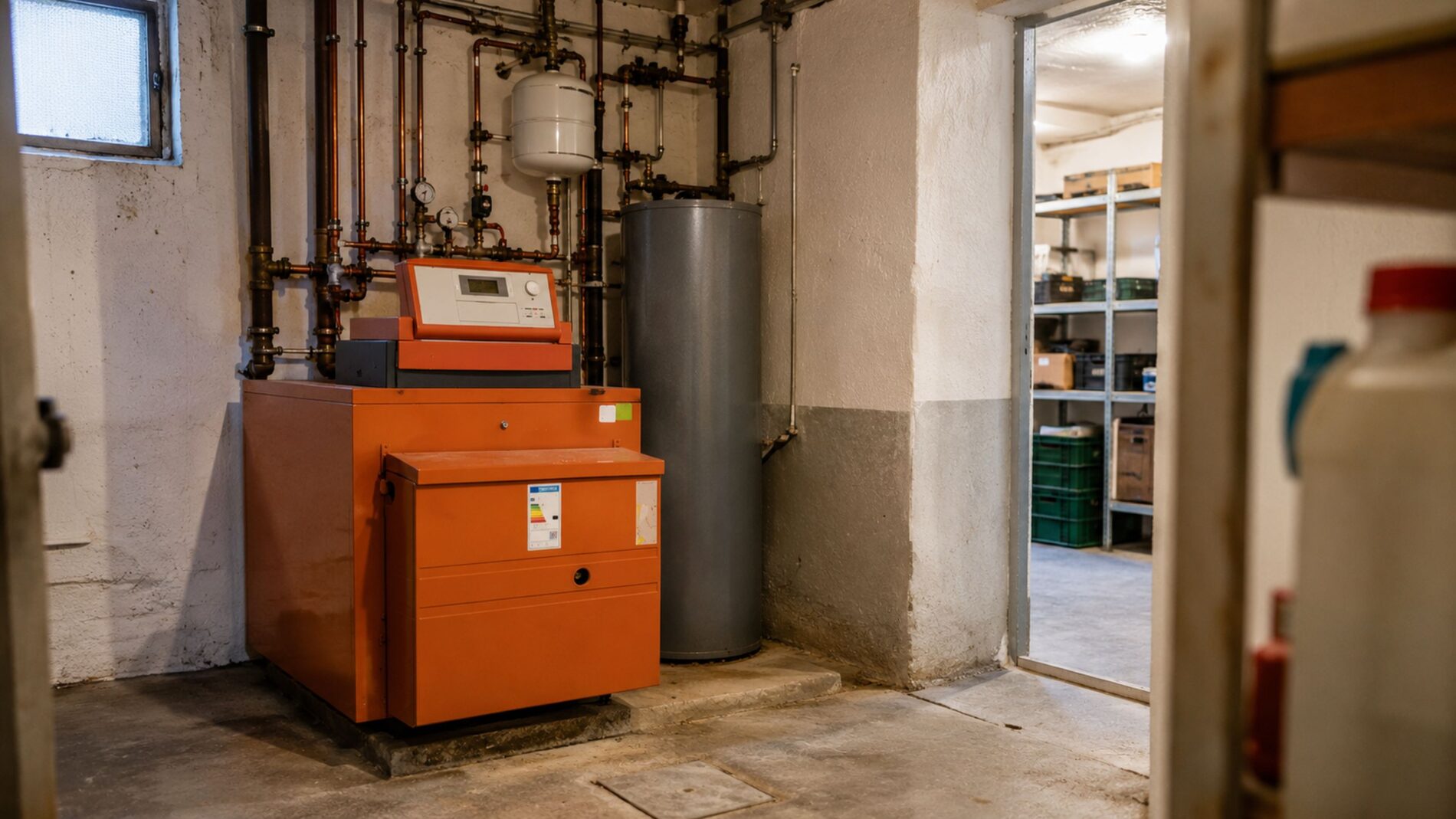
Consequently, the installation of new gas and oil heating systems remains possible. Furthermore, the existing Section 72 is being eliminated; it previously mandated the phasing out of fossil-fuel heating systems by the end of 2044. At the same time, older constant-temperature boilers could once again be permitted. The Ministry of Economic Affairs cites the high complexity and lack of practical feasibility of the previous regulations as the reasons for these changes.
Homeowners Set to Save Billions
The Federal Government anticipates significant financial relief. Citizens are expected to save approximately five billion euros annually, while the draft legislation projects additional savings of 2.3 billion euros for businesses. Homeowners, in particular, stand to benefit, as expensive mandatory retrofits are being eliminated. Thus, the new heating legislation would shift many renovation decisions back into the hands of individual households.
The new approach also directly affects tenants. In the future, landlords and tenants are to split the additional costs associated with CO₂ pricing, biogas, and grid usage fees equally. This provision is intended to limit financial burdens. The SPD had strongly advocated for this measure. The Tenants’ Association welcomes this protective mechanism; however, homeowners’ associations criticize the new cost risks it entails.
Climate Targets at Greater Risk
Climate researchers foresee significant risks. According to calculations by the Potsdam Institute, an additional 16 million tons of CO₂ could be generated by 2030. By 2045, this figure could even reach approximately 230 million tons. Consequently, the building sector could miss its climate targets even more significantly.
At the same time, uncertainty is growing within the heating industry. Manufacturers of heat pumps and providers of climate-friendly technologies fear a decline in demand. The gas industry, however, welcomes the technology-neutral approach. The Heating Act is therefore becoming a central point of contention in energy policy. The crucial factor now will be how the Cabinet and the Bundestag modify the draft legislation.