
A solar power system with a total capacity of 1 gigawatt entails significant raw material requirements, regardless of whether it is constructed as a solar park or as a collection of many smaller rooftop installations. Construction, operation, and decommissioning require polysilicon, aluminum, silver, glass, cabling, inverters, transformers, and mounting systems. The manufacturing phase is particularly critical, as most of the key components originate in China. There, the production of many intermediate goods relies heavily on a fossil-fuel-based electricity mix. Consequently, substantial CO₂ emissions are generated long before the facility begins supplying electricity.
Raw Material Demand Arises Before the First Solar Power Is Generated
For 1 gigawatt of photovoltaic capacity, approximately 2,000 to 3,400 tons of polysilicon are required, depending on the cell technology used. Furthermore, the system requires large quantities of aluminum for frames and mounting structures. Depending on the specific design, more than 10,000 tons of aluminum may be needed.
Silver also remains a crucial component of many solar cells. While modern cell technologies have significantly reduced consumption, raw material requirements often still amount to approximately 10 to 12 tons of silver per gigawatt.
China Dominates Production and Increases CO₂ Emissions
CO₂ emissions are generated primarily during the manufacturing process. According to the International Energy Agency, China accounts for more than 80 percent of the global production capacity for polysilicon, wafers, cells, and modules. Furthermore, in 2023, nearly 95 percent of all new PV production capacity originated in China.
This has a direct impact on the overall carbon footprint. Fraunhofer estimates the carbon footprint of Chinese glass-film modules at approximately 810 kilograms of CO₂ equivalents per kilowatt of installed capacity. For a 1-gigawatt facility, this translates—mathematically—to roughly 810,000 tons of CO₂ equivalents attributable solely to module manufacturing.
Inverters Increase Resource Requirements and Replacement Needs
A 1-gigawatt solar facility requires inverters with an AC output capacity of approximately 800 to 1,200 megawatts. This applies to large-scale solar parks just as it does to numerous smaller installations. However, in systems featuring a more decentralized layout, the sheer number of individual devices required increases significantly.
Inverters contain steel, aluminum, copper, printed circuit boards, semiconductors, and plastics. Their operational lifespan is frequently shorter than that of solar modules. Consequently, their use generates additional costs, replacement part requirements, and electronic waste throughout the operational life of the solar facility.
Recycling Reduces Raw Material Demand, but Doesn’t Solve Everything
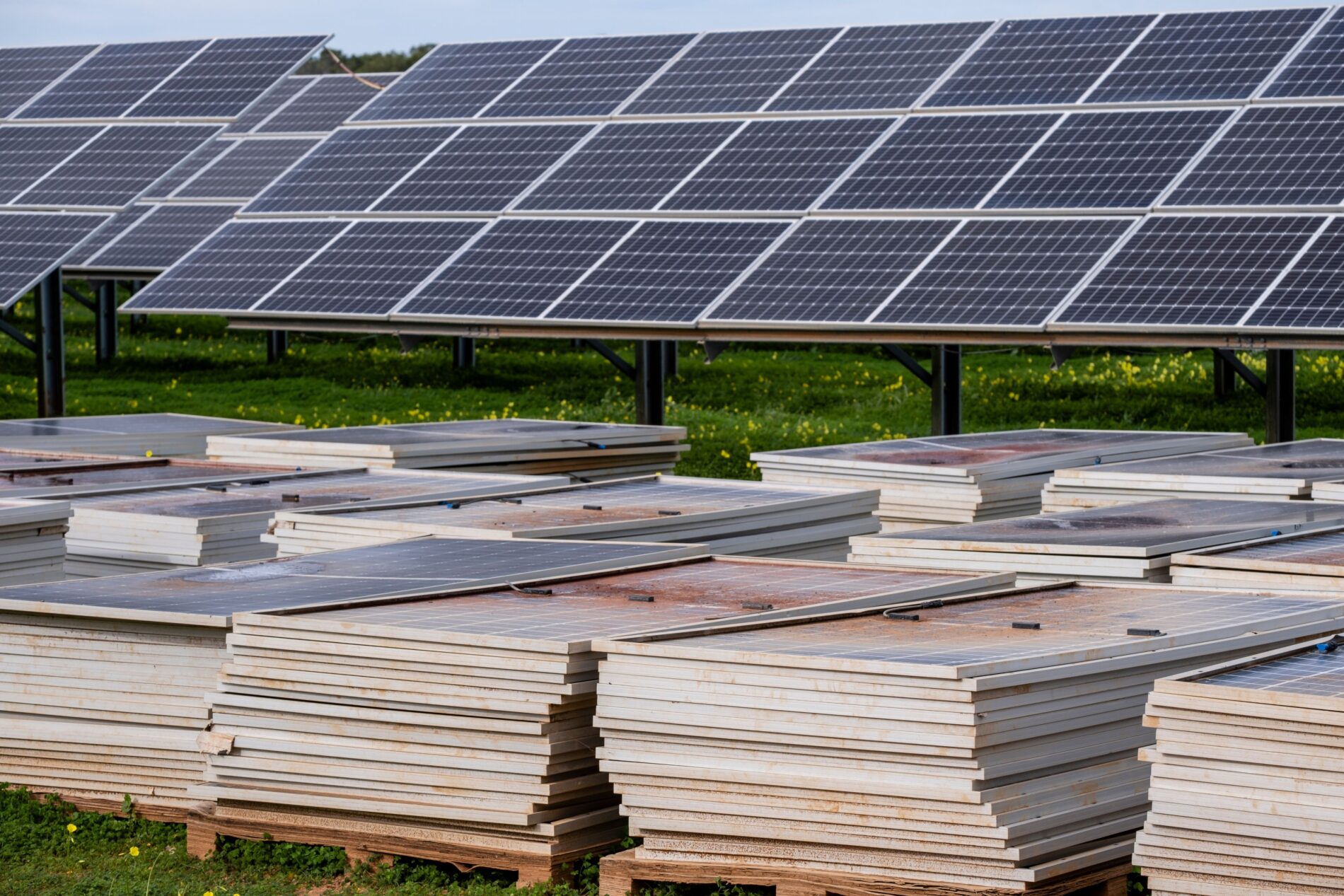
At the end of a 1-gigawatt facility’s lifespan, roughly 50,000 to 70,000 tons of module mass are ready for recovery. Today, typically between 80 and over 95 percent of this material can be reclaimed. Glass, aluminum, and copper, in particular, offer excellent recycling prospects.
However, EVA films, backsheets, adhesives, and contaminated fine fractions remain problematic. Consequently, several thousand tons of difficult-to-recover residual materials may still accumulate. Furthermore, recycling itself consumes energy—requiring several gigawatt-hours of electricity, depending on the specific process used.
Solar Power Remains Low-Emission, but Not Without Consequences
Criticism regarding material usage therefore raises a valid point. Solar power is neither raw-material-free nor climate-neutral in its production. Moreover, the manufacturing of many upstream components remains dependent on fossil fuels.
Nevertheless, over its entire lifespan, photovoltaics generally remain significantly lower in emissions than coal, oil, or gas. The decisive difference lies in the fact that they operate without fuel. An honest assessment must therefore consider raw material requirements, production in China, the relatively short lifespan of components, recycling, and climate benefits in conjunction. (KOB)