
During the largest disaster response exercise in the Grafschaft Bentheim district on October 10, 2026, a fundamental prerequisite for successful rescue operations failed intermittently. While approximately 1,000 emergency personnel were simulating a hazardous materials incident, a forest fire, and severe flooding, the radio network collapsed for a time. Consequently, fire departments, emergency medical services, and disaster response units were unable to maintain continuous communication via the designated radio channels. The outage revealed a significant vulnerability in managing major disaster scenarios, as reliable radio communication is essential for safely coordinating rescue teams and providing timely warnings of new hazards. Officials resolved the issue during the exercise; however, in a real-world disaster response, similar communication failures could endanger lives.
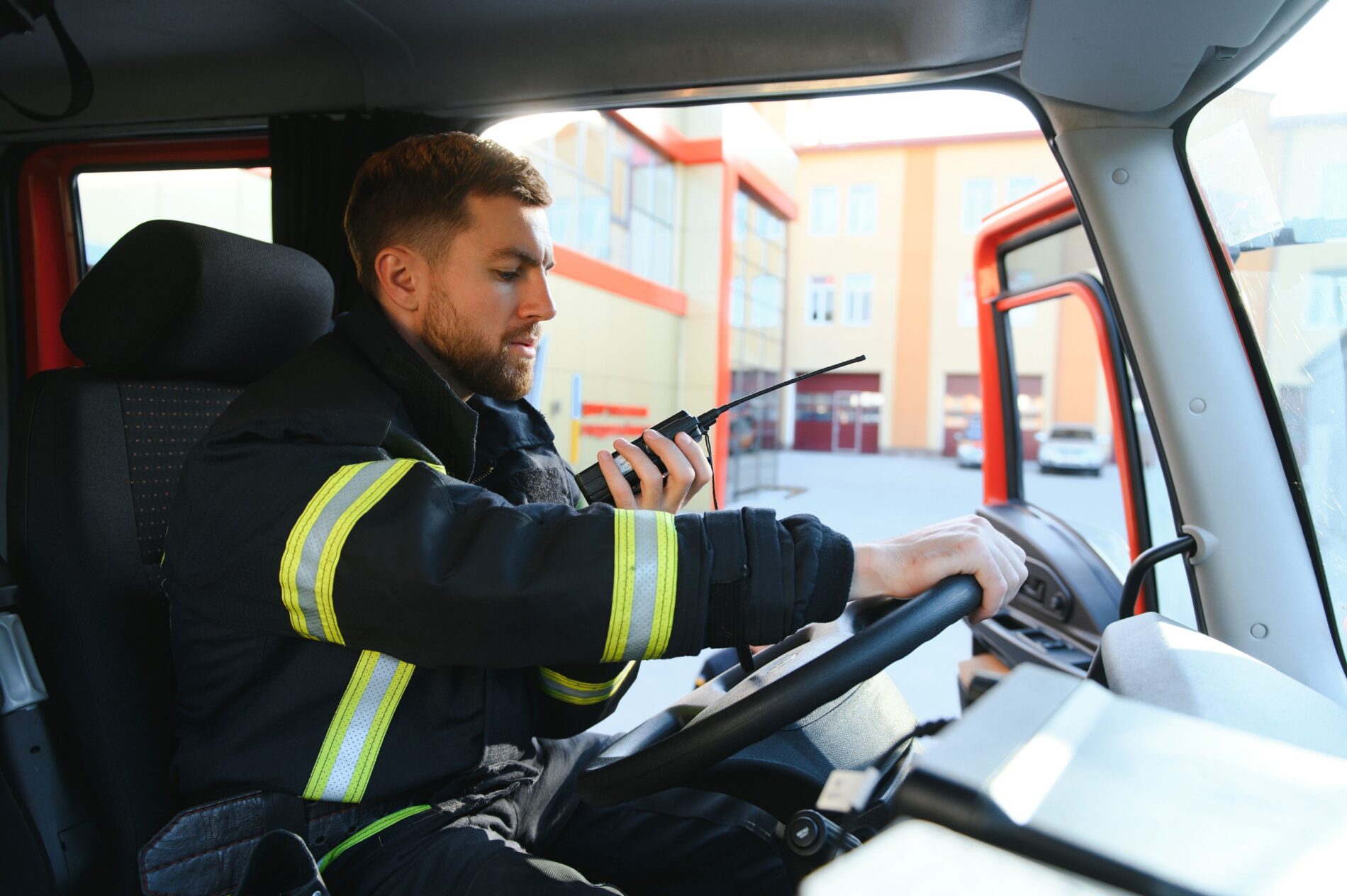
Image: Shutterstock
Radio network fails precisely when operational demands are high
A functioning radio network is an essential part of the basic equipment for every fire department and emergency medical service. Incident commanders must be able to reach their personnel at any time, request reinforcements, and relay hazard warnings. Yet, during the large-scale exercise, this fundamental requirement was not met at times. The heavy operational load pushed radio communications to their limits, revealing a weakness under the very conditions for which the system is needed.
The incident commander told NDR: “We reached the limits of our radio system’s capacity.” This is particularly critical because disasters often affect multiple locations simultaneously. Without reliable communication, vital information may arrive late or not at all. This creates a risk of flawed decisions, delayed rescue operations, and additional dangers for emergency personnel and those affected.
Three disaster scenarios strain communication systems
The large-scale exercise, codenamed “Vechtekater,” was designed to test the operational capabilities of emergency response organizations under realistic conditions. In Bad Bentheim, emergency personnel simulated a hazardous materials incident involving a train, requiring them to evacuate the train and treat numerous casualties. Additionally, a helicopter transported simulated casualties to a hospital in Nordhorn. Reliable communication is crucial in hazardous materials incidents, as dangerous substances can spread rapidly.
Simultaneously, in Itterbeck, emergency crews battled a large-scale vegetation fire, with helicopters providing aerial firefighting support. In Nordhorn, other units practiced flood protection measures following heavy rainfall, transporting sandbags by boat and erecting protective barriers. All three scenarios therefore required close coordination among the participating organizations.
Around 1,000 emergency personnel—but the radio network fails to hold up
Fire departments, the police, the Federal Agency for Technical Relief (THW), the Bundeswehr, and various emergency response organizations participated in the large-scale exercise. They were joined by units from North Rhine-Westphalia and emergency personnel from the Netherlands. Meanwhile, the disaster management staff and the technical operations command worked from the district administration building in Nordhorn. The district subsequently gave a positive assessment of the cross-border cooperation; however, this organizational success could not offset the communication problems that were identified.
Emergency personnel were not informed of the specific scenarios beforehand, ensuring conditions were as realistic as possible. The simulated incidents also resulted in road closures and traffic disruptions, though there was no actual danger to the public. Nevertheless, the exercise demonstrated that even a large number of highly trained emergency responders rely on a reliable communication infrastructure. If radio communication fails, even a professionally organized command unit can only perform its tasks to a limited extent.
Radio networks must function reliably, especially during major disasters
The district now intends to investigate the technical difficulties in greater detail and improve its communication structures. However, no comprehensive public analysis of the failures is available yet, nor has the exact extent of the radio outages been conclusively documented. Although officials were able to resolve the disruption during the exercise, the temporary overloading of the communication system remains the critical technical finding.
A radio network must function not only during routine operations but—crucially—under conditions of exceptionally high demand. In the event of a real-world train crash, forest fire, or severe flood, minutes can determine whether lives are saved or lost. The large-scale exercise in Grafschaft Bentheim has therefore revealed a clear need for improvement. If 1,000 emergency responders cannot communicate reliably with one another during simultaneous disaster situations, a fundamental prerequisite for effective disaster response is not being met.
Author: Blackout News
Sources: NDR (10.10.26) – EmsVechteWelle (10.10.26) – Landkreis Grafschaft Bentheim (08.10.26) – Stadt Bentheim (08.10.26)