
Swiss energy policy supports the expansion of wind power with substantial state subsidies, whereas new nuclear power plants remain banned. ETH professor Annalisa Manera criticizes this unequal treatment of nuclear energy and questions standard cost comparisons. Her criticism takes on new significance in October 2026, as Switzerland once again debates the construction of nuclear power plants. On October 6, an alliance submitted more than 131,800 signatures opposing the lifting of the ban on new construction. This threatens to politically block a technology capable of reliably supplying electricity even in winter. At the same time, taxpayers and electricity customers are footing the bill for the state-subsidized expansion of weather-dependent energy sources.
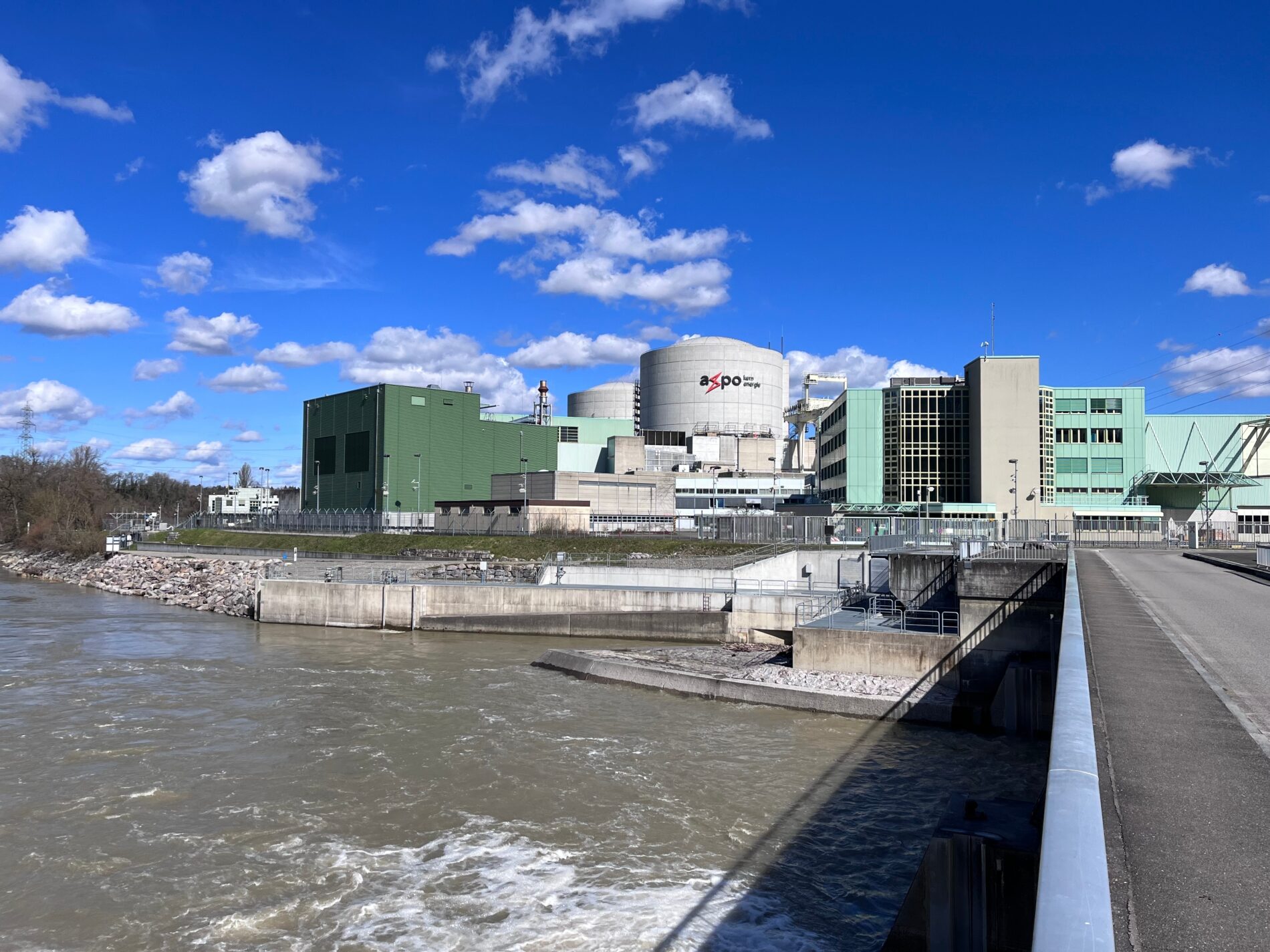
Image: Shutterstock
Nuclear Power Plants Without Subsidies – Wind Power Receives Up to 60 Percent of Investment Costs
This disparity becomes particularly evident when examining Swiss subsidy policy. Under the Energy Act, new wind turbines are eligible for investment grants covering up to 60 percent of their recognized construction costs. Additionally, project developers can receive subsidies covering up to 40 percent of recognized planning costs. A sliding market premium is available as an alternative to the investment grant. In contrast, no comparable support program exists for new nuclear power plants.
ETH Professor Annalisa Manera criticizes this unequal treatment with a striking statement: “If a nuclear power plant were subsidized as heavily as wind turbines, it could be built almost for free.” Her remark illustrates the extent to which government payments can alter a power plant’s economic viability from the operator’s perspective. However, this does not eliminate the investment costs; instead, the financial burden is shifted to the public sector. Precisely for this reason, policymakers must explain why they provide financial support to one technology while denying comparable funding opportunities to another.
Government support influences which power plants actually get built
The varying regulations shape investment conditions well before ground is even broken. Wind power projects can factor in substantial government support, whereas investors in new nuclear power plants must contend with high construction costs and financing risks. Consequently, a facility’s economic prospects are not determined solely by its technical performance; political decisions regarding subsidies also influence which projects investors choose to pursue.
This disparity also makes it difficult to meaningfully compare different electricity generation technologies. A subsidized wind farm appears more economically attractive to its operator because the state covers a portion of the costs. In contrast, a nuclear power plant must privately finance higher investment costs without such support. However, treating them equally would not automatically prove that new reactors are cheaper than wind power plants. Such a comparison would require analyzing all costs, subsidies, and electricity output volumes over the respective lifespans of the facilities.
Nuclear energy supplies electricity even when wind and solar power fail
Another crucial difference lies in the availability of electricity generation. Nuclear power plants generate electricity largely independently of weather conditions and can provide high output levels over extended periods. Wind turbines, on the other hand, only supply electricity when wind conditions are sufficient. Therefore, a power system with an increasing share of weather-dependent generation requires additional flexibility, reserves, and—where necessary—storage capacity.
These requirements entail additional costs that are easily overlooked when comparing individual power plants. Storage systems must be financed, power grids adapted, and extended gaps in generation bridged. While nuclear power plants also require maintenance reserves and contingencies for unplanned outages, their predictable electricity generation offers a different systemic value than weather-dependent power input. A fair cost comparison must therefore consider the entire electricity supply system rather than stopping at the generation costs of individual facilities. Despite billions in subsidies, security of supply remains a challenge
In early October, the Swiss Federal Electricity Commission reported that reservoir levels stood at just 74 percent. At the same time, gas storage facilities in Northwest Europe were only 66 percent full. Although the authority considers current security of supply to be assured, price risks and import dependencies persist for the winter. This highlights the fact that expanding subsidized generation facilities alone does not guarantee a secure electricity supply at all times.
Nevertheless, a broad political alliance seeks to prevent Switzerland from even authorizing new nuclear power plants. Opponents point to construction costs, waste disposal issues, and safety risks. While these objections warrant objective scrutiny, they do not automatically justify the application of different economic standards. According to a study by ETH Zurich, new reactors would often fail to be competitive given current European construction costs. Precisely for this reason, policymakers must evaluate all technologies based on consistent criteria rather than favoring specific forms of generation through subsidies.
An energy policy that applies double standards ultimately burdens electricity customers
Manera’s criticism thus highlights a fundamental contradiction in state energy policy. On the one hand, the state facilitates investment in wind power through substantial subsidies and market premiums. On the other, comparable support mechanisms are lacking for new nuclear power plants, even though existing reactors secure a vital part of Switzerland’s electricity supply. Anyone who criticizes the economic viability of nuclear energy in isolation under these conditions overlooks a crucial political factor.
The decisive question, therefore, is not which technology the state favors, but rather which combination delivers electricity reliably and affordably in the long term. This encompasses all investments, financing costs, grid reinforcements, storage facilities, reserves, and waste disposal costs. Any support scheme must demonstrate its overall economic benefit and must not simply shift costs from the operator to the general public. As long as policymakers apply different standards, competition between wind power and nuclear energy remains politically distorted. Ultimately, it is taxpayers and electricity customers who bear the financial consequences.
Author: Blackout News
Sources: SRF (06.10.26) – Eidgenössische Elektrizitätskommission ElCom (06.10.26) – LaRegione (22.09.26) – Tagesanzeiger (13.07.25)