
A significant chapter of Hessian industrial history will come to an end in Offenbach in 2026, as printing press manufacturer Manroland Sheetfed ceases regular business operations on June 1. The company had initiated protective shield proceedings in March after the situation was exacerbated by heavy losses and a sharply shrinking market for new sheet-fed offset presses. The site was hit particularly hard by the downturn in its important business with China, resulting in the loss of jobs for around 750 employees. Production wound down at the end of May, while the final winding-up process and potential sales of individual business units are set to continue until the end of the year.
Insolvency Hits a Long-Established Industrial Site
For decades, the site on Mühlheimer Straße has been synonymous with mechanical engineering, exports, and skilled labor. Now, the production of new printing presses there is coming to an end. Furthermore, only a skeleton crew remains at the facility to handle outstanding orders and safeguard parts of the business.
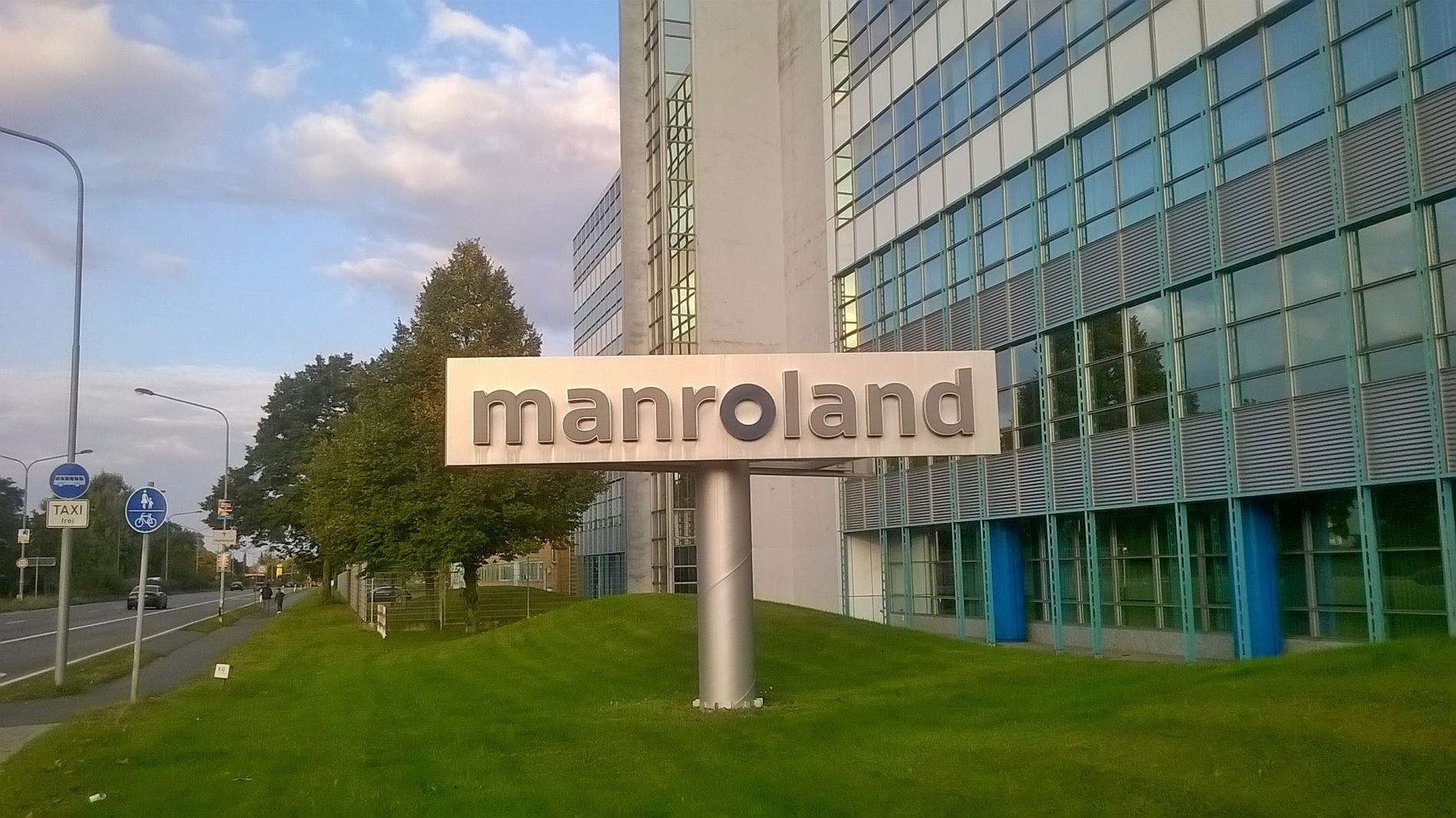
Image: Offenbacherjung, CC BY-SA 4.0, via Wikimedia Commons

Economic indicators were already showing a dramatic trend prior to the decision. A loss of €43.2 million is projected for 2025. At the same time, print shops worldwide were ordering fewer new systems as investments in traditional printing technology declined in importance.
Manroland loses its industrial base after a long crisis
However, the crisis did not emerge overnight. The former Manroland AG filed for insolvency as early as 2011. Subsequently, investors separated the web-offset and sheet-fed offset divisions, while the Offenbach-based unit continued operations under the name Manroland Sheetfed.
This rescue bought the plant time, but not lasting security. The workforce shrank over the years. Furthermore, the printing market changed more rapidly than the machinery manufacturer could tap into new growth markets.
From Offenbach to global markets
The company’s roots date back to 1871. Louis Faber and Adolf Schleicher founded a business producing high-speed lithographic presses. Shortly thereafter, Offenbach developed into a hub supplying printing technology to many countries.
The “Roland” name gained international prominence starting in 1911. Later, MAN Roland—and subsequently Manroland—shaped the market for large-scale printing presses. Consequently, the closure affects not just a single facility, but also a piece of industrial history in the Rhine-Main region.
Consequences extend beyond the plant itself
A difficult phase is now beginning for the workforce. Many of the employees possess specialized knowledge in mechanical engineering; consequently, much depends on whether other industrial companies can absorb these skilled workers.
Suppliers and service providers are also feeling the impact of the closure. A major machinery manufacturer generates demand for contracts, maintenance, logistics, and technical services. Furthermore, Offenbach is losing a visible anchor of its industrial past.
Author: Blackout-News
Sources: Frankfurter Rundschau (10.06.26) – Gießener Allgemeine (09.06.26) – Langley Holdings (03.03.26) – PrintCAN (22.04.26)