
For years, Russia has been pushing for the construction of a new pipeline to China in order to supply its ally with natural gas worth billions of euros. However, even during his visit to Beijing on Wednesday, Russian President Vladimir Putin was unable to conclude a final agreement for the “Power of Siberia 2” pipeline. While both sides have reached a “fundamental understanding,” some details and the timeline remain unclear, said Kremlin spokesman Dmitry Peskov.
50 Billion Cubic Meters of Natural Gas
The 2,600-kilometer pipeline route is planned to run from the Yamal Peninsula in Northern Siberia, through Mongolia, to China. The pipeline could transport approximately 50 billion cubic meters of natural gas per year—equivalent to about twelve percent of China’s estimated current total gas consumption. This project has become even more critical for Russia since Europe began importing significantly less Russian gas in response to Russia’s war of aggression against Ukraine. Furthermore, the Nord Stream pipelines in the Baltic Sea—which were used to transport Russian gas to Germany—were severely damaged in an attack in September 2022 and remain out of operation. Nevertheless, the reserves on the Yamal Peninsula continue to supply the EU via shipments of liquefied natural gas (LNG), the importation of which is not scheduled to be banned until 2027.
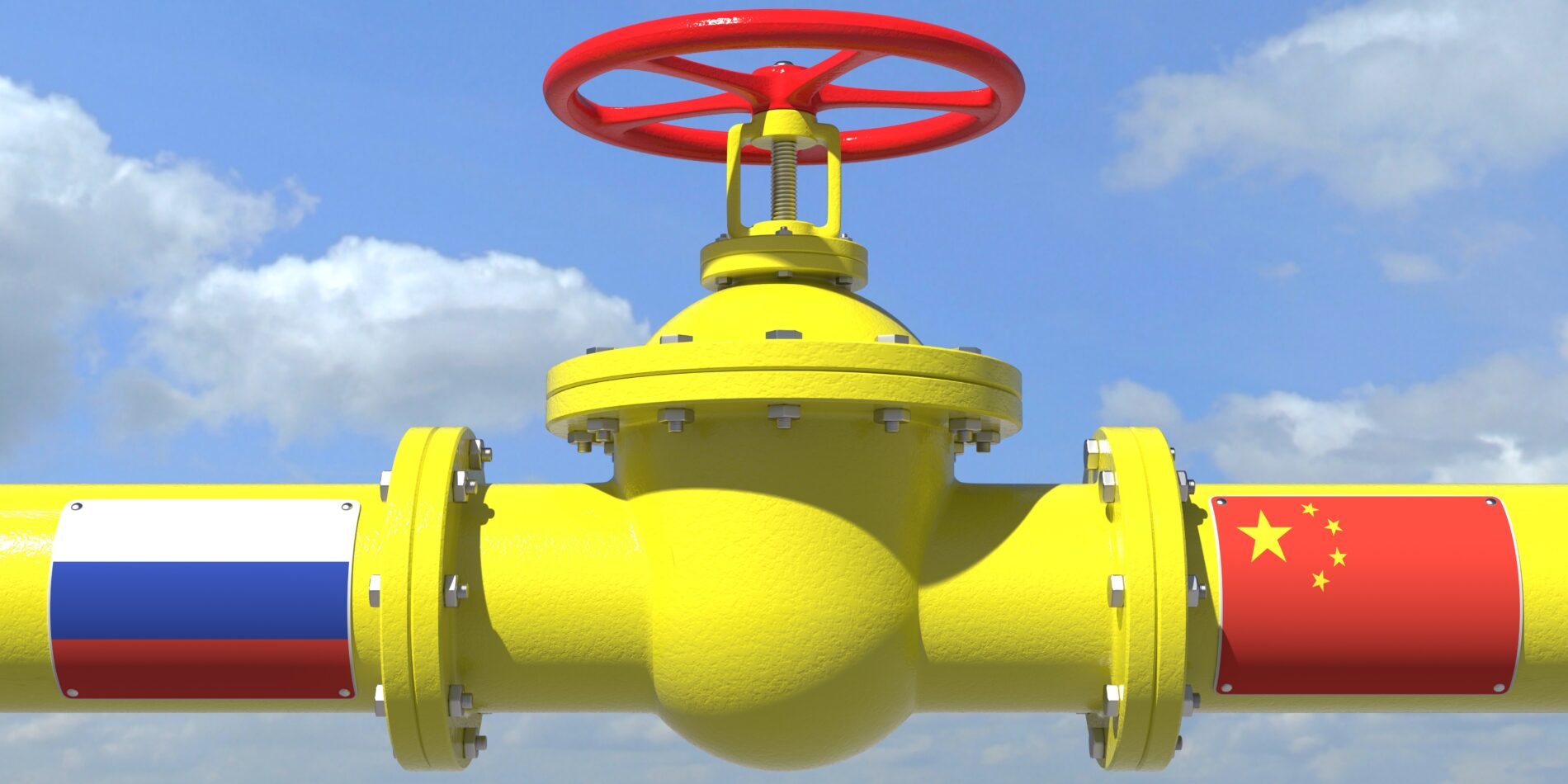
“For Russia, this is about a strategic lifeline, having lost the majority of its European gas market,” says Alexander Korolev, a political scientist at UNSW Sydney in Australia. “For China, the pipeline is about energy security and influence. It diversifies supply.” This makes the People’s Republic less dependent on seaborne shipments—which are susceptible to bottlenecks, such as those currently resulting from the blockade of the Strait of Hormuz amidst the war involving Iran.
A first gas pipeline from Russia to China, “Power of Siberia 1,” has already been operational since 2019 and has a capacity of approximately 38 billion cubic meters per year.
Stalled Progress
Despite numerous efforts by Moscow—which, due to the war in Ukraine, is in urgent need of revenue—Beijing remains hesitant to realize the project, which Putin first proposed back in 2006. Construction has yet to begin, even though the Russian gas giant Gazprom signed a legally binding 30-year supply contract with the China National Petroleum Corporation (CNPC) last year. The negotiations are not public, but the price of the Russian gas is almost certainly a sticking point. China’s stance on the project for years has been: “If it works out, great; if not, we can manage without it,” says Alexei Gromov, head of the Institute for Energy and Finance in Russia.
New Momentum?
That may now have changed. Moscow hopes that energy prices—driven up by the war in the Gulf region and the closure of the Strait of Hormuz—could make the pipeline more attractive to Beijing. “The current crisis could boost the prospects for the construction of the ‘Power of Siberia 2’ pipeline,” says Natasha Kuhrt, a lecturer in International Peace and Security at King’s College London. However, she argues that “all the cards are in China’s hands,” and that Beijing “will be unyielding when it comes to price,” noting that the construction of the first pipeline, “Power of Siberia 1,” took around twenty years to complete.
Deepening Ties
Analysts attribute China’s reticence, in part, to Beijing’s desire to avoid becoming overly dependent on a single source. Yet, since the West imposed sanctions on Russia, Beijing has been purchasing Russian oil—which has become cheaper as a result—in large quantities. Furthermore, in the first three months of the year, the People’s Republic imported natural gas from Russia worth approximately two billion euros—three times the amount imported during the same period in 2022.
Russian energy sales to China constitute the “most stable” element of the political, military, and economic relationship that has developed between the two nations in recent years, says Korolev. Should the “Power of Siberia 2” pipeline indeed be built, it would further reinforce the mutual interdependence between two of the world’s major powers. This would also send a signal to the West, the political scientist is convinced: namely, that Russia “is not isolated and remains capable of successfully implementing major infrastructure projects.”
AFP translated by Blackout News