
On the late afternoon of August 1, 2026, a photovoltaic system on a single-family home in Lachendorf caught fire. A passerby noticed smoke and open flames on the roof and called emergency services. By the time the fire department arrived, the area of the system was already burning intensely, and the fire threatened to spread to the roof structure. Emergency crews halted the spread, ensuring the house remained habitable and no one was injured. Nevertheless, police estimate the damage at around 50,000 euros. Preliminary findings suggest a technical defect may have triggered the fire; the exact cause is still under investigation.
Early emergency call prevents total roof structure fire
The crucial tip-off did not come from inside the building, but from a passerby in the neighborhood. He spotted the fire developing on the roof early enough and alerted the dispatch center. Consequently, firefighting operations began before the blaze could take hold of the entire roof structure.
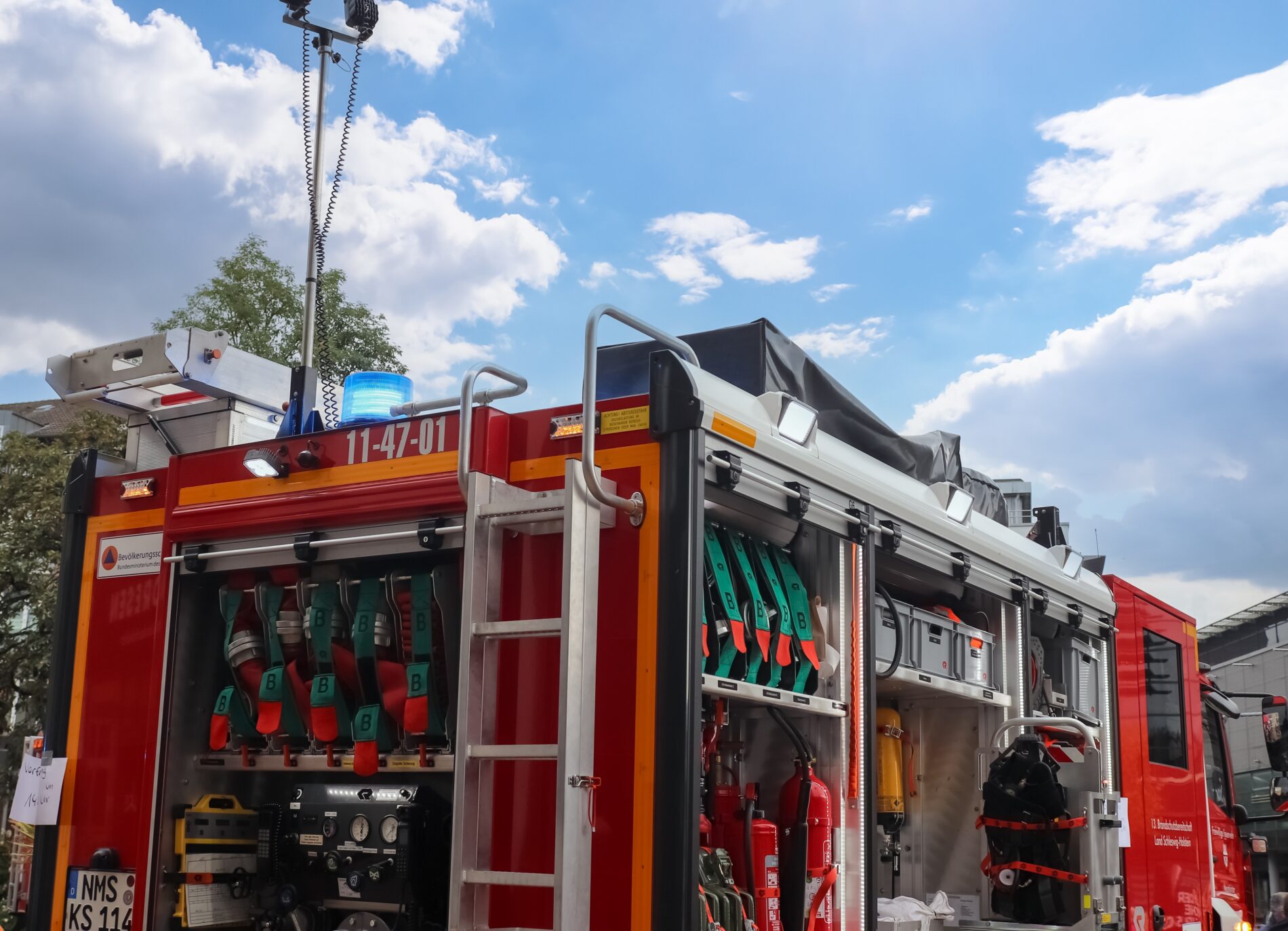
Representative image: Shutterstock
While the emergency response prevented the roof structure from burning down completely, the material damage was nonetheless substantial. The estimated cost of around 50,000 euros reflects the scale of the fire, even though it was confined to a limited section of the roof. At the same time, the residents were able to remain in their home once the operation concluded.
Photovoltaic Fire: Investigators Must Determine the Ignition Path
Police have so far narrowed down the suspected point of origin to the area of the solar array. However, this does not yet prove that one of the modules itself failed; cables, plug connections, junction boxes, or other electrical components could also be the source of the fire.
This distinction is crucial for properly classifying the photovoltaic fire. The Fraunhofer ISE identifies contact issues as a potential cause of series arcs. Faulty connections can generate temperatures high enough to ignite adjacent materials. Consequently, investigators must reconstruct the path of the damage rather than simply attributing the fire to the solar installation as a whole.
Defective cables and inverters as potential sources of fire
Other incidents from 2026 illustrate the wide range of possible origins for technical malfunctions. In Bielefeld, according to police reports, a cable belonging to a small photovoltaic system caught fire. In Wehr, by contrast, an inverter apparently suffered a burnout, though no open flames developed.
The photovoltaic fire in Lachendorf was confined to the roof area thanks to early detection and a prompt firefighting response. Nevertheless, the fire caused building damage running into the five-figure range and necessitated a specialized analysis of the cause. Only the results of this analysis will reveal which component failed and whether installation, materials, or aging played a role.
Author: Blackout News
Sources: Celle heute (02.08.26) – Celler Presse (02.08.26)