
A crucial aspect of Europe’s pharmaceutical supply will be determined in June 2026 in the Austrian town of Kundl. It is there that Sandoz operates Europe’s last major plant capable of manufacturing penicillin entirely—from raw material to finished medication. The company accuses Chinese producers of engaging in state-subsidized price dumping for amoxicillin active ingredients; consequently, Sandoz prepared an anti-dumping complaint for the EU Commission in March. At the same time, low reimbursement rates and rigid tender processes are exacerbating the Tyrolean site’s cost disadvantage vis-à-vis China. A further drop in prices could jeopardize Europe’s last complete production chain and increase reliance on China.
Penicillin from Kundl starts with the active ingredient itself
The plant first produces the basic building block 6-APA. This serves as the basis for several antibiotics, including the frequently prescribed amoxicillin. Sandoz also processes the active ingredients on-site into tablets, oral solutions, and other dosage forms. This end-to-end production distinguishes Kundl from facilities that source intermediate products from Asia.
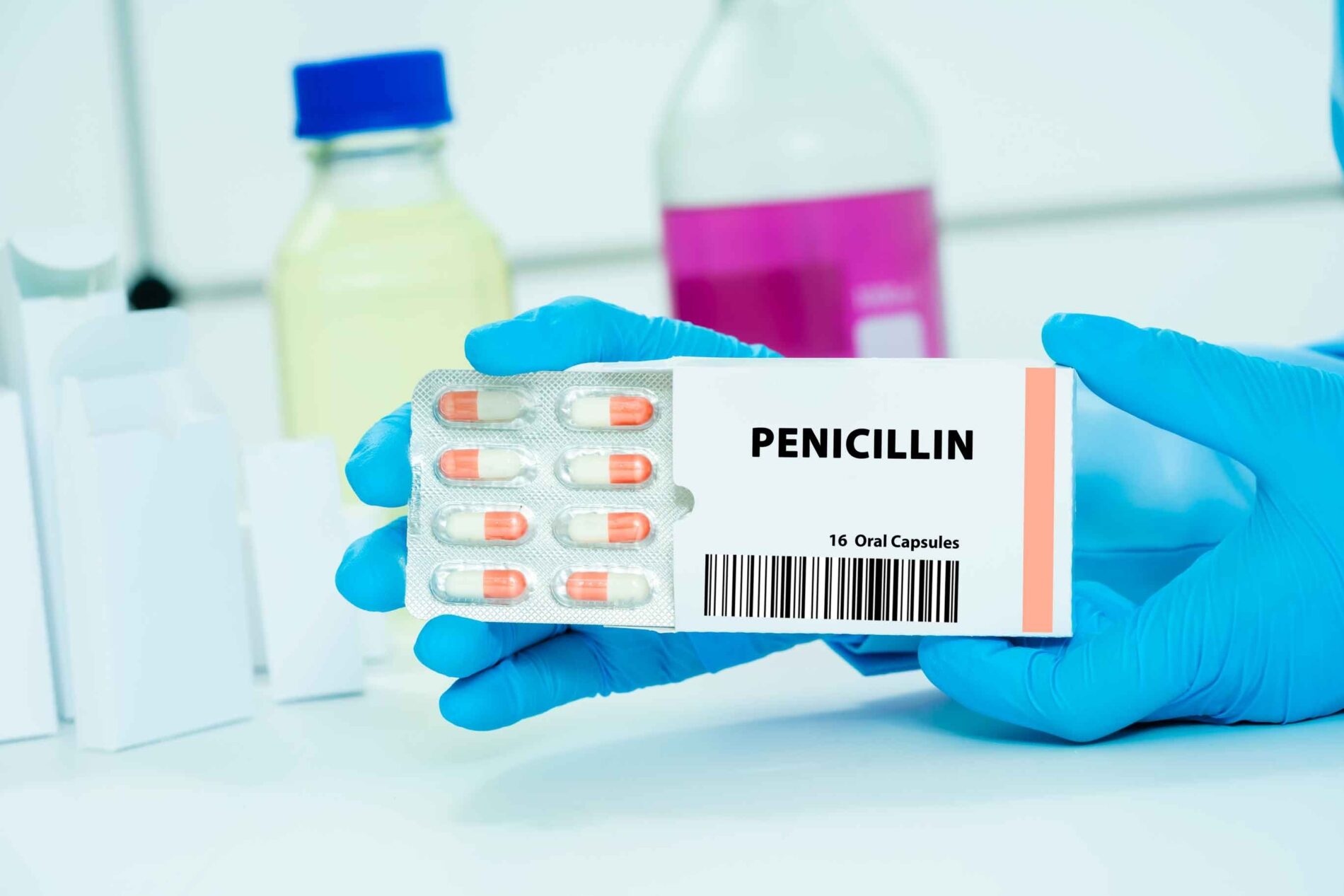
Image: Shutterstock
According to the company, around 94 percent of the active ingredients for generic antibiotics worldwide originate in China. Furthermore, Europe imports a large share of its amoxicillin active ingredient from Asian production sources. Sandoz therefore notes that the situation involves more than just standard price competition; between 2022 and 2025, the prices of key raw materials dropped by nearly 60 percent.
High investments do not solve the pricing problem
Since 2020, Austria and Sandoz have invested around 200 million euros in the Kundl site. Of this amount, 150 million euros went into modernizing active ingredient production, while another 50 million euros were used to expand the manufacturing of finished antibiotics. Additionally, the EU Commission approved 28.8 million euros in Austrian state aid.
While the new facilities increase capacity, they do not yet guarantee profitable production. Kundl is now capable of producing up to 240 million packs of antibiotics annually. Sandoz also doubled its capacity for liquid amoxicillin for children to over 60 million units. Nevertheless, the company reports that it still sells parts of its output below the full cost of production.
Tenders often favor the lowest price
Generic drugs are expected to remain affordable because health insurance funds and state healthcare systems must limit their spending. Consequently, contracts in many tenders are awarded primarily to the lowest-bidding suppliers. Factors such as production location, supply chain length, and in-house active ingredient manufacturing often carry little weight. Yet, European plants face higher labor, energy, and environmental costs than many of their Asian competitors.
The EU’s planned Critical Medicines Act aims to stabilize the supply of essential medicines. The initiative seeks to place greater emphasis on European production capacity, joint procurement, and more diversified supply chains. Sandoz is also calling for guaranteed market shares for European-made medicines. However, the definition of “origin” remains a crucial factor. Limiting processing to final assembly in Europe would continue to benefit manufacturers using Asian intermediate products.
Europe’s medicine supply remains vulnerable
Shortages experienced since the winter of 2022 have highlighted the consequences of highly concentrated supply chains. At times, there was a particular lack of amoxicillin suspensions for children across several European countries. Furthermore, if a major Asian supplier fails, other manufacturers cannot make up the shortfall at short notice; new fermentation facilities require substantial investment, skilled personnel, and lengthy approval processes.
The EU Commission must now assess whether there is sufficient evidence to initiate an anti-dumping investigation. Potential measures could include additional tariffs or other trade policy instruments. At the same time, public procurement tenders would need to place greater emphasis on demonstrably stable supply chains and European penicillin production. Otherwise, Europe risks losing its last remaining full-scale production facility—and rebuilding it later would be far more costly than preserving the existing plant.
Author: Blackout News
Sources: Apple Podcasts (15.06.26) – NZZ (15.06.26) – Süddeutsche Zeitung (31.05.26) – dsn (09.06.26) – Reuters (28.05.26)