
The bankruptcy of the Swiss bicycle parking facility operator V-Locker AG affects several German cities. The company declared insolvency due to over-indebtedness on July 13 and filed its balance sheet with the court. Digitally controlled facilities in nine cities across Germany and Switzerland are affected. Consequently, Bonn has halted new bookings and is asking customers to retrieve their bicycles. However, Frankenthal is keeping its parking tower—which was almost entirely funded by subsidies—open for the time being. The facilities also rely on the operator for the app, control systems, maintenance, and technical support.
Court Yet to Rule on Bankruptcy Proceedings
V-Locker is prohibited from entering into any new obligations pending the court’s decision. Consequently, the company has largely suspended operations, support, repairs, and the handling of malfunctions. However, the competent Swiss court has yet to decide on the initiation of bankruptcy proceedings.
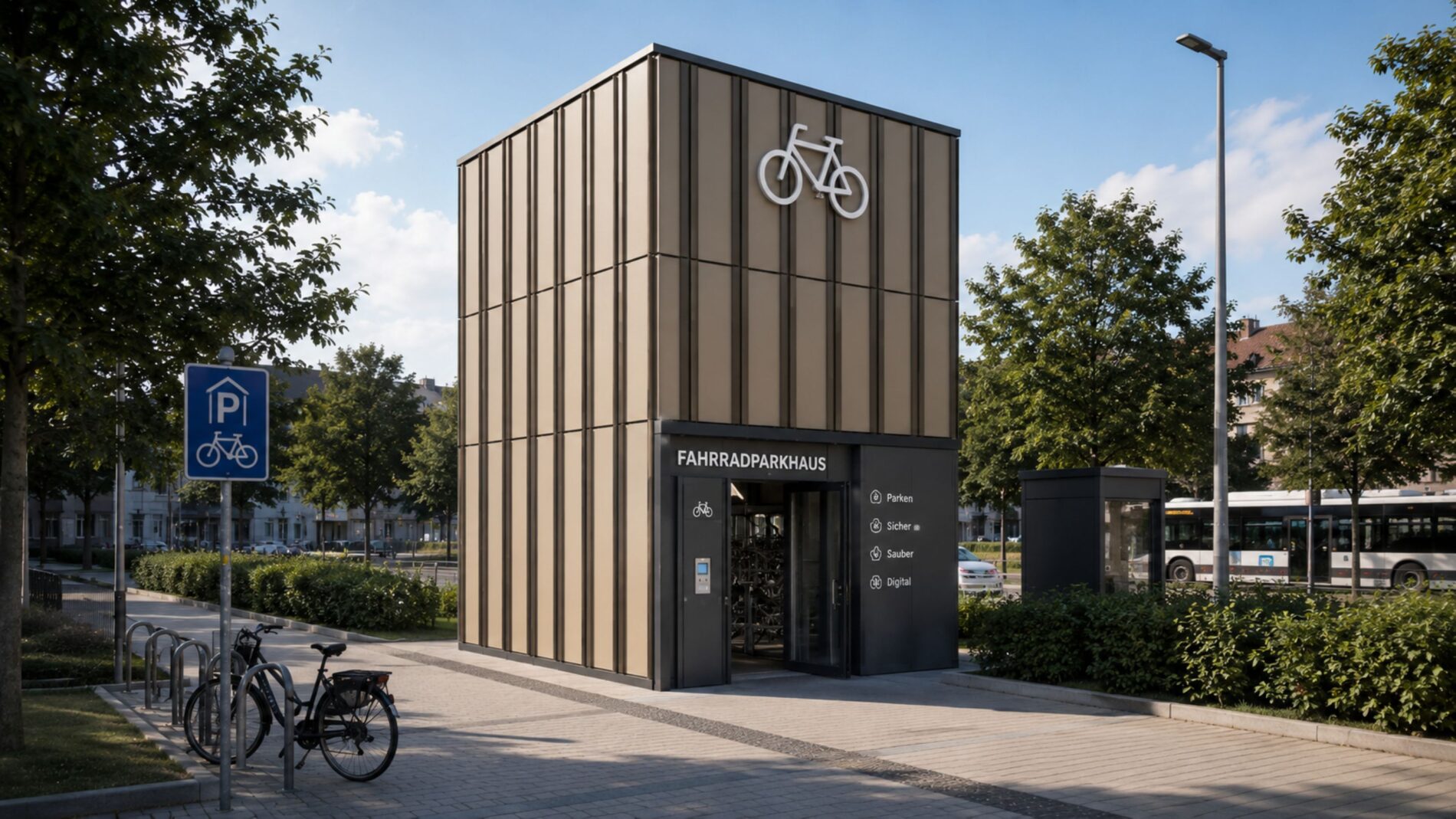
Stock image: AI-generated
The chain launched in 2019 with digitally connected bicycle lockers at train stations and transport hubs. In Germany, facilities were subsequently opened in Halle, Mühlacker, Bonn, Schwalmstadt-Treysa, and Frankenthal. The app also lists Swiss locations, meaning the crisis is affecting multiple municipal partners simultaneously.
Bicycle parking facility bankruptcy hits Bonn particularly hard
The bankruptcy of the bicycle parking operator is already having immediate consequences in Bonn. The four facilities, offering a total of 280 spaces, are closed to new bookings, and customers are being asked to retrieve their bicycles from the lockers. The projects cost three million euros, with around half of the funding coming from the EU; however, their average occupancy rate had recently been only about 30 percent.
Frankenthal is taking a different approach with its parking tower, which only opened on May 26. The facility offers 96 spaces and cost approximately 1.3 million euros. The state of Rhineland-Palatinate funded 1.25 million euros of this amount through the KIPKI program. Nevertheless, the city is keeping the tower open for the time being while reviewing the contract and exploring alternative solutions.
Municipalities Need Access to Software and Control Systems
The structures generally belong to cities or municipal utilities, yet the technology comes from V-Locker. Consequently, a new operator requires more than just personnel for maintenance and billing; they also need access to the software, control systems, data, and technical documentation. Bonn is already evaluating a new operating system because V-Locker was unreachable for the municipal utility company.
Mühlacker and Halle must likewise determine how their facilities can continue to operate. The collapse involving the bicycle parking facilities highlights the dependence of publicly funded infrastructure on a specialized provider. While subsidies secure construction, they do not automatically guarantee operation, maintenance, or long-term access. For the municipalities, the technical transferability of the systems will now determine the continued utility of these investments.
Author: Blackout News
Sources: Bild (19.07.26) – Du bist in Halle (19.07.26) – WDR (17.07.26) – SWR (16.07.26) – PZnews (16.07.26)