
The Oettinger Group, based in Oettingen, Bavaria, has been pursuing a profound corporate restructuring since 2023, reorganizing its international business through a new company in the Swiss canton of Zug. This move is driven by the sharp decline in the beer market, falling sales in Germany, and the goal of generating a significantly larger share of revenue abroad by 2026. The tax structure is particularly sensitive, as internal plans explicitly mention the use of lower tax rates through foreign subsidiaries. At the same time, concerns are growing at the German locations because the new structure could draw influence, added value, and decision-making away from Germany. Therefore, not only the workforce and works councils are affected, but also Germany itself, as the tax and production base of one of Germany’s largest discount beer manufacturers. (bild: 05.04.26)
Switzerland becomes the hub for international business
At the heart of the restructuring is Oe International AG in Zug. This company has existed since April 2024 and operates formally separately from Oettinger Brauerei GmbH. However, it is intended to manage the international business with Oettinger products and thus play a key role in future growth.
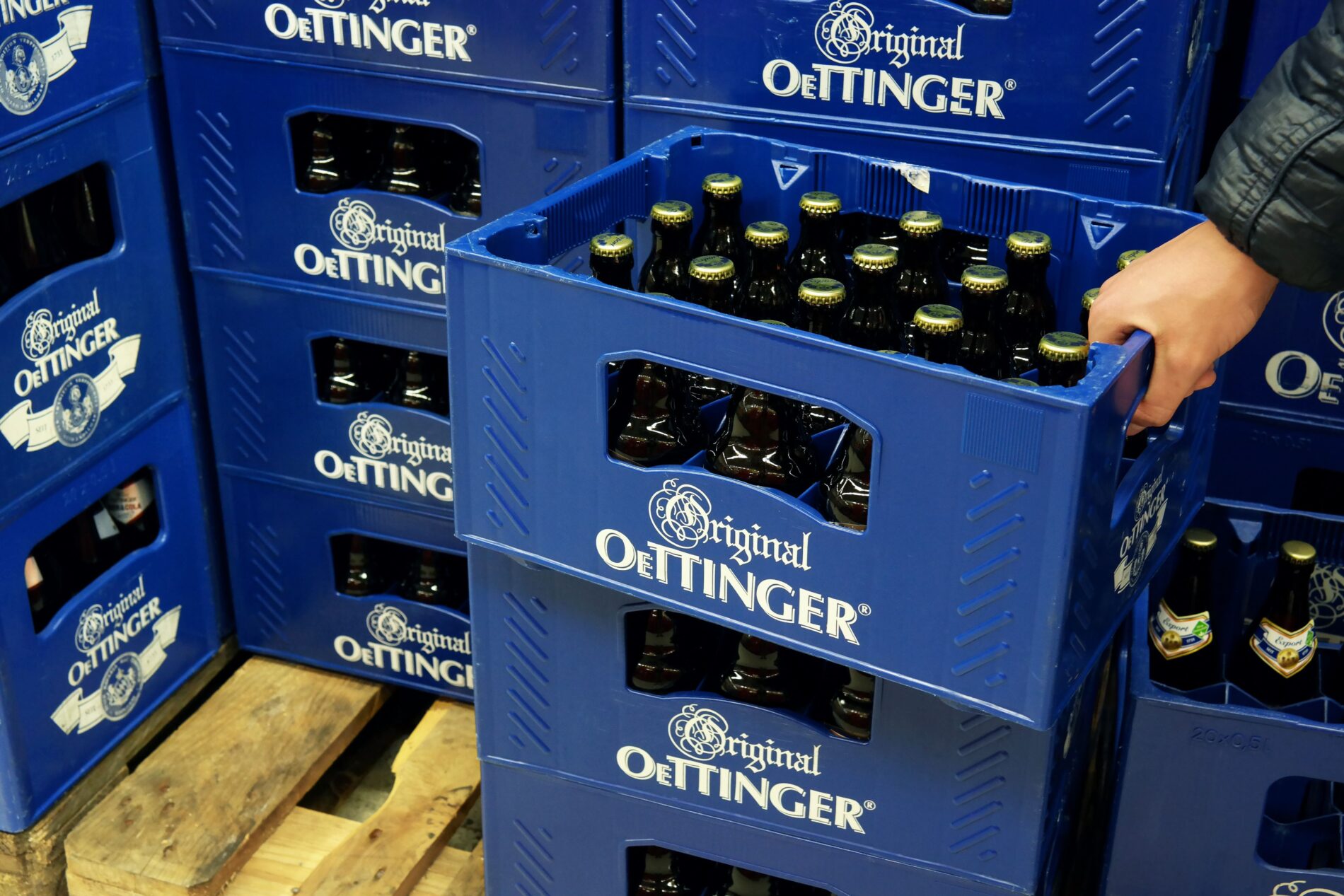
The Kollmar family, the owners, are clearly pursuing this course with unwavering determination. Pia Kollmar, along with her daughters, controls the new structure through a German holding company. At the same time, the Swiss subsidiary has been given more personnel weight, as experienced managers are to assume responsibilities there in international sales and strategic direction.
Declining beer sales increase the pressure on the company
The timing of the restructuring is no coincidence. In 2025, beer sales in Germany plummeted by six percent, marking the sharpest decline since records began. Therefore, Oettinger is seeking new markets, new revenue streams, and better margins outside its shrinking domestic market.
The plan extends far beyond traditional exports. By 2026, around half of the revenue is expected to be generated abroad. The company is focusing not only on beer but also on a broader range of beverages, its own brands, and new offices in key markets such as China.
Tax rates, power shifts, and domestic conflicts
The tax implications of the reorganization are particularly sensitive. Internal documents describe the goal as “utilizing differences in tax rates through the inclusion of foreign subsidiaries.” While Germany levies high corporate taxes, the Canton of Zug has been considered an attractive location for international holding companies and sales firms for years.
However, the tax issue is not the only risk for the German locations. According to internal plans, the restructuring was also intended to simplify co-determination and reduce restrictions on corporate governance. From the employees’ perspective, this would mean less influence for works councils, while at the same time the owning family would gain more leeway in strategic decisions.
German plants remain important, but the balance is shifting
A complete relocation of beer production abroad has not yet been confirmed. Known production shifts primarily affect German locations, as Oettinger is closing its plant in Braunschweig and transferring production to Oettingen and Mönchengladbach. Nevertheless, the new Swiss structure is changing the center of power, because sales, growth, and potential profit shares are being organized more extensively outside of Germany.
This gives the corporate restructuring a new dimension. While Oettinger remains rooted in Germany as a brewery, it is shifting its strategic leverage for international business to Switzerland. This is a warning sign for employees, locations, and the tax authorities, because not only are sales markets shifting, but also influence, the tax base, and future growth opportunities.