
On June 11, the trial of Michael Roth—an entrepreneur from the Upper Palatinate region—begins at the Weiden Regional Court. His company, which specialized in the disposal and recycling of wind turbine scrap, had received state subsidies shortly before facing insolvency. Prosecutors accuse him of transporting waste materials to the Czech Republic between June 2024 and January 2025 and dumping them there without the required permits. According to investigators, the waste consisted primarily of rotor blades made from carbon fiber and plastics. Roth is also alleged to have transported toxic battery waste to the Czech Republic and Poland. The proceedings also address an accident at his facility in Schwandorf, where, according to the prosecution, employees were exposed to contaminants and suffered health damage. (welt: 01.06.26)
Government subsidies met an unresolved disposal problem regarding wind turbine scrap
For a long time, Roth International was viewed as a company with a politically desirable business model. The firm promised solutions for aging wind turbines. At the same time, a problem has been growing in this very area—one that has occupied operators and authorities for years.
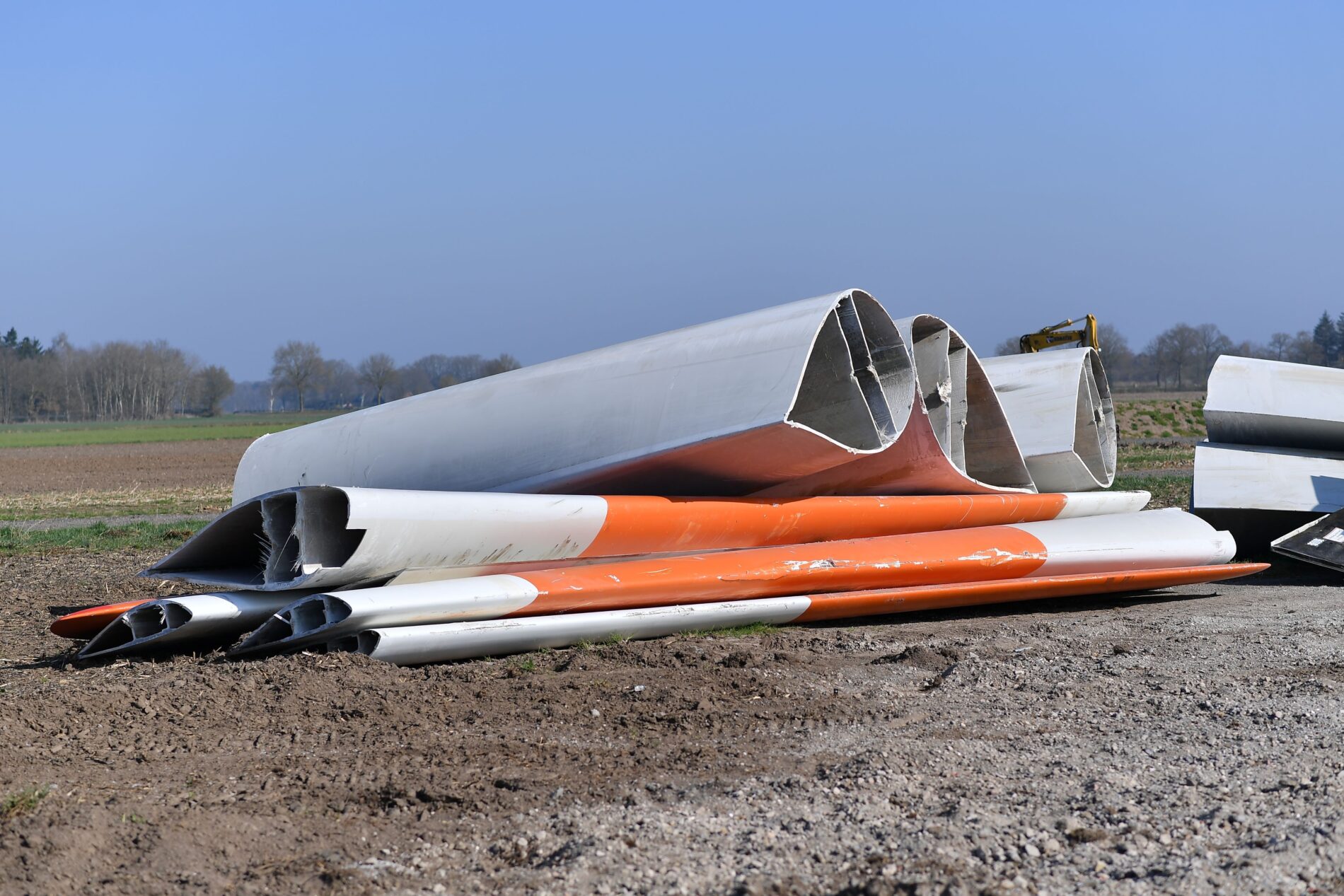
According to estimates by the German Environment Agency, around 20,000 tonnes of waste from wind turbine blades alone are generated annually. This figure is projected to rise to 50,000 tonnes per year over the coming decade. Yet, a viable strategy for handling these vast quantities of material is still lacking.
BayBG invested; Upper Palatinate provided €2.1 million
In 2022, the state-backed Bavarian investment company BayBG acquired a stake in Roth International as a silent partner. However, the amount of the investment was not disclosed; the Bavarian Ministry of Economic Affairs also declined to specify a figure.
A year later, the Upper Palatinate administrative region provided additional public funding. Roth International received €2.1 million in investment aid for small and medium-sized enterprises. According to sources close to the matter, a portion of these funds went toward the construction of the production facility.
Disposal of wind turbine waste becoming a costly bottleneck
The funding was based on a logical expectation: that Roth would help make the decommissioning of wind turbines technically and economically manageable. This makes the case particularly sensitive regarding funding practices.
The costs per turbine are high. Greenpeace estimates them at between €160,000 and €350,000, while other figures range as high as half a million euros. At the same time, more than 10,000 of the approximately 30,000 wind turbines in Germany are over ten years old.
Acclaimed recycling company faces serious allegations
Roth promoted its own proprietary processes for handling composite materials from rotor blades. According to the company, these processes were developed in collaboration with a Fraunhofer Institute. However, the Fraunhofer Society found no record of any such collaboration with Roth International.
At the time, the industry publication Windkraft-Journal had strongly praised BayBG’s decision to invest. A BayBG manager stated there: “Roth International has made an excellent name for itself through its consistent focus on particularly challenging aspects of recycling and plant decommissioning.” Today, a court must determine what became of that reputation.
Mayor personally stopped a truck
The case originated in the Czech municipality of Jiříkov, south of Bautzen. A pile of delivered waste materials was growing on the outskirts of the town. Consequently, the mayor raised the alarm and eventually used her car to block the path of a truck belonging to Roth.
The charges also involve battery waste. Roth allegedly transported this waste to the Czech Republic and Poland, even though investigators determined the disposal method was unlawful. Furthermore, he is accused of continuing to operate a facility for separating battery components in Schwandorf despite existing problems.
Insolvency likely to prevent repayment of subsidies
Roth has been in pre-trial detention since August 2025. A co-defendant—an employee—remains at liberty. However, both are presumed innocent until a final conviction is reached.
Following the bankruptcy in March 2025, the district government demanded the return of its subsidy. However, the insolvency administrator reported an insufficiency of assets to cover costs. As a result, the bankruptcy estate is likely sufficient only to cover legal proceedings. The silent equity investment held by BayBG is also likely lost.