
On Wednesday evening in Arnsberg, at a CDU event, Federal Chancellor Friedrich Merz called for a new departure for Germany. This message was also aimed at his own party, as speculation regarding a change in the chancellorship is undermining his authority. His appearance—marking the 80th anniversary of the Neheim-Hüsten Program—was intended to demonstrate strong leadership. At the same time, economic advisors and leading research institutes are lowering their growth forecasts for Germany. High energy prices, excessive bureaucracy, weak investment, and a lack of competitiveness are acting as a drag on the economy. Consequently, the gap between the rhetoric of a new beginning and the reality of government practice is widening: Merz outlines the objective, yet the concrete measures needed to achieve economic recovery remain absent. (welt: 28.05.26)
A Fresh Start as a Message—But Not as a Program
In his hometown, Merz opted for a display of resolute determination. “Germany has the strength for a new beginning,” declared the CDU leader. Furthermore, he stated that he intended to facilitate this course through his government. Yet it is precisely at this juncture that his message becomes vulnerable, for this is a promise he has been making ever since taking office. The Chancellor identifies a direction, but he fails to explain what specific steps are intended to lead the economy out of its current slump.
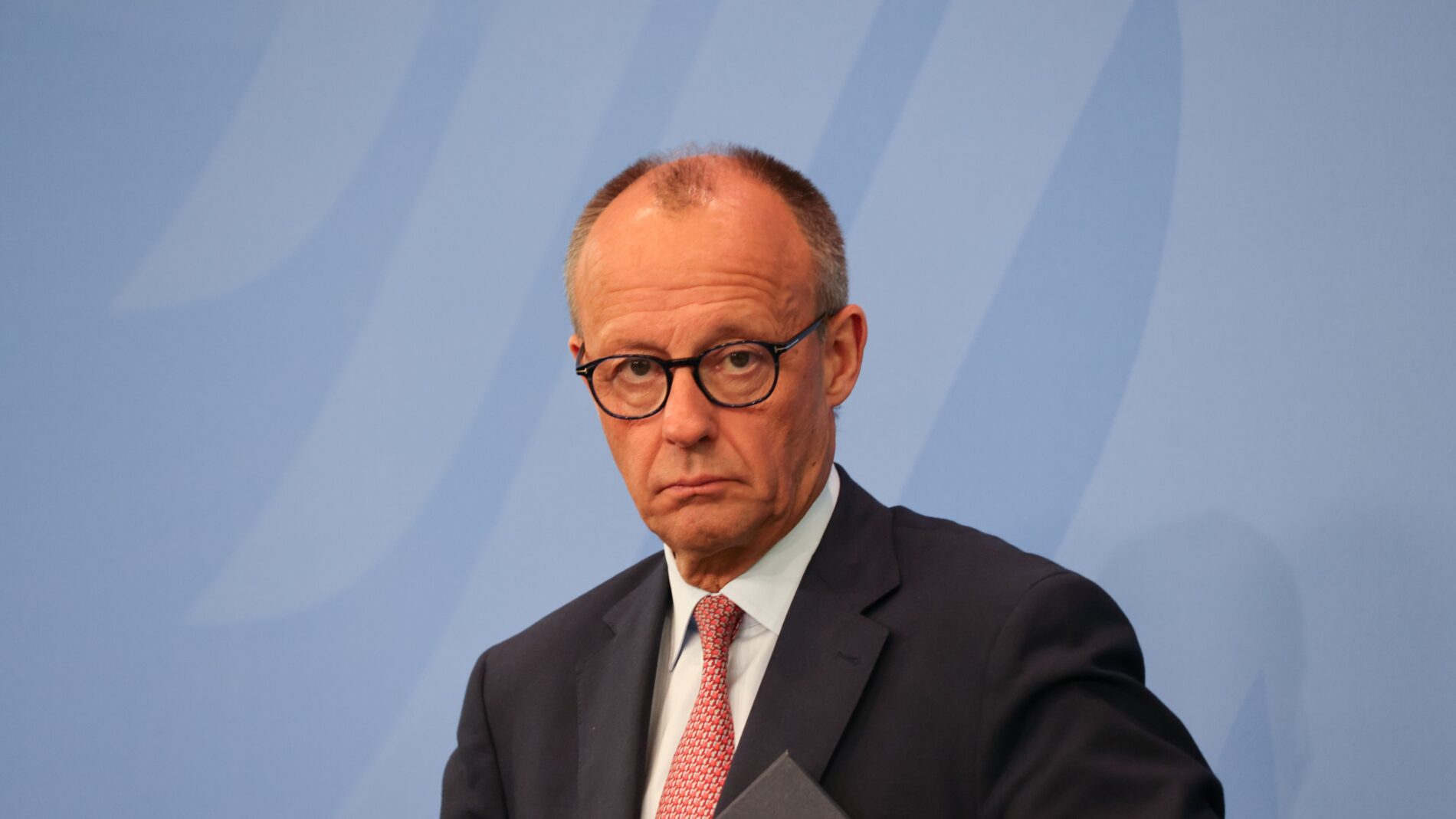
The speech sounded politically cohesive, yet in terms of economic policy, it remained very thin. Merz spoke of strength, responsibility, and renewal, without citing any concrete measures that could herald a turnaround. Meanwhile, businesses are waiting for relief measures that would actually lower their costs. They need competitive energy prices, less red tape, and reliable tax frameworks—not just more lofty rhetoric. As long as these issues remain unresolved, rhetoric cannot substitute for government action, and it certainly cannot trigger an economic upturn.
Forecasts Point Against a Rapid Recovery
The Council of Economic Experts projects growth of only 0.5 percent for 2026. For 2027, the forecast stands at 0.8 percent. Leading economic institutes, too, anticipate only a weak recovery; they expect an increase of 0.6 percent in 2026. For 2027, they foresee 0.9 percent growth. Consequently, there is currently no solid foundation whatsoever for a self-sustaining economic upturn.
These figures do not indicate a dynamic turnaround, but rather stagnation at a low level. While Merz speaks of a fresh start, expert expectations continue to slide. Furthermore, there is no discernible lever capable of triggering private investment in the short term. Hope alone creates no new production lines, brings down no electricity prices, and accelerates no permitting processes. Precisely for this reason, the Chancellor’s optimism appears politically contrived, yet economically unsubstantiated.
Businesses Need Decisions, Not Appeals
The structural challenges facing Germany as a business location have been known for years. High energy prices drive up the costs of production and transport. Bureaucracy ties up capital, time, and personnel. Unstable regulatory frameworks deter investors. As a result, companies are postponing projects, exploring alternative locations, or holding back on investments.
While Merz speaks of renewal, his government has so far failed to deliver a comprehensive reform agenda. Businesses judge the Chancellor not by his speeches, but by costs, deadlines, and planning certainty. And in precisely these areas, the track record remains weak. Anyone who promises economic dynamism must explain what measures are intended to trigger it. Once again, Merz fails to provide this answer.
The Coalition Acknowledges the Stalemate—But Does Not End It
Merz points to the coalition with the SPD as a political reality. While this may explain his predicament, it fails to resolve a single structural issue facing the country as a business location. Companies continue to pay high energy prices. Permitting processes remain excessively slow. Investments remain risky due to a lack of reliable signals. Consequently, citing the coalition comes across as little more than an excuse for the absence of reforms.
The Chancellor himself concedes that the “Black-Red” coalition should have achieved more during its first year in office. Precisely for this reason, his rhetoric of renewal carries even greater weight. Those who acknowledge their own shortcomings must act with all the greater clarity. Yet Merz stops short at merely describing the problem; he speaks of renewal, but his government fails to create the necessary preconditions for it.
Without Reforms, Recovery Remains a Mere Promise
Germany needs no further pep talks. The economy requires competitive energy prices, expedited administrative procedures, and reduced bureaucratic burdens. Furthermore, it needs fiscal signals that make investing within the country more attractive. Without these measures, sustainable growth cannot materialize; it cannot simply be talked into existence.
The consequences affect more than just businesses. Consumers feel the pinch of high prices and diminished purchasing power. Employees face uncertain prospects. Germany’s standing as a business location loses credibility when announcements go unimplemented. Thus, Merz’s speech becomes the yardstick by which his chancellorship will be measured: he describes an economic recovery that his government has, thus far, failed to pave the way for. (KOB)