
On May 25, 2026, at approximately 3:50 a.m., two power pylons near Garching, near Munich, caught fire. The police are treating the evidence as an act of arson. Consequently, the State Security Division has launched an investigation. Parts of Ismaning experienced a brief power outage. The attack targeted publicly accessible energy infrastructure in northern Munich. Furthermore, investigators are examining the possibility of a political motive. Authorities have not yet identified a specific perpetrator group. (sueddeutsche: 26.05.26)
Two Power Pylons on Fire Near Garching
The fire department extinguished both fires. Nevertheless, damage was sustained by the power infrastructure. According to current information, technical causes are not considered likely. The incident sites were located in the vicinity of Garching and Ismaning.
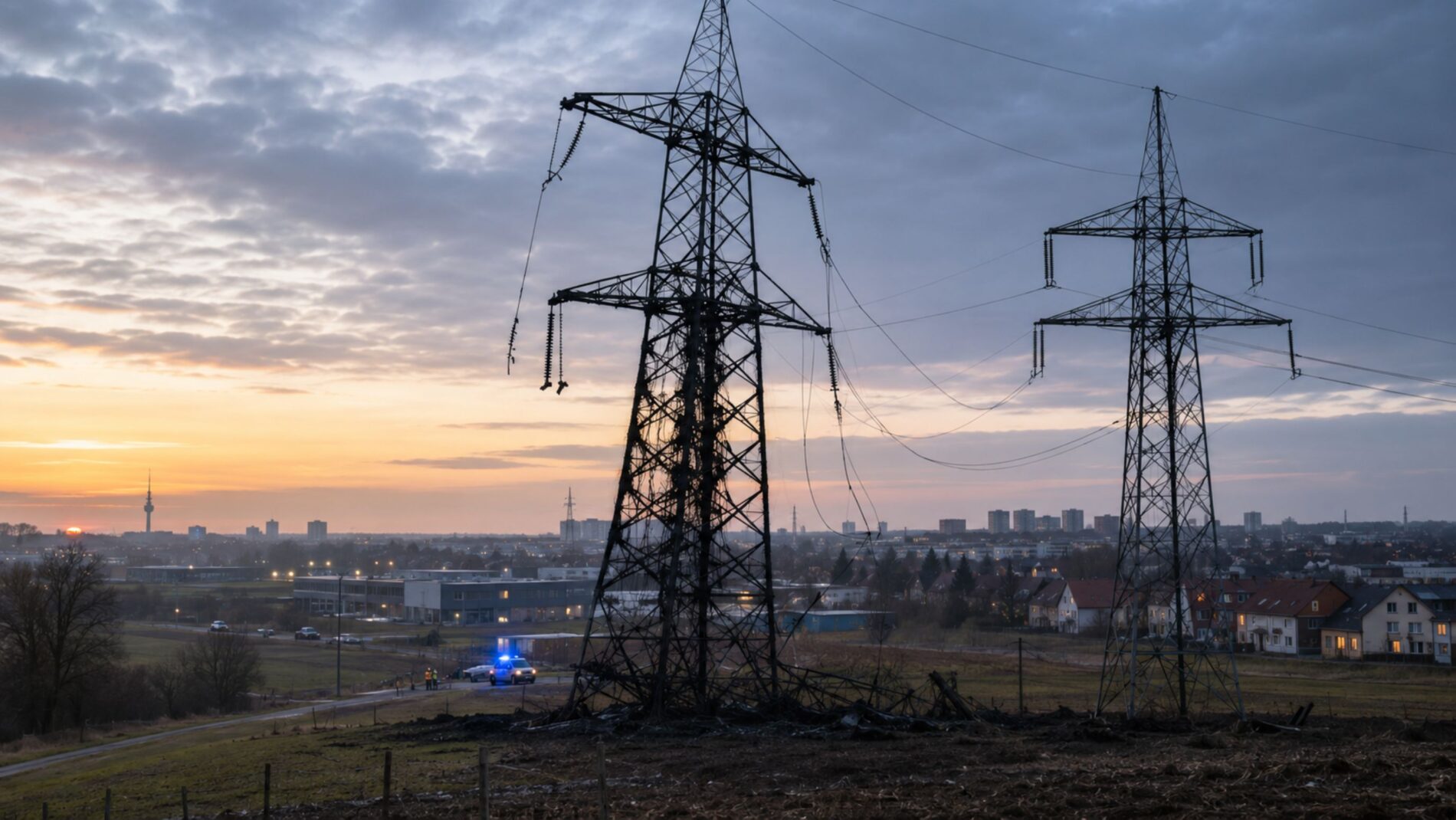
The police are therefore seeking witnesses. Their focus lies on observations made at the Garching-Nord exit. Additionally, any information regarding the A9 motorway and Freisinger Landstraße is considered important. Forest paths and field tracks situated between Garching, the research center, and the Isar River also fall within the search area.
Political Motivation: Authorities Investigate the Background
A political motivation is suspected. However, investigators have not yet committed to attributing the act to any specific political camp. Consequently, a direct link to left-wing extremist groups remains unconfirmed at this time. In the absence of a letter of responsibility or specific suspects, the assessment of the motive remains open.
The suspicion of a political motivation stems primarily from the choice of target and the modus operandi. The attack was directed against components of the energy supply infrastructure. Furthermore, the pattern of the incident bears a resemblance to previous attacks on critical infrastructure; such acts allow perpetrators to cause significant disruption with minimal effort.
Parallels to the Arson Attack in Berlin
The comparison with the incident in Berlin is particularly striking. On September 9, 2025, electricity pylons were set ablaze there as well. This resulted in widespread power outages across the southeastern sector of the capital. While the incident in Garching had only limited consequences, the attack in Berlin affected a significantly larger number of people.
In Berlin, households, businesses, and public transportation systems all suffered as a result of the outage. Traffic lights, rail services, and parts of the telecommunications network were all affected. Additionally, care facilities were forced to implement emergency protocols. The case therefore demonstrated just how quickly an attack on electricity pylons can disrupt the daily lives of entire urban districts.
Exposed Facilities Remain a Vulnerable Target
In the area near Munich as well, the attacked facilities were situated in open terrain. Consequently, perpetrators can access such targets with relative ease. Grid operators provide heightened protection for central hubs; however, many pylons located in wooded and open field areas remain difficult to monitor on a continuous basis.
For metropolitan areas, this poses a security challenge. Power outages affect not only households; they also disrupt transportation, communication systems, businesses, and emergency response networks. The incident near Garching therefore demonstrates that localized attacks on energy infrastructure can quickly have repercussions extending far beyond the immediate scene of the crime.