
Anyone buying a new electric car in Germany currently faces a significantly higher risk of depreciation than someone buying a comparable combustion engine vehicle. This is the finding of an analysis by the online used car platform Carvago, based on a large data set of German listings. Ten pairs of similar electric cars and combustion engine models were compared. The benchmarks were the purchase prices from the end of 2022 and the median prices of three-year-old used cars in the fourth quarter of 2025. The result is clear: In all ten comparison pairs, the depreciation of the electric cars was higher than that of their respective combustion engine counterparts. Some models lost almost 70 percent of their original value in just three years.
Carvago Compares the Depreciation of Electric Cars with Similar Combustion Engine Vehicles
The study was conducted not by a manufacturer or association, but by Carvago, a Czech online platform for used cars. The company compiled ten comparison pairs of similar models, including the Hyundai Kona and Kona Electric, Audi Q8 and Q8 e-tron, Mercedes E-Class and EQE, and VW Golf and ID.3. Based on this data, analysts evaluated German vehicle listings and compared the previous purchase prices to the current median prices of three-year-old vehicles.
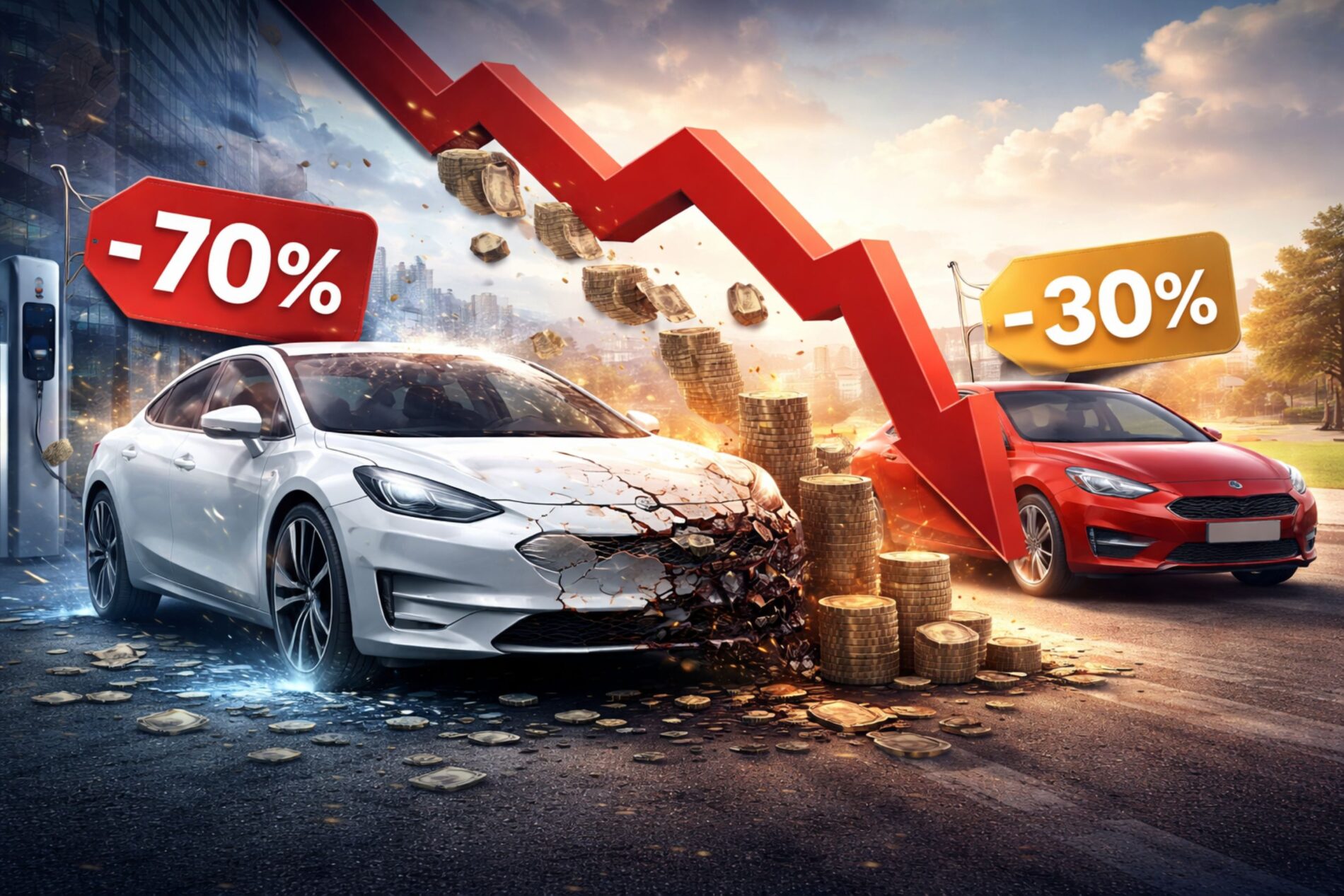
The Mercedes EQE sedan fared particularly badly in this analysis. According to Carvago, it lost 69.7 percent of its original value, while the comparable Mercedes E-Class depreciated by 49.3 percent. The Citroën e-Berlingo (57.9 percent), the Porsche Taycan (56.6 percent), and the Peugeot e-208 (53.6 percent) also significantly outperformed their combustion engine counterparts. The VW ID.3 lost 51.2 percent, while the Golf lost 41.3 percent. Even where the difference is smaller, the pattern remains clear: electric cars depreciate more rapidly.
Rapid technological advancements are driving up depreciation
The main reason lies in the rapid pace of technological change. Batteries, range, charging capacity, and software are developing significantly faster in electric cars than in conventional combustion engine vehicles. As a result, many electric cars seem technologically outdated after just a few years, even though they remain perfectly usable in everyday life. This is precisely what is driving down resale values. Carvago also points to a certain reluctance among some used car buyers towards battery-powered vehicles, which further exacerbates depreciation.
This is the real warning for buyers of new electric cars. Anyone paying a high purchase price today must expect a large portion of that value to disappear after just three years. This hits new car buyers particularly hard because, according to Carvago, some of the electric cars examined had significantly lower mileages and yet depreciated more rapidly. Many are therefore switching to leasing, but the expected depreciation is already factored into the monthly payments. The market is sending a clear signal: Technological progress in electric cars is driving development forward, but at the same time it is devaluing many new vehicles faster than comparable combustion engine vehicles.