
The Märkerwald wind farm project in Dierdorf (Westerwald) has proven economically unviable as of September 2026. ABO Energy has withdrawn its permit application for eight turbines and is halting the project’s development. A decisive factor is the sharp drop in awarded prices in the EEG tenders for onshore wind energy. Consequently, up to 54.4 megawatts of planned capacity—along with potential revenue for several municipalities in the vicinity—will be lost.
Märkerwald wind farm project fails due to lower remuneration rate
ABO Energy had planned eight Nordex N175 wind turbines for the Märkerwald, an area used for forestry. Each turbine was designed to generate 6.8 megawatts of power and reach a total height of 266.5 meters. In addition, the developer planned for a hub height of 179 meters and rotors with a diameter of 175 meters.
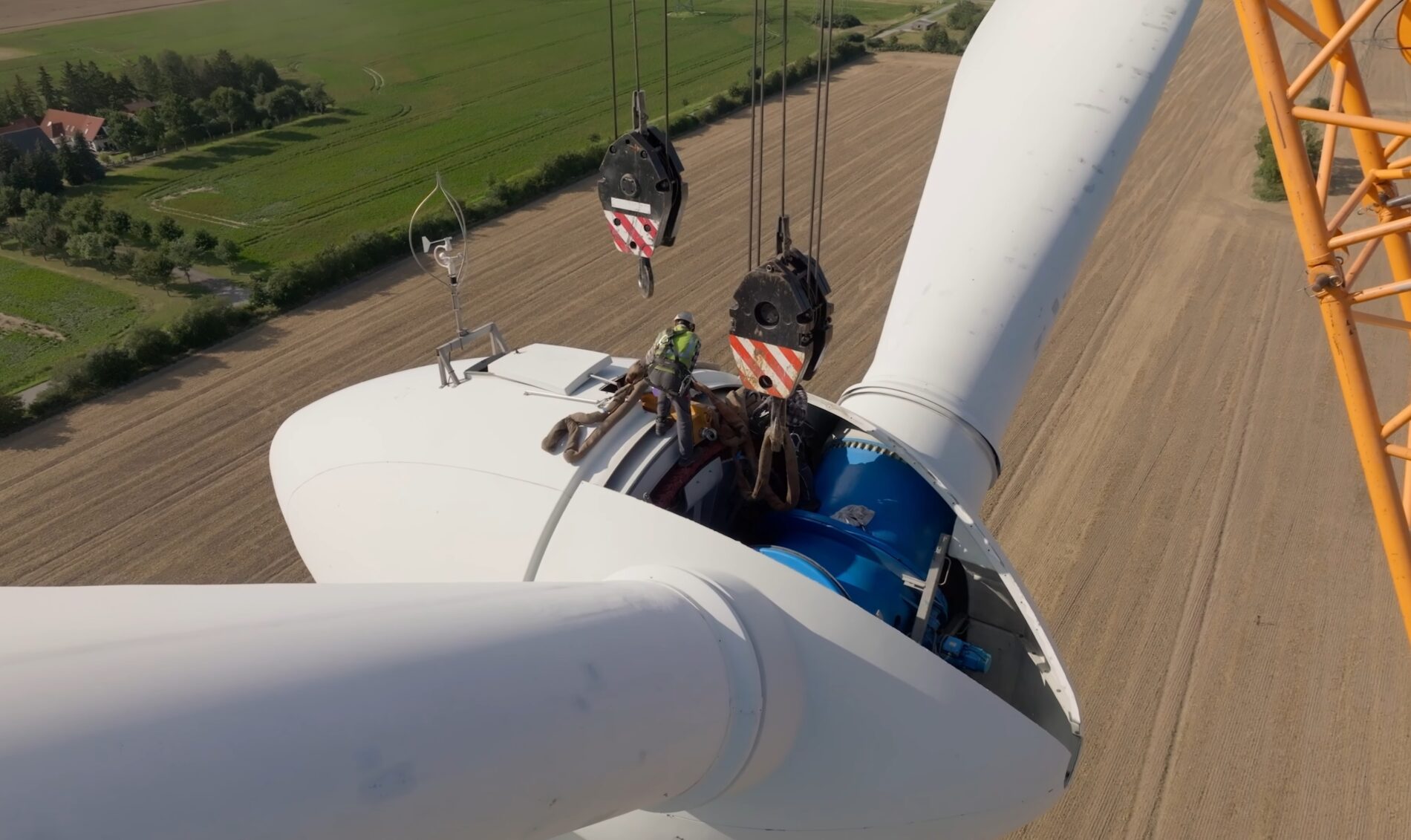
Image: Shutterstock
The application for approval had been with the competent authority since the end of December 2024. The project had thus already progressed well beyond the early planning stage. Now, however, ABO Energy has stated: “Under current conditions, realizing the wind farm is not economically viable.” Consequently, the company is withdrawing the application.
EEG auctions drive winning bid price down to 5.06 cents
The primary reason for halting the project is the intensified competition in auctions for onshore wind energy. In May 2026, the Federal Network Agency put approximately 2,495 megawatts out to tender. This was met with 628 bids totaling 6,409 megawatts. Only 270 bids were successful.
As a result, the average volume-weighted winning bid price fell to just 5.06 cents per kilowatt-hour. In February 2026, the figure had stood at 5.54 cents. In May 2025, it was as high as 6.83 cents. This represents a drop of nearly 26 percent within a single year. The Märkerwald wind farm therefore faces significantly lower revenue prospects than when the approval process began.
Halted Project Costs Region Potential Revenue
ABO Energy had projected an annual output of around 102 million kilowatt-hours for the eight turbines. According to the company’s calculations, this amount of electricity corresponds to the household consumption of approximately 61,000 people. Furthermore, the turbines were expected to avoid the emission of just under 77,000 tonnes of carbon dioxide per year. With the project’s cancellation, this planned generation is now lost.
The decision also has financial implications for the surrounding municipalities. Under the Renewable Energy Sources Act (EEG), operators can provide financial participation to municipalities within a 2,500-meter radius, paying up to 0.2 cents per kilowatt-hour generated. Consequently, ABO Energy had factored in annual payments of around 204,000 euros for the project. Over a 20-year period, the potential total payout would have exceeded four million euros.
At the same time, however, the case illustrates an unusual consequence of the rapid expansion of wind power. Many approved projects are now competing for a limited volume of capacity in government tenders. This drives down winning bid prices—and thus the potential revenue for new turbines. As a result, projects with higher construction, financing, or site-specific costs may no longer be economically viable. It was precisely this trend that led to the withdrawal of the Märkerwald wind farm project, despite extensive preparations having already been made.
Author: Blackout News
Sources: NR Kurier (10.09.26) – Rhein-Zeitung (09.09.26)