
River expansion or restoration? There is disagreement within the federal cabinet regarding how to handle the current low-water situation. While Federal Transport Minister Steffen Bilger (CDU) advocated for further expansion of waterways on Wednesday, Federal Environment Minister Carsten Schneider (SPD) called for a return to more natural river courses. To address current transport bottlenecks caused by low water levels, Berlin and Brandenburg also relaxed Sunday driving bans for trucks.
“We need to make our waterways more efficient while simultaneously making vessels fit for periods of low water,” Bilger explained following a virtual meeting with state transport ministers. “That is precisely why we are pushing ahead with key expansion projects and intend to continue subsidizing vessels optimized for low-water conditions.” He added that environmental protection would remain a constant priority throughout the expansion process.
Schneider rejected the idea of deepening rivers to maintain shipping operations. Speaking in Berlin, he stated that this could not be the answer to the current situation. Instead, he argued for a “restoration” of rivers—moving away from canal-like channels toward natural rivers featuring meandering branches and floodplains that retain water across the landscape.
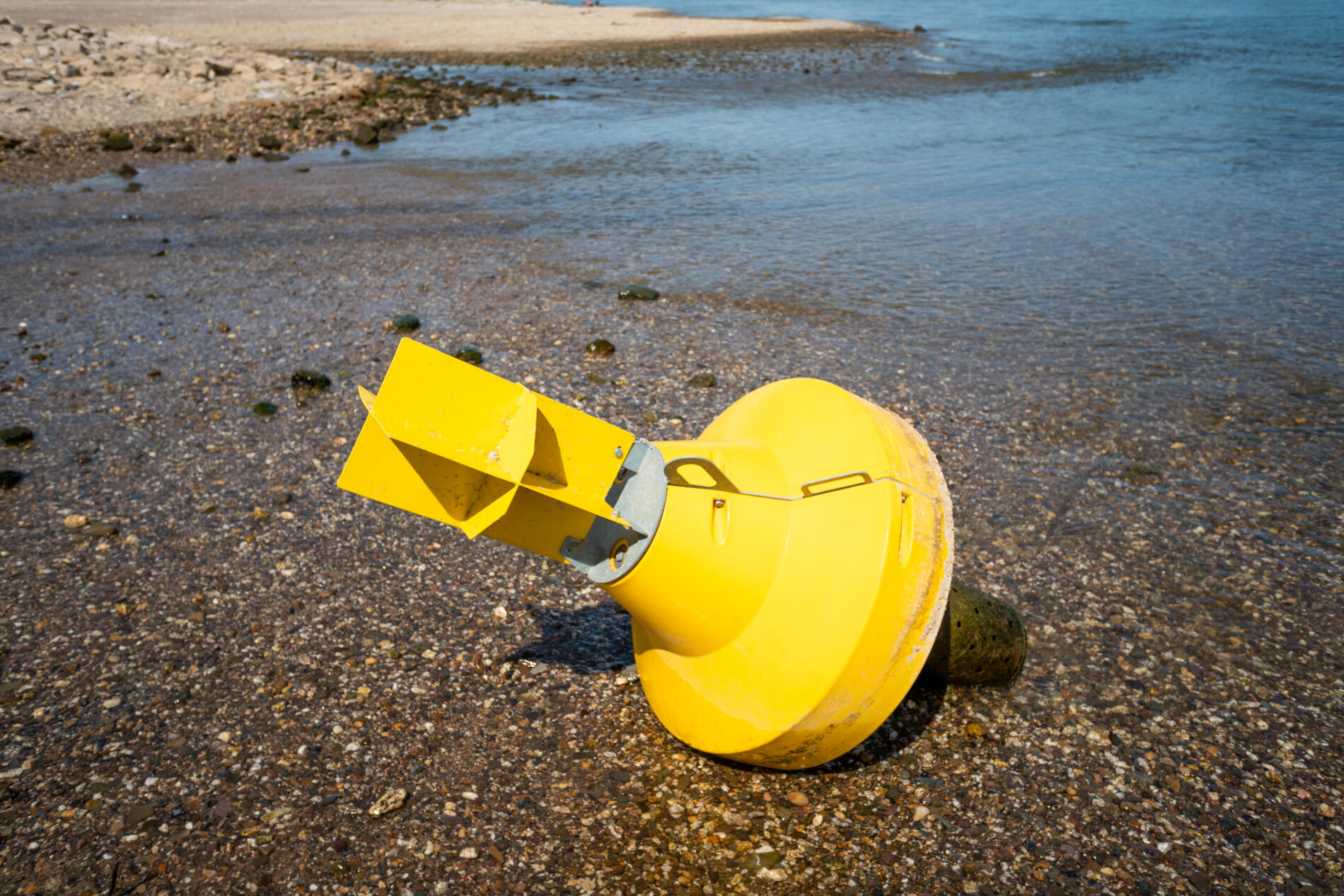
Image: Shutterstock
Germany’s major rivers are experiencing low water levels in many places due to persistent dry weather. Over the weekend, historic lows were recorded on the Rhine in North Rhine-Westphalia. This poses major challenges for inland shipping, as vessels must carry significantly reduced loads or are unable to operate at all. The inland shipping association expects the Rhine to become impassable along its entire length at some point this week.
“The coming weeks will be challenging,” stated Bilger. Water levels on the Rhine and Danube are expected to remain very low for the time being: “That is why we must act pragmatically now,” the CDU politician explained.
According to the Bavarian Ministry of Transport, the Danube is already no longer navigable on an economically viable basis from Regensburg onwards. Transport Minister Christian Bernreiter (CSU) therefore called for the “consistent and resolute” expansion of the waterway. “Fortunately, there are no supply shortages yet,” Bernreiter added. “Nevertheless, we must monitor the situation closely and ensure greater flexibility in freight transport.”
Environmentalists oppose deepening shipping channels. “They do more harm than good,” explained Beatrice Claus of the WWF. “Expansion and straightening cause water to flow away even faster into the North Sea and Baltic Sea, rather than being retained in the surrounding area.” It is more important, she argued, to create greater water storage capacity through near-natural landscapes. “Dredging the rivers creates a false impression of taking action,” noted Olaf Bandt, head of the environmental group BUND.
Environment Minister Schneider shares this view. “In past centuries, Germany was a water-rich country; great effort went into straightening rivers and making them serve our needs, as well as enabling agriculture by draining peatlands,” he said. However, due to climate change, water has now become a scarce resource. A shift in thinking is therefore required.
Given the current situation, several federal states have suspended the ban on truck traffic on Sundays and public holidays. Following North Rhine-Westphalia, Rhineland-Palatinate, Saarland, Lower Saxony, Hamburg, Schleswig-Holstein, Baden-Württemberg, and Bavaria, Berlin and Brandenburg also implemented relaxations of the rules on Wednesday.
However, economist Thomas Puls of the German Economic Institute (IW) in Cologne does not expect these measures to have much impact. “I do not anticipate a measurable shift of freight to the roads,” he told Der Spiegel. It would take 150 or more trucks to replace a single inland waterway vessel, and key goods transported by water—such as petroleum products, sand, gravel, ore, or chemicals—cannot simply be hauled by just any truck.
Transport Minister Bilger rejected changes to driving and rest time regulations for truck drivers. “Naturally, I am also mindful of the situation facing truck drivers,” he told broadcasters RTL and ntv. “They have a tough job.”
Author: AFP – pe/oer/jm – Translated by Blackout News
Sources: AFP Press Portal