
On October 2, 2026, the EU issued a safety warning for the Hyundai Nexo. The recall affects hydrogen vehicles manufactured between December 13, 2017, and March 28, 2024. A faulty thermal safety valve on the hydrogen tank can allow hydrogen to escape; this gas could ignite upon contact with an ignition source, potentially causing a vehicle fire. Consequently, the EU classifies the defect as a serious fire risk. The importer had already initiated the recall on September 22.
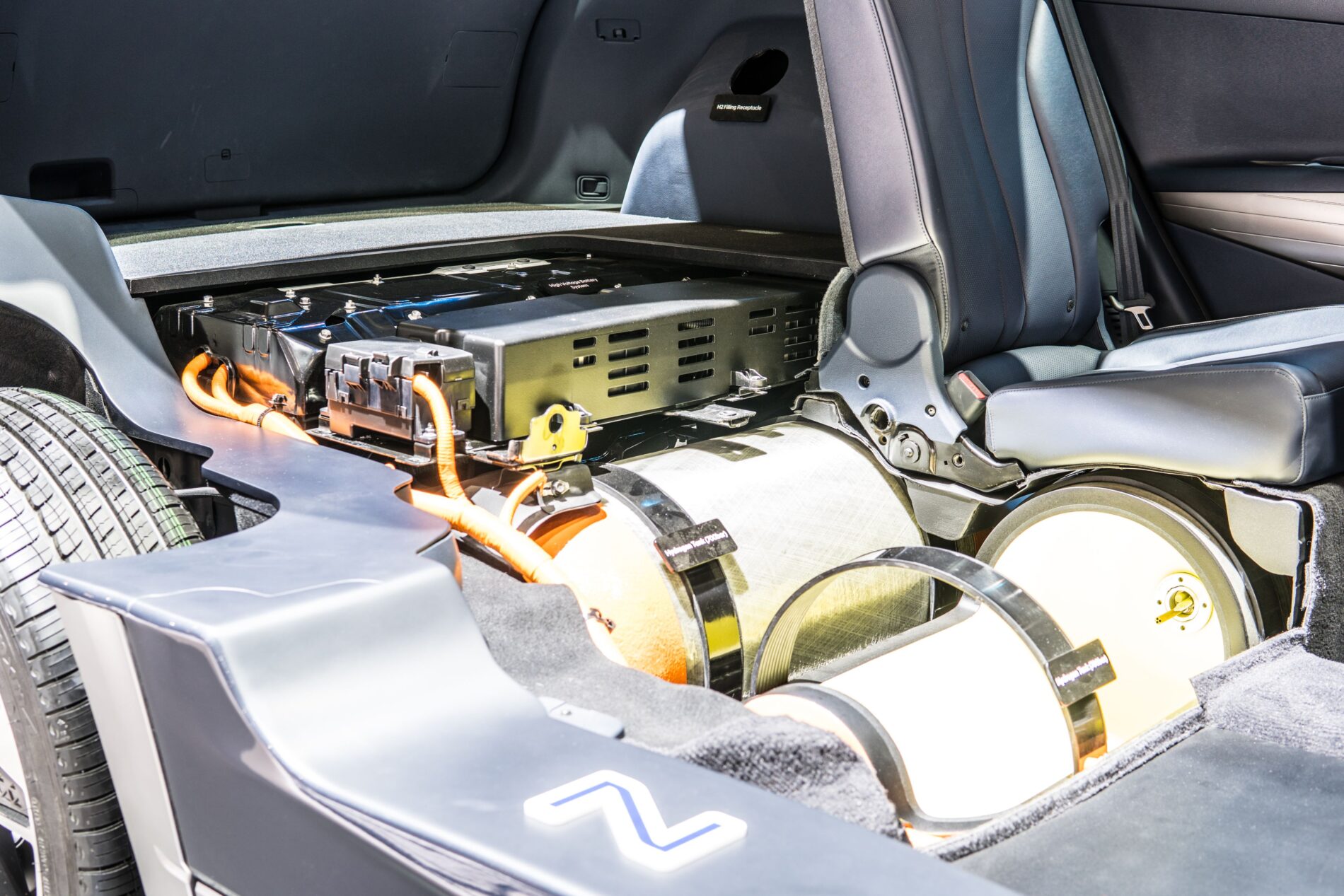
Image: Shutterstock
Hyundai Nexo: Safety valve can release hydrogen
The component in question is known as a Thermally-activated Pressure Relief Device (TPRD). Its purpose is to protect the hydrogen tanks from dangerous overpressure; in the event of significant heating, the valve is designed to vent hydrogen from the tank in a controlled manner. However, in the affected Nexo models, the safety device itself can become the source of an unintended gas release.
A 2024 US recall document provides further details on a corresponding technical fault in the Nexo. The TPRD utilizes a glass element designed to shatter at a specific temperature. However, Hyundai discovered micro-cracks that could lead to premature breakage. Investigations traced these cracks back to severe pressure fluctuations during component testing. As a result, hydrogen leakage can occur during normal vehicle operation.
KBA data indicates 41,011 vehicles worldwide
The Federal Motor Transport Authority (KBA) is also monitoring a current recall of the Hyundai Nexo due to a defective thermal safety valve. An analysis of KBA data identifies 41,011 affected vehicles worldwide. Furthermore, the production period cited ranges from September 28, 2017, to June 5, 2024. The KBA lists the action under reference number 17005R and manufacturer code 41D213.
However, the data does not fully align with the EU warning issued on October 2. The “Safety Gate” system cites manufacturer code 41D123 and a narrower production timeframe. Additionally, the EU warning has not yet specified a number of affected units for Germany or Europe. While both datasets concern a thermal safety valve on the hydrogen tank, they cannot simply be equated.
Previous recalls also involved the hydrogen system
This current recall is not the first safety action involving the model’s hydrogen system. The ADAC records a recall of 1,107 vehicles in Germany from August 2022. At that time, defective hydrogen sensors might have failed to detect leaking gas, prompting Hyundai to replace the sensors.
A further recall followed in 2023 due to potential leaks occurring after refueling. According to KBA figures, 67 Nexo vehicles were affected in Germany, with a global total of 211. Detaching filter material could compromise the seal of the refueling port; consequently, Hyundai inspected the connection and replaced it where necessary.
Recall affects the first generation of the hydrogen car
The current EU warning explicitly cites vehicle type FE. It therefore applies to the first generation of the Hyundai Nexo, not the successor model available since 2026. The ADAC lists the new generation under the model series designation NH2. Furthermore, all production periods specified for the recall end no later than June 2024.
The older generation stores 6.33 kilograms of hydrogen at a pressure of 700 bar. Three tanks provide a combined volume of 156.6 liters for this purpose. Consequently, a reliable pressure relief mechanism is a key safety feature of the tank system. Under recall 41D213—issued in conjunction with the KBA (Federal Motor Transport Authority)—workshops are required to replace the thermal safety valve. Owners can also check with Hyundai using their vehicle identification number to see if their vehicle is affected.
Author: Blackout News
Sources: Recall Europe (02.10.26) – Car Recalls (15.09.26)