
In a lecture at the University of Lucerne on October 9, 2026, former ifo Institute president Hans-Werner Sinn delivered a scathing assessment of Germany’s energy transition. “It’s all nonsense. Nothing has pained out as claimed,” he remarked, sharply criticizing political promises of affordable energy, new export markets, and a leading international role for Germany. The economist warns of persistently high electricity costs, a lack of storage capacity, and the further weakening of German industry. Furthermore, he considers the legally mandated goal of achieving climate neutrality by 2045 to be unrealistic. He highlights weather-dependent power generation and the high costs of additional reserve power plants as particularly problematic issues. Consequently, he argues, businesses and consumers will continue to face significant financial burdens resulting from Germany’s energy policy.
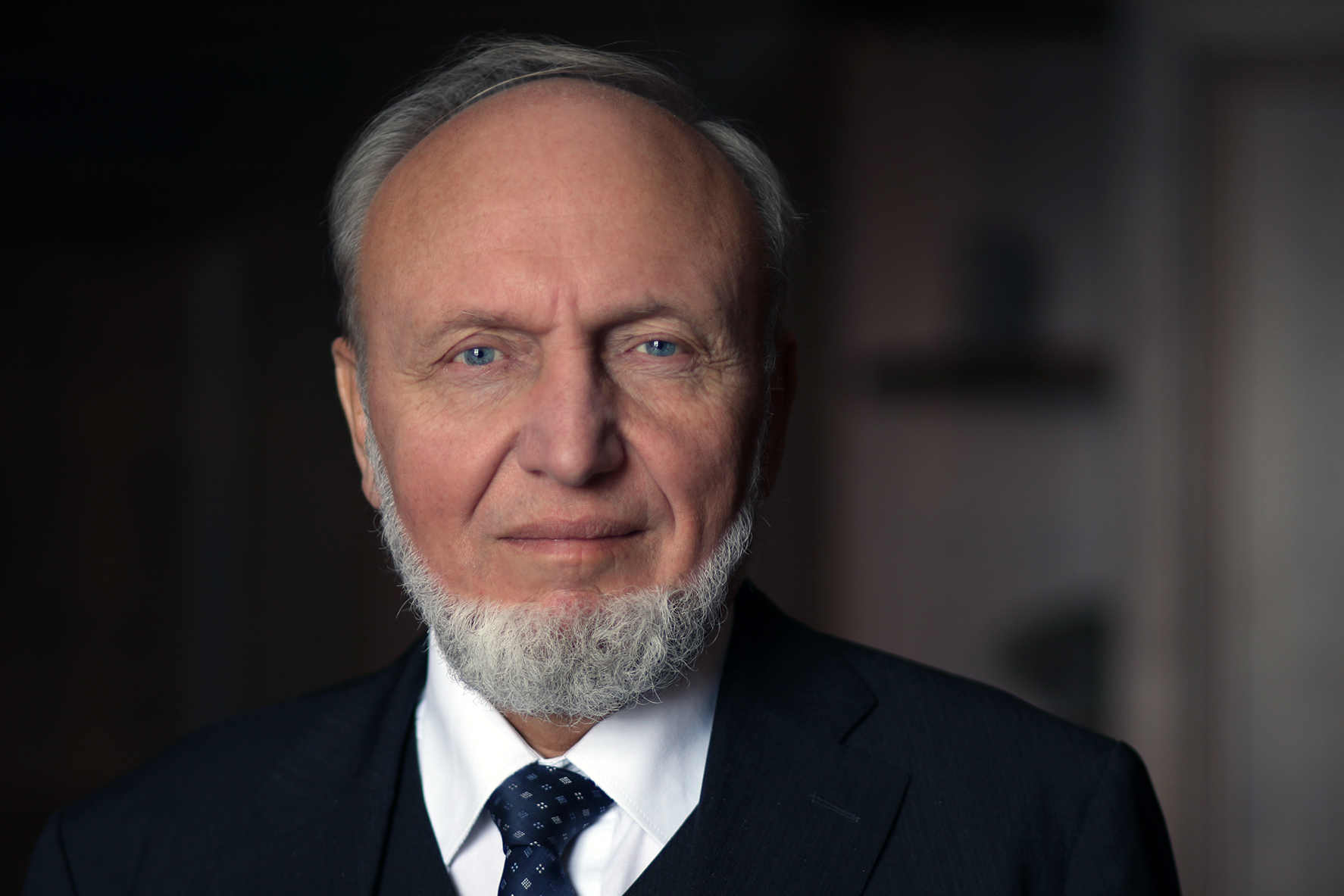
Image: Romy Vinogradova, CC BY 4.0, via Wikimedia Commons

According to Sinn’s analysis, the energy transition entails double costs
Sinn particularly criticizes the economic expectations that policymakers used to justify the restructuring of the energy supply. The premise was that wind and solar power would provide affordable energy, while German manufacturers would gain access to new international markets. In reality, however, electricity prices in Germany remain among the highest in Europe. Furthermore, a large proportion of the installed solar modules are produced in China. Consequently, foreign manufacturers benefit significantly from Germany’s expansion program, while domestic industrial firms are burdened with high energy costs.
Sinn identifies the necessity of securing a reliable power supply as a critical issue. Wind and solar power generation depend on weather conditions, yet industry and households require electricity at all times. This necessitates the continued availability of dispatchable power plants and additional reserve capacities. The construction, operation, and maintenance of these facilities incur extra costs—even if the plants are only in operation for a few hours. Thus, the energy transition demands substantial investment in parallel generation infrastructure, power grids, and storage systems.
Climate targets for 2045 are increasingly slipping out of reach
Sinn is particularly critical of Germany’s climate targets. Germany aims to reduce its greenhouse gas emissions by at least 65 percent by 2030 compared to 1990 levels. The target for 2040 is an 88 percent reduction, with the goal of achieving climate neutrality by 2045. However, as of 2025, the actual reduction stands at only about 48 percent. Consequently, Sinn believes that the rate of emission reduction required from this point forward is neither economically nor technically feasible.
Official projections from the German Environment Agency (Umweltbundesamt) also confirm significant deviations from these targets. Based on measures currently in place, emissions are expected to fall by only 62.6 percent by 2030. For 2040, the agency anticipates a reduction of approximately 80 percent—falling short of the mandated 88 percent. While the German Environment Agency does not categorically deem the targets unattainable, Sinn goes much further, expressing concern that additional state intervention could accelerate industrial decline. He acknowledges, however, that he cannot yet quantify the extent to which the decline in industrial production has contributed to the emission reductions achieved so far.
According to Sinn, the energy transition is failing due to the challenge of seasonal storage
Another core problem concerns the storage of large quantities of electricity over several months. Batteries can compensate for short-term fluctuations, while pumped-storage power plants have a limited capacity for energy absorption. Neither technology is sufficient for extended, low-wind periods during the winter. Sinn also views hydrogen as economically problematic due to high conversion losses; according to his calculations, roughly three-quarters of the original energy input can be lost during the processes of production, storage, and subsequent reconversion into electricity. Sinn illustrates the scale of the necessary transformation by looking at total energy consumption. In his presentation, he noted that the share of renewables stands at approximately 22 percent, with wind and solar power together accounting for about nine percentage points. According to his rough calculations, replacing fossil fuels to a significant extent would require an almost tenfold increase in the current contribution from these sources. However, this simplified analysis does not account for all the efficiency gains that would result from electrification. The latest data from the German Environment Agency (Umweltbundesamt) indicate that, as of 2025, the share of renewables in gross final energy consumption has already reached 23.9 percent.
Sinn calls for international climate policy rather than unilateral German action
Despite his fundamental criticisms, Sinn explicitly does not deny the influence of carbon dioxide on the climate. However, he considers national measures—lacking sufficient international participation—to be economically problematic. Instead, he advocates for an “international climate club” that would collectively limit the consumption of fossil fuels. As long as such an agreement is not in place, he recommends greater investment in climate change adaptation—for example, through flood protection and technical measures to counter rising temperatures.
For the German federal government, this presents a fundamental economic policy challenge. It continues to pursue ambitious expansion and climate targets, while businesses simultaneously require affordable and reliably available electricity. Consequently, a comprehensive assessment cannot merely account for the generation costs of individual wind turbines or solar installations; rather, the total costs—including grid expansion, backup power plants, energy storage, and system stabilization—are what truly matter. It is precisely this holistic accounting that forms the basis of Sinn’s critique. Without transparent cost calculations and robust supply strategies, German industry faces the risk of further competitive disadvantages.
Author: Blackout News
Sources: IWP (21.10.26) – Report (21.10.26) – Nachrichtenblatt (23.10.26)