
The Federal Government in Berlin is issuing a new warning signal regarding the German economy. According to the Ministry of Economic Affairs’ monthly report, the government anticipates a significant economic slowdown in the second quarter—at a time when businesses have been awaiting tangible relief measures since the administration took office. The downturn is being triggered by the conflict in Iran, high levels of uncertainty, volatile energy and raw material prices, and strained supply chains. Furthermore, a political deadlock on reforms is exacerbating the situation, as the promised “Autumn of Reforms” last year failed to yield any tangible results. Industry, consumers, and investors are all affected, while economic growth, purchasing power, and planning certainty continue to erode. (handelsblatt: 15.05.26)
Government Describes Downturn, Yet Takes No Visible Action
Germany’s economy did indeed start the year better than expected. Gross domestic product grew by 0.3 percent in the first quarter compared to the previous quarter. The economy was bolstered primarily by increased spending from the government and private households.
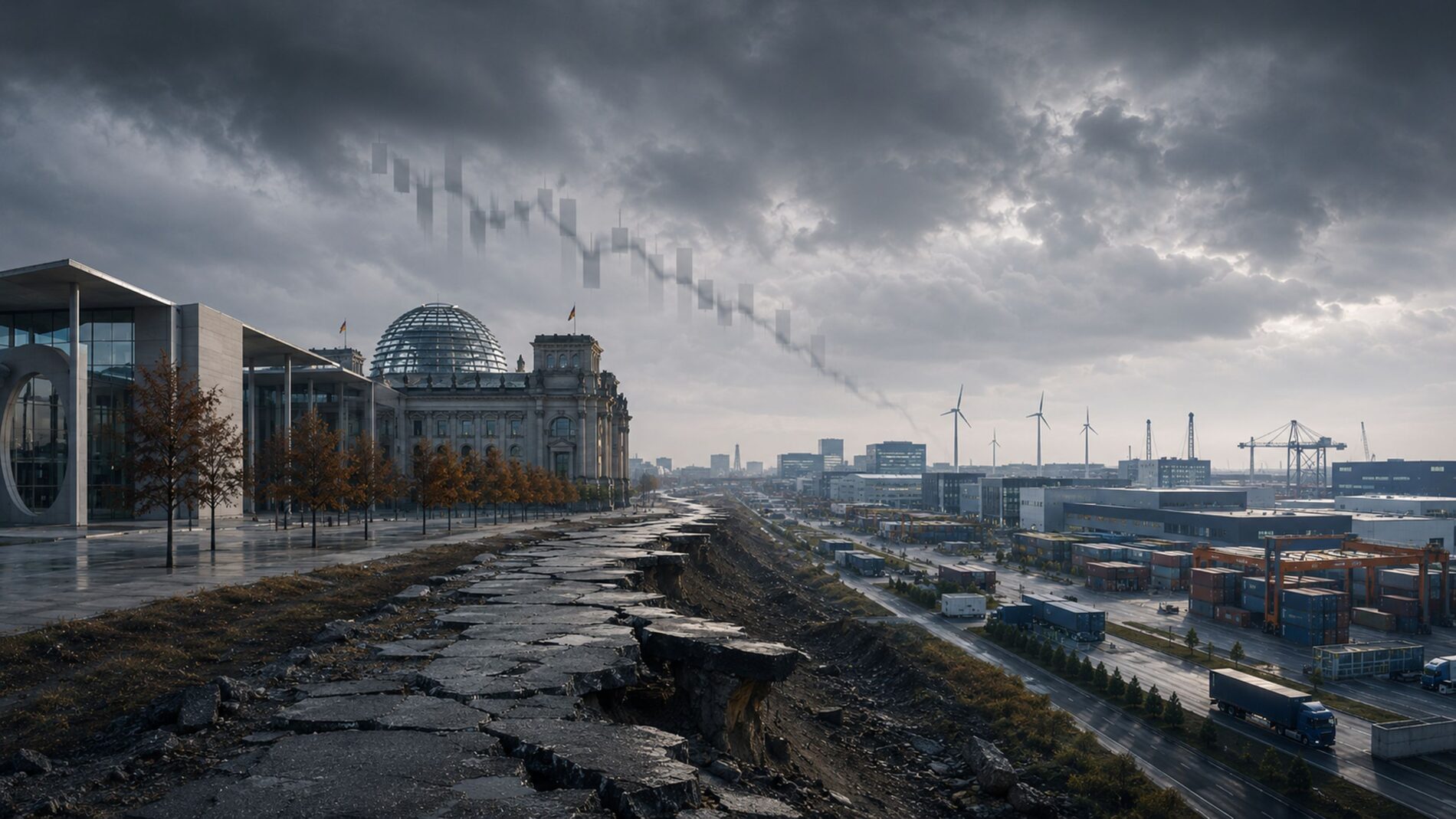
However, this growth masks the structural weakness of the economy as a business location. The Ministry of Economic Affairs now anticipates a distinct slowdown in the spring. “Current indicators point to a significant economic dampener in the second quarter,” the report states.
Economic Slowdown Meets Stalled Reforms
With this assessment, the government confirms the economy’s continued decline without initiating any discernible turnaround. Since taking office, it has held out the prospect of reforms designed to ease the burden on the business sector. Yet, to this day, companies see few concrete measures that would facilitate investment or effectively reduce operating costs.
The heralded “Autumn of Reforms” already proved largely inconsequential last year. Since then, one economic summit has followed another in quick succession. However, businesses continue to await binding decisions regarding energy prices, bureaucracy, taxation, and permitting procedures.
Industry Remains Weak While Operating Costs Rise
This political foot-dragging coincides with a fragile economic climate. The conflict involving Iran is exacerbating uncertainty across energy, raw material, and financial markets. Consequently, the risk is growing that external shocks could strike an already weakened economy even harder.
For businesses, however, the sheer number of political roundtable discussions is of little consequence. What matters are reliable regulatory frameworks, lower costs, and faster administrative procedures. It is precisely in these areas that the Federal Government has, thus far, failed to deliver tangible results.
External Crises Collide with Homegrown Structural Problems
The situation within the industrial sector remains particularly critical. “Industrial activity remains weak,” the Ministry of Economic Affairs emphasizes. While incoming orders have indeed risen recently, the government itself points to the possibility of “pull-forward effects” triggered by the outbreak of the conflict.
Many companies may, therefore, have placed orders earlier than usual. This distorts the short-term picture and serves only to boost the statistics. However, a robust recovery of the industrial sector cannot be inferred from these figures.
Without Relief, Another Setback Looms
Industry is also grappling with high energy prices, a shortage of skilled labor, a heavy tax and levy burden, and sluggish administrative procedures. While other nations actively vie for production facilities and investment, Germany continues to lose its appeal. This undermines growth, employment, and industrial value creation.
The Federal Government has now acknowledged these risks in its own monthly report. Nevertheless, it remains unclear when these warnings will translate into concrete economic policy. Without visible reforms, the next economic downturn threatens to manifest not merely as a brief slump, but as another step in a broader economic decline. (KOB)