
In Wesel, a private parking space for an electric vehicle became a matter of dispute in the spring of 2026 after a retired couple installed a parking spot—complete with charging facilities—next to their end-of-terrace house. The city authorities deem this usage impermissible under building regulations. Consequently, the couple has been ordered to cease using the space; continued use carries the threat of a coercive fine amounting to 5,000 euros. This case affects two seniors who simply sought to charge their vehicle at their home and now face the risk of administrative proceedings. (rp-online: 26.05.26)
EV Parking Space Becomes a Point of Contention in the City of Wesel
The conflict illustrates just how quickly private charging infrastructure can run up against municipal limits. A parking space at home can significantly facilitate the switch to an electric car, as the charging process does not depend on public stations. In Wesel, however, this very practical advantage has become a problem, because the city has prohibited the use of the newly constructed area as a vehicle parking space.
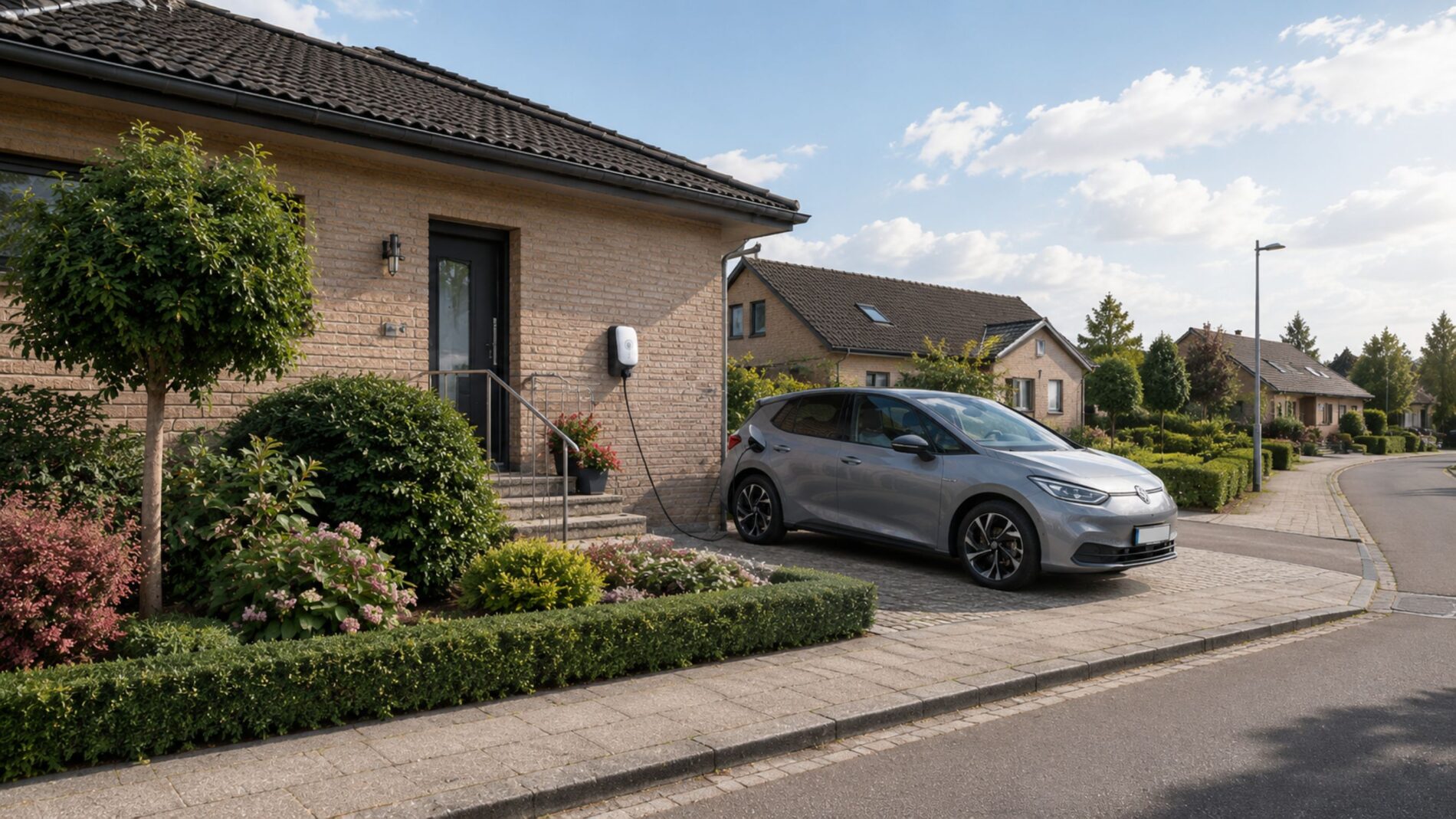
Stock image
The retired couple sought to integrate electric mobility into their daily lives. They wanted to keep the car parked directly at their home and charge it there, thereby eliminating the need for long trips to public charging stations. However, the authorities evaluated the situation not on the basis of the solution’s practical utility, but rather in accordance with building code regulations governing the property and its designated use.
Permitting Issue Escalates the Conflict
At the heart of the matter lies the question of whether the designated space may be utilized in this specific manner. The area in question was established adjacent to the end-of-terrace house without—it appears—the permissible scope of its use having been definitively clarified in advance. Consequently, the city is treating the matter not merely as a private parking issue, but as a violation of building regulations.
The threat of a coercive fine places significant pressure on the couple involved. The sum of 5,000 euros transforms what was initially a neighborhood and mobility issue into a financially consequential administrative case. At the same time, the official order demonstrates that the city is not merely seeking a retroactive clarification of the situation, but intends to actively prohibit the current use of the space.
Private Charging Spots Require Clear Rules
For many property owners, a parking space for an electric vehicle initially appears to be a straightforward adaptation to new mobility requirements. Legally, however, the situation can become complex when setback areas, driveways, front gardens, or local ordinances are involved. Consequently, simply owning a plot of land does not automatically grant the right to implement any desired charging and parking solution.
The case from Wesel highlights a critical weakness in the transition to sustainable mobility. While the political objective is to encourage more people to switch to electric vehicles, the practical implementation within residential environments is often determined by highly granular local regulations. If property owners only discover these rules after making an investment, avoidable conflicts and additional costs inevitably arise.
Wesel Case Reveals Conflict Between Climate Goals and Administrative Practice
The city can only enforce its position if it legally classifies the specific area in question as non-compliant. For the couple involved, however, what matters most is practical, everyday usability—since an electric vehicle loses significant value without a reliable means of charging. This creates a conflict that extends far beyond the scope of a single parking space.
In everyday life, the availability of a dedicated parking space for an electric vehicle often determines whether e-mobility is a viable option. Those who are able to charge at home save themselves unnecessary trips, time, and dependence on public charging infrastructure. The case in Wesel, however, demonstrates that installing private charging points without prior legal clarification can quickly become a significant burden.