
The new ICE L has been in service since mid-December, but Deutsche Bahn’s ICE train is starting its operations under unusual circumstances. The newly planned power cars still lack the necessary approval, forcing the company to rely on borrowed locomotives. This lack of approval necessitates a temporary solution and is noticeably impacting the start of service on the Cologne-Berlin route. The missing approval means that Deutsche Bahn’s ICE trains are traveling at lower speeds and are currently being operated with borrowed Vectron locomotives that cannot reach the planned top speed. (spiegel: 19.12.25)
Deutsche Bahn’s ICE trains rely on leased technology due to lack of approval
For the start of operations, Deutsche Bahn’s ICE trains will not use the originally planned locomotives from manufacturer Talgo, but will instead rely on Vectron locomotives from its leased fleet. The new power cars have not yet received approval from the relevant authorities, and a firm date for their release remains open. The necessary approval is being delayed while, according to Deutsche Bahn, the manufacturer is working to meet all formal requirements.
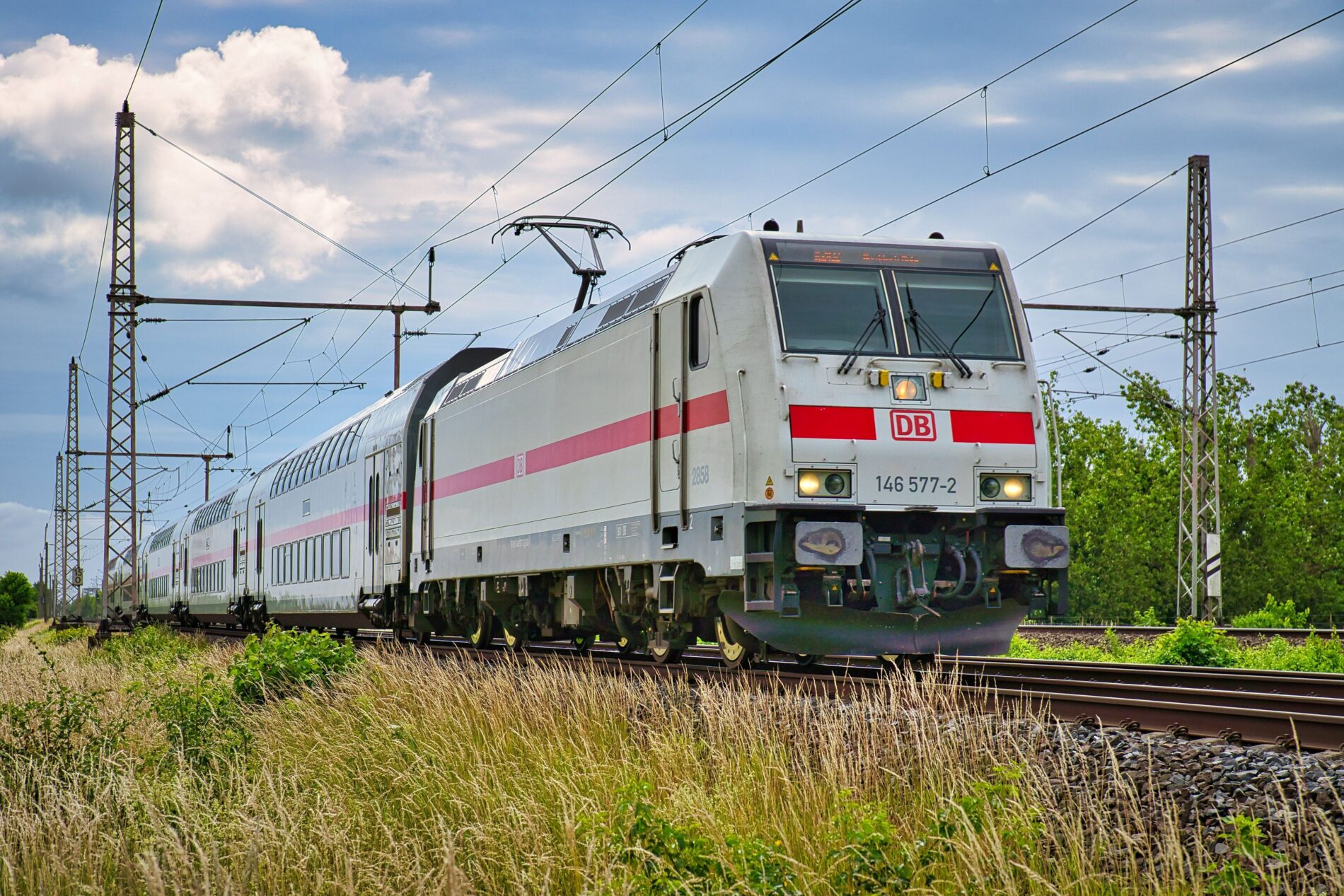
This decision ensures the continuation of operations, as the Vectron locomotives currently in use are fully approved and available at short notice. This allows Deutsche Bahn’s ICE trains to remain reliably on schedule, even though the leased locomotive is only intended as an interim solution. Internally, this phase is considered temporary until the production locomotives receive approval.
Reduced Top Speed Extends Travel Times
The lack of approval directly impacts the maximum speed, as the new train is currently unable to reach its planned top speed. Instead of 230 kilometers per hour, a maximum of 200 kilometers per hour is possible because the use of Vectron locomotives is technically limited. This restriction extends travel times and is already reflected in the official timetables.
Deutsche Bahn’s new ICE trains are therefore traveling slower than planned, but remain operational. For passengers, this means longer travel times, which are clearly indicated, allowing for reliable planning. Deutsche Bahn emphasizes that this reduction in speed is being communicated deliberately while work continues on obtaining full approval.
The railway company emphasizes that this reduction is being communicated intentionally while work continues on obtaining full approval.
Accessibility Remains a Key Argument
Regardless of speed or locomotive, the ICE L sets new standards for accessibility, as the train features step-free boarding. This accessibility significantly facilitates travel and improves comfort, especially for passengers with reduced mobility. Wider carriages and level boarding are standard features, while the interior design is clear and uncluttered.
Deutsche Bahn sees this accessibility as a crucial advancement, even though the train currently has some technical limitations. The improved accessibility remains a core characteristic of the new train type and clearly distinguishes the ICE L from older long-distance trains.
Planned Expansion Despite Technical Limitations
Despite the pending approval, the company is sticking to its expansion plans. Starting in May, further routes are to be added, including connections between Berlin, Hamburg, and Westerland. From July, additional services from North Rhine-Westphalia towards the coast and the Allgäu region are planned, with the use of Vectron locomotives initially continuing.
Four new trains are to be delivered by the end of the year, with nine more units to follow next year. Deutsche Bahn has ordered a total of 79 ICE-L trains, but the original schedule could not be met. The new ICE trains from Deutsche Bahn are thus launching with technical limitations, but under controlled conditions, until the approval, maximum speed, and vehicle concept are fully aligned.