
Since 2022, the German economy has been stagnating, while DAX-listed corporations have made significant gains on the stock market. Per capita GDP has fallen by around two percent, and sentiment among both businesses and consumers remains poor. The root cause is a severe structural crisis that demands an economic reset. Yet the “Black-Red” federal government under Friedrich Merz is failing to deliver this reset. Consequently, large corporations are shifting their revenue, value creation, and future prospects abroad. Small and medium-sized enterprises are increasingly following suit, while Germany loses its industrial substance. (welt: 03.05.26)
DAX Companies Have Long Earned the Vast Majority of Their Revenue Outside Germany
The DAX Price Index has risen by a good quarter on the stock market since 2022. However, this only appears to be evidence of German economic strength. In reality, the rise demonstrates just how significantly these listed corporations have already decoupled themselves from Germany as a business location.
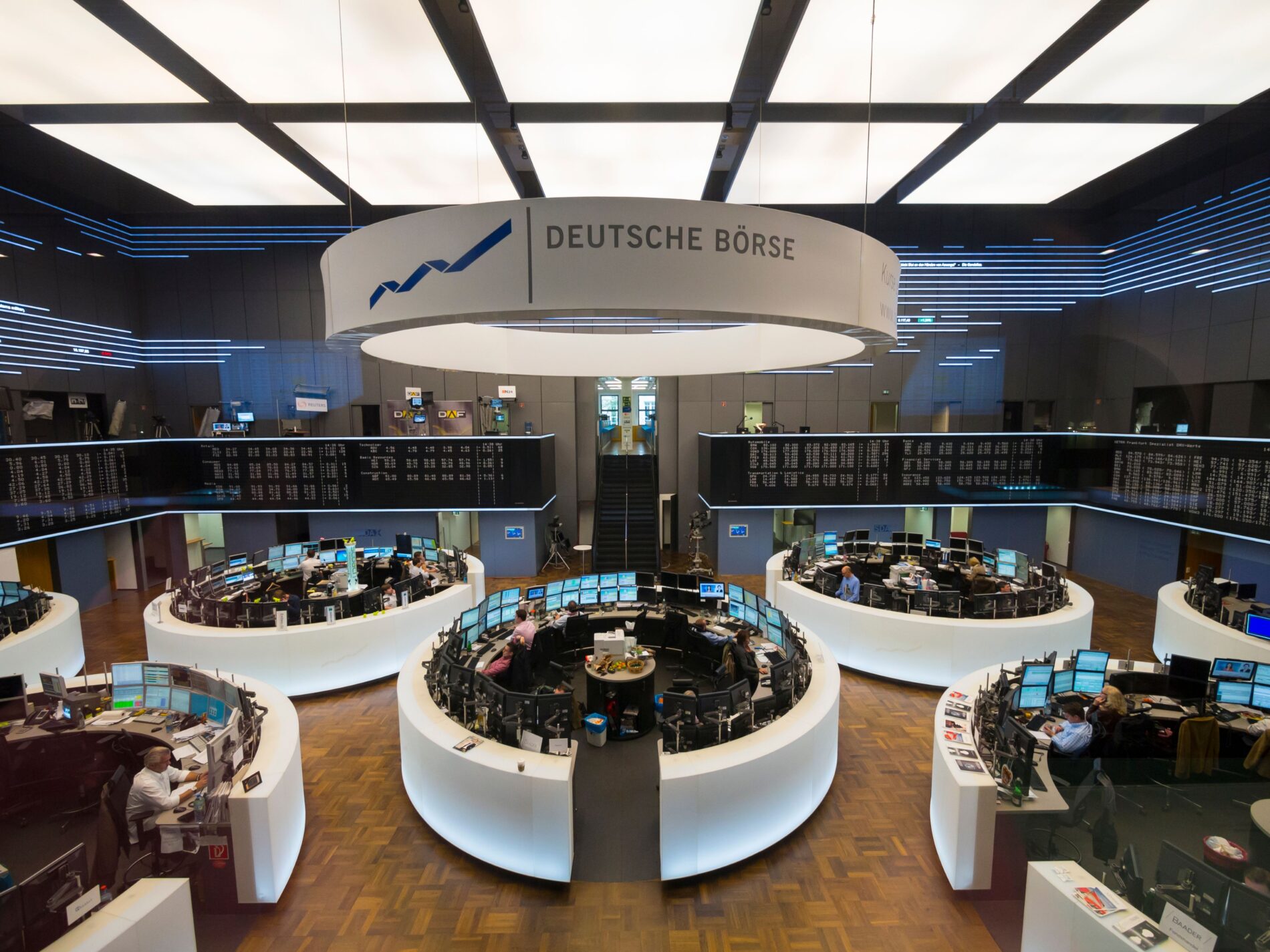
DAX-listed corporations generate more than 80 percent of their revenue abroad. Moreover, 60 to 70 percent of their value creation takes place outside of Germany. Consequently, their stock market success depends less and less on the state of the German economy.
SMEs Follow the Path of Large Corporations
For Germany, this decoupling poses a danger. When production, research, and investment migrate abroad, the domestic economic hub loses more than just individual jobs; at the same time, suppliers, skilled workers, and regional industrial networks come under pressure.
For a long time, Germany’s medium-sized enterprises (SMEs) remained more firmly anchored within the country. However, high costs, sluggish growth, and political uncertainty are altering the strategic calculations of many firms. As a result, an increasing number of companies are following the lead of the DAX corporations.
The USA Delivers Stronger Returns Despite Political Risks
A comparison with the United States underscores this trend. Since 2022, the S&P 500 has surged by more than 70 percent. Even Donald Trump’s volatile politics have, thus far, done little to slow down U.S. companies.
Since Trump took office, the S&P 500 has gained nearly 20 percent. Investors, however, focus primarily on earnings—not on political theatrics. Furthermore, companies are benefiting this year from Trump’s tax cuts.
Investors Shift Capital to Where Growth Is Generated
For a time, the DAX outperformed the S&P 500. Some investors reduced their exposure to the US market due to Trump. However, since the outbreak of the conflict with Iran, this lead has evaporated, as Europe appears to be more heavily impacted.
Investors now factor Trump’s regard for the financial markets into their calculations. Consequently, the adage “Trump Always Chickens Out” has evolved into the “TACO Rule.” This rule reflects the expectation that Trump will back down when faced with market pressure.
Exodus Becomes the Response to Stalled Reforms
Economist Albert O. Hirschman distinguished between “voice” (dissent) and “exit” (departure) as responses to adverse conditions. Many companies and young professionals are now choosing the path of exit. They are relocating capital, labor, and future opportunities to countries offering more favorable conditions.
Others respond politically—for instance, by casting their votes for the AfD. Those who wish neither to leave nor to protest can instead invest their savings abroad. At the same time, however, they remain exposed to the reach of the German state—particularly as the SPD and the Left Party call for increased wealth redistribution.