
In Bavaria, concerns regarding gas extraction are stalling the development of several domestic deposits—even though Germany continues to require gas in the wake of the energy crisis, the nuclear phase-out, and costly imports. In Reichling, located in the Alpine foothills, an exploratory drilling operation concluded back in August, yet public results remain unavailable. In Holzkirchen, disputes over a drilling site—along with concerns regarding groundwater, geothermal resources, and potential seismic activity—are blocking access to a deposit containing approximately 650 million cubic meters of gas. Potential gas fields stretching from Swabia to Traunstein are similarly affected. Consequently, domestic resources remain untapped, while other European nations are opening up new gas sources, extending existing extraction operations, or technically expanding their production capabilities. (welt: 18.05.26)
In Bavaria, concerns are increasingly taking the place of technical scrutiny
In Reichling, the “Lech” energy project has been at a standstill for months. The consortium continues to cite ongoing analyses but offers no concrete results. Consequently, it remains unclear whether the drilling is paving the way for extraction or if the project is stalling politically due to various concerns.
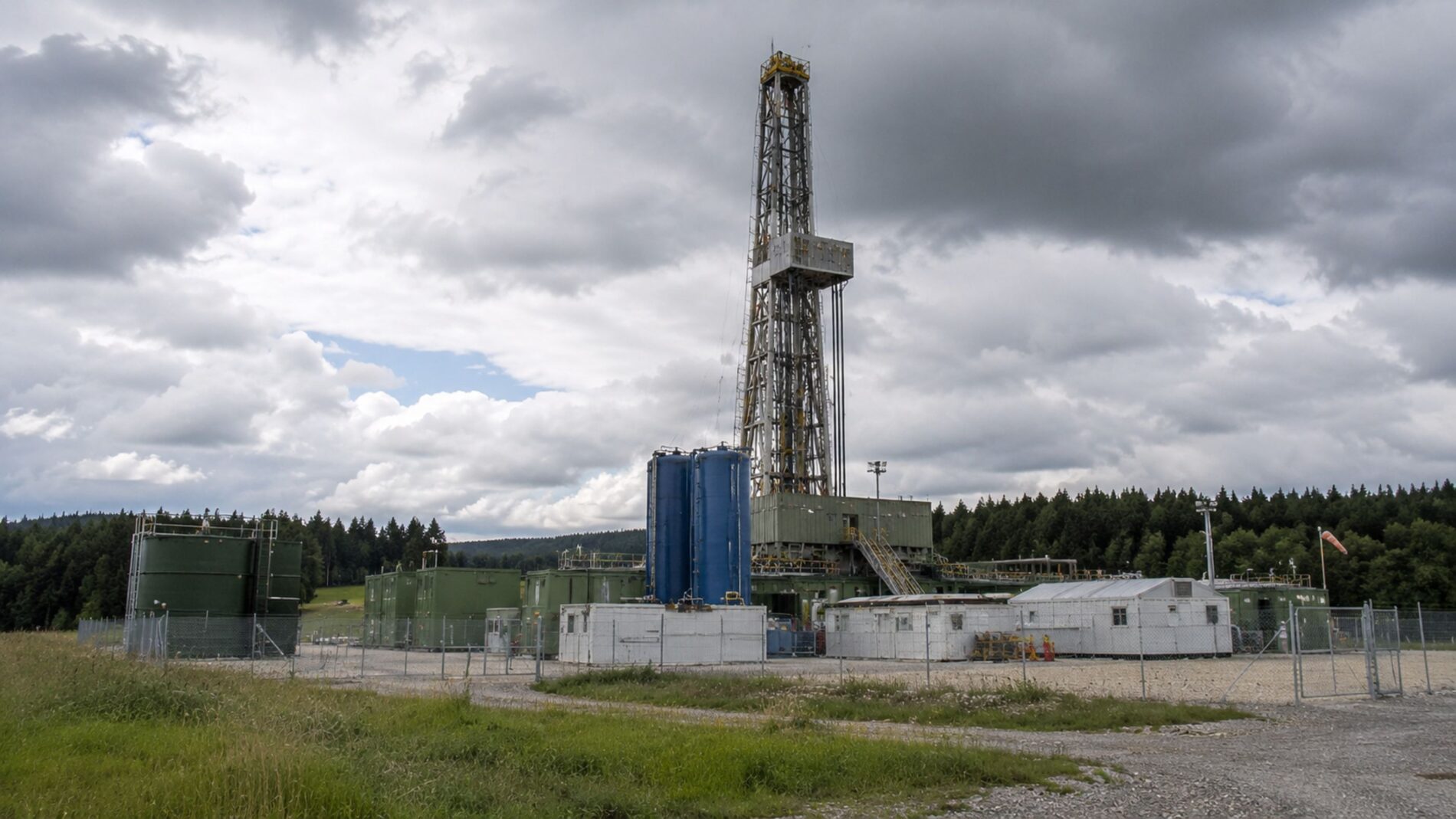
Industry sources suggest that the technology is largely ready. Consequently, extraction could, in principle, begin. However, lengthy administrative procedures and massive local opposition are seen as major obstacles. Yellow wooden crosses attached to garden fences in the area serve as a visible sign of just how deeply entrenched this local opposition has become.
Holzkirchen Fears Impact on District Heating and Boreholes
Holzkirchen, located southeast of Munich, also sits atop a significant natural gas field. Terrain Energy intends to develop this field, yet the company has been unable to secure a drilling site. Managing Director Marcus Endres explains that he could begin supplying gas within six months. He notes that the gas is under high pressure, allowing it to rise naturally and be extracted using conventional methods.
However, the municipality opposes the project. Mayor Christoph Schmid cites concerns regarding potential seismic activity and risks to local geothermal energy systems. Holzkirchen relies on deep-seated thermal water to power its district heating network. While this concern certainly warrants technical scrutiny, it does not justify a blanket ban on the project—particularly in the absence of specific expert assessments.
Authorities Demand Safety, Yet Create Stagnation
The Bavarian Ministry of Economic Affairs emphasizes that geothermal drilling operations must not be jeopardized by natural gas drilling activities. Furthermore, the Ministry points to the need for expert assessments and strict liability requirements. While this cautious approach sounds reasonable, in practice, it results in a project being stalled before a formal application can even be submitted.
To date, Terrain Energy has been unable to file a drilling application because it lacks a designated drilling site. The municipality refuses to provide a location, and private landowners remain hesitant as well—despite the potential for substantial financial earnings. According to the company, the drilling site would be left with nothing more than a small utility building once operations were complete; nevertheless, many landowners are deterred by the prospect of facing public criticism within the community.
Austria, Denmark, and Romania Secure Their Own Gas Sources
The contrast with Austria is therefore particularly striking. In May 2026, OMV brought the Wittau gas field—located near Vienna—into operation. It is considered Austria’s largest gas discovery in 40 years. In the initial phase, approximately 11 terawatt-hours of gas are set to be developed. In total, OMV estimates the recoverable resources at up to 48 terawatt-hours.
Denmark, too, is once again assigning greater strategic importance to North Sea gas. The government is currently examining whether existing production permits can be extended beyond 2042. This does not constitute a traditional new licensing round; nevertheless, it demonstrates that security of supply is once again taking precedence. Furthermore, Romania is pressing ahead with the Neptun Deep project in the Black Sea. This project is expected to begin supplying large quantities of gas starting in 2027.
Germany’s Gas Debate Loses Touch with Reality
Other countries are also prioritizing their own domestic sources. Norway is boosting yields from existing fields through the use of new technologies. The Netherlands is advancing offshore projects in the North Sea. This creates a clear pattern: many nations are keeping gas available as a transitional technology, while Germany is—through political means—stifling the development of its own domestic potential.
Germany’s concerns ought to focus on clarifying risks rather than effectively halting all exploration activities. Yet in Bavaria, the prevailing impression is that fear and bureaucratic procedures carry more weight than technical considerations. Germany continues to consume gas. Moreover, it imports energy from countries that are engaging in precisely the kind of extraction that is now largely deemed undesirable within Germany itself.