
Bergheim, in the district of Neuburg-Schrobenhausen, is prioritizing the protection of high-yield arable land over the further expansion of solar power installations on agricultural sites. In late September, the municipal council rejected a proposal from Munich-based DoppelErnte GmbH, a project developer seeking to build an agri-PV facility. This concept involves placing solar panels on farmland while allowing agricultural activity to continue between or beneath them. However, even this dual-use approach failed to convince the municipality when it came to high-quality soil. Bergheim aims to preserve particularly productive land exclusively for food production, thereby preventing the energy transition from increasingly competing with agriculture for scarce, fertile soil.
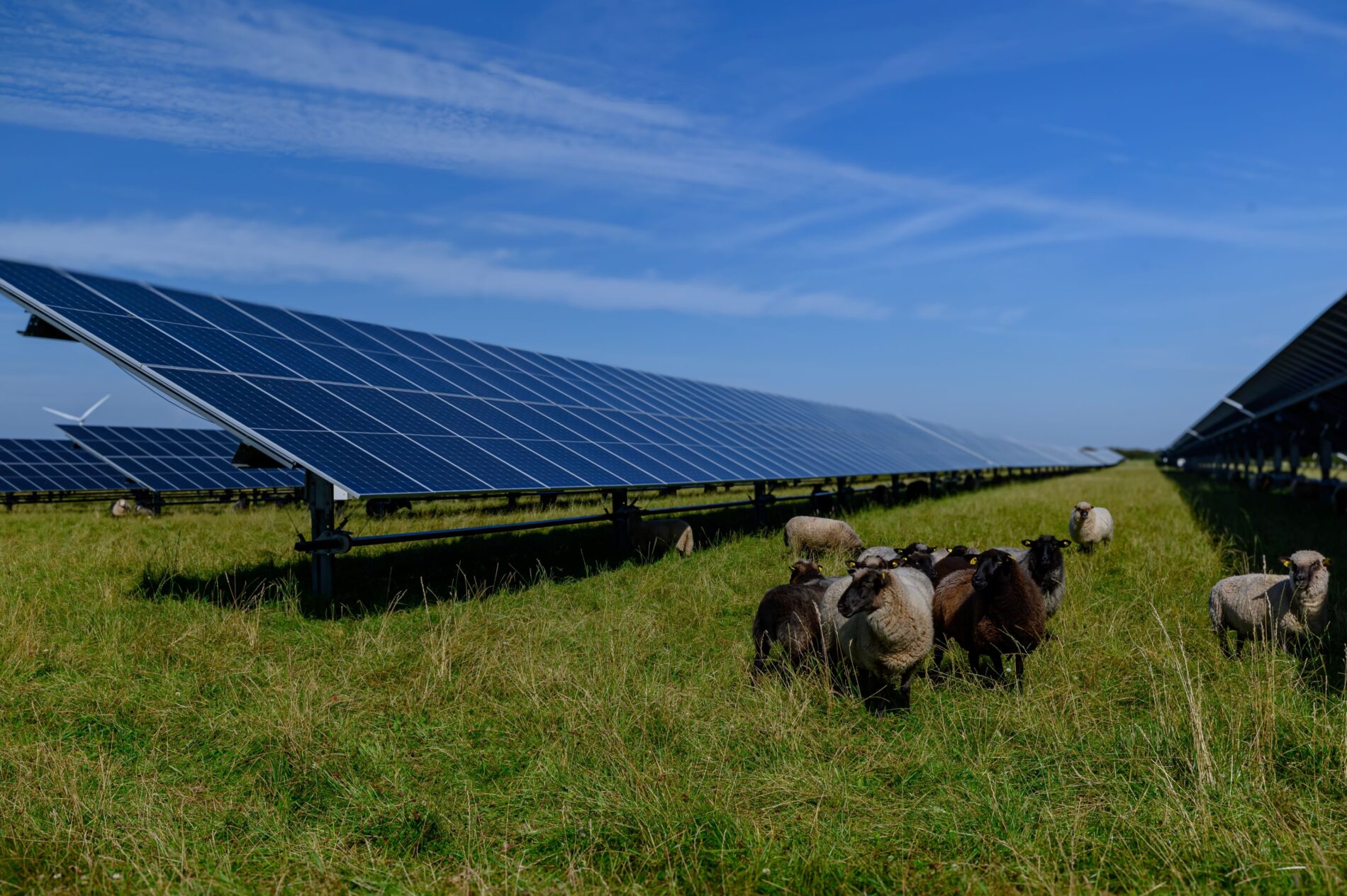
Image: Shutterstock
Agri-PV Does Not Completely Eliminate Land-Use Conflicts
Agri-PV is considered a solution to the competition between agriculture and solar power generation. However, this conflict of objectives does not disappear entirely through dual land use. The Bavarian Technology and Support Centre (TFZ) points out that solar panels can restrict working widths during fertilization and crop protection operations.
Furthermore, the installations can influence crop selection and farm management practices. The TFZ identifies a continuing need for research into the long-term effects of shading on yields and product quality. This aspect therefore carries particular weight, especially on highly productive soils.
High-quality arable land cannot be replaced elsewhere
Bergheim has already made the protection of high-quality soil a condition for previous solar projects. In the case of an application by the developer Anumar, the municipality stipulated a maximum soil quality rating of 50. However, one of the sites in question had ratings between 74 and 77, and thus failed to meet the established criteria.
In doing so, the municipality is pursuing an approach that goes beyond mere electricity generation. Fertile soil yields harvests over decades and forms the foundation of regional food production. While solar installations are feasible at other locations, high natural soil fertility cannot simply be transferred to poorer-quality land.
Agricultural land is becoming increasingly scarce
Germany has been losing agricultural land for years. According to the German Environment Agency, the total area shrank by 3,058 square kilometers between 2016 and 2024. While the expansion of settlement and transport infrastructure was the primary cause, any additional competition for land intensifies the pressure on remaining arable fields.
Bavaria’s Minister of Agriculture, Michaela Kaniber, has also articulated this conflict with unusual clarity. “Our land is limited, and it is needed primarily for food production,” she stated in May 2026 at the opening of an agri-PV pilot plant. At the same time, she warned against projects where agriculture serves merely as a pretext for installing solar panels.
Bergheim draws a clear line regarding solar installations
The decision is not fundamentally opposed to photovoltaics; however, it establishes a priority: highly productive soil should primarily be reserved for agriculture. Consequently, solar projects must focus more on less valuable land or areas that have already been developed.
This point is particularly significant given the growing demand for land. While a solar module can be dismantled after its service life, it affects land management while in operation. For this reason, Bergheim does not accept such an intrusion on high-quality farmland, even under the guise of “dual use.”
Author: Blackout News
Sources: Bayerisches landwirtschaftrliches Wochenblatt (02.10.26)