
The final CASTOR transport carrying high-level radioactive waste from the reprocessing of German fuel elements arrived at the interim storage facility at the Brokdorf nuclear power plant around 10:17 p.m. on June 17. According to NDR, the seven containers arrived without incident. Only a few demonstrators accompanied the transport. The police chief in charge, Frank Matthiesen, attributed the peaceful nature of the event to a shift in the social climate. For Nuklearia, the low level of mobilization indicates that organized resistance to a return to nuclear power has lost momentum.
CASTOR shipment arrives at former anti-nuclear movement stronghold
“For decades, Brokdorf was a symbolic site for the anti-nuclear movement. Now, the final shipment has arrived there smoothly—of all places—without any significant mobilization for protests. Nuclear power has once again become socially acceptable. Consequently, there is no longer any excuse for policymakers to delay a return to nuclear energy,” says David Gramatzki, a board member of Nuklearia. He had visited Brokdorf the day before the shipment—June 17—to see the situation for himself.
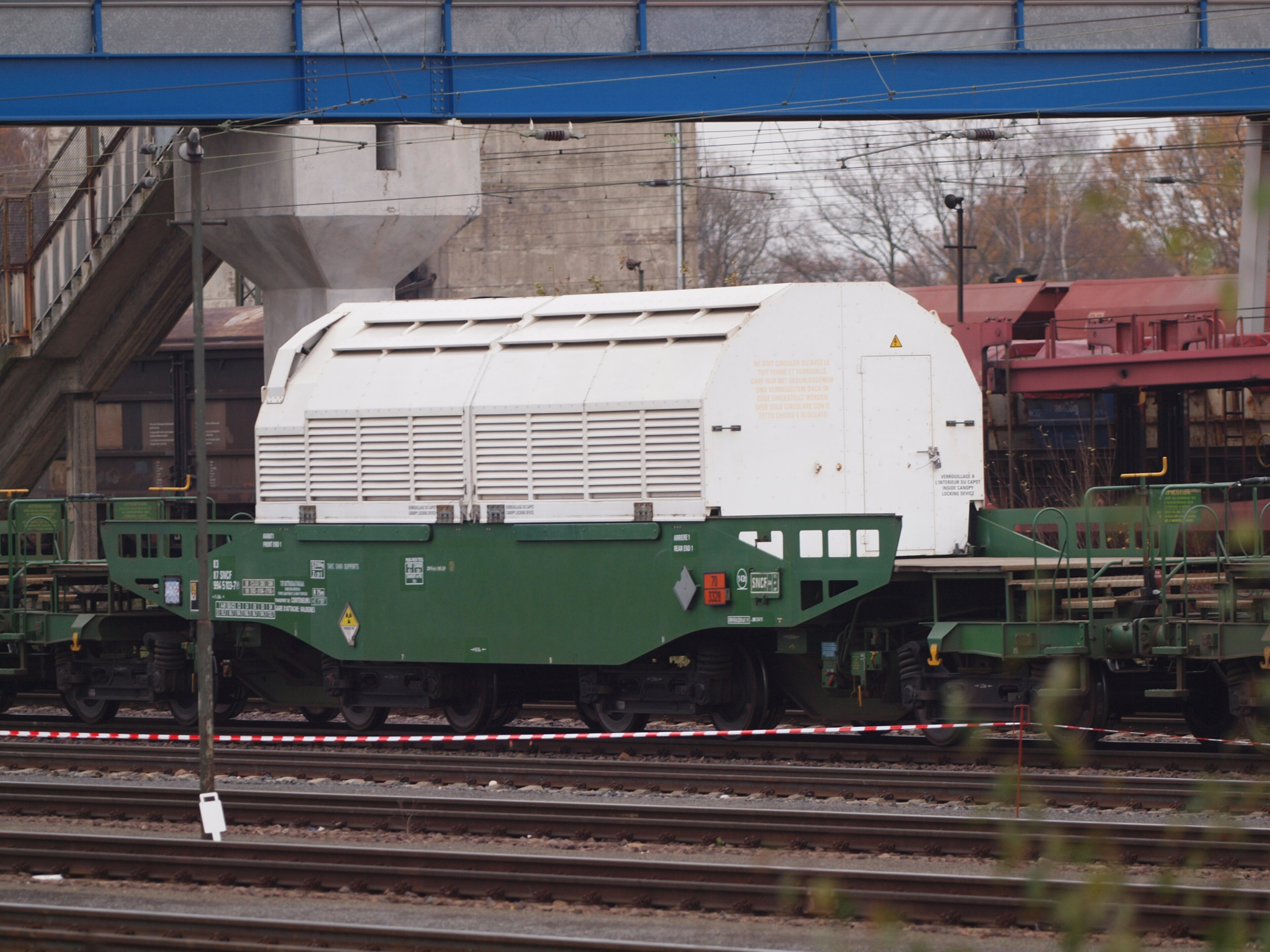
Image: KaiMartin, CC BY-SA 3.0, via Wikimedia Commons

“The public is already far ahead of the political establishment. It is time to put the legalization of nuclear power, the reactivation of shut-down power plants [1], and the resumption of fuel recycling on the agenda,” said Gramatzki. The trouble-free CASTOR transport stands in stark contrast to earlier shipments, which regularly triggered massive protests and large-scale police operations.
Police chief notes a shift in the social climate
The police also observe a completely different situation. Frank Matthiesen, the head of the Itzehoe police directorate and the officer in charge of the operation, commented to NDR on the relaxed atmosphere on the evening of the transport: “I believe the overall social climate has changed to such an extent that this is one of the reasons why no protests took place here today.”
Surveys support the assessment of a shift in attitudes toward nuclear power. A YouGov/SINUS survey from the spring of 2026 found that 53 percent of respondents considered Germany’s nuclear phase-out to be a mistake. A Verivox/Innofact survey from 2025 showed 55 percent support for re-entering the nuclear power sector.
What is inside the seven transport containers
The massive HAW28M-type transport and storage containers do not hold fuel assemblies. Instead, they contain highly radioactive residues bound in a stable form within glass canisters. These residues were generated during the earlier reprocessing of German fuel assemblies abroad. Usable nuclear fuel was separated out during that process, while the remaining residues were concentrated and vitrified.
This approach conserves resources and significantly reduces the volume of waste requiring disposal. The seven containers brought to Brokdorf hold all the high-level radioactive waste remaining from the recycling of fuel used to generate approximately 100 TWh of electricity. This amount of electricity would be sufficient to meet Hamburg’s power needs for a decade. From Nuklearia’s perspective, the CASTOR transport thus illustrates a key advantage of nuclear energy: large quantities of electricity generated with comparatively small amounts of concentrated waste.
Final Disposal Remains a Key Task
Radioactive waste materials must be permanently contained in a final repository. According to the Chair of the Management Board of the responsible Federal Company for Radioactive Waste Disposal (BGE), geological conditions for final disposal are favorable. “Germany possesses excellent geological formations for the final disposal of high-level radioactive waste. The challenge is not finding a site; rather, we are spoiled for choice,” she noted regarding the situation in 2025.
Nevertheless, the search for a site and the subsequent development of a final repository remain long-term technical and political undertakings. Nuklearia calls for an accelerated process to identify and develop suitable sites.
Nuklearia Calls for a New Debate on Energy Policy
Nuklearia demands an energy policy debate free of taboos. This includes a technical assessment of reactivating suitable German nuclear power plants and a fundamental return to nuclear energy.
Nuklearia—a non-profit organization independent of industry and political parties—views nuclear power as the foundation of a clean and secure energy supply. Through this stance, the association aims to protect the climate and nature while safeguarding the economy and prosperity.
The organization also advocates for the reprocessing of nuclear fuel. In its view, the smooth transport to Brokdorf demonstrates that public opposition no longer fundamentally stands in the way of a new debate regarding nuclear power, reactivation, and fuel recycling.
Author: Blackout News
Sources: Nuklearia (19.06.26) – NDR (Stand 19.06.26) – Tagesschau (18.06.26) – Süddeutsche Zeitung (18.06.26) – Deutschlandfunk (18.06.26)