
According to a study, biomethane—derived, for instance, from manure and organic waste—will remain a scarce resource in Germany, even in the medium term. On Monday, the Oeko-Institut in Freiburg stated that “in no region of Germany are there sufficient biogenic residues to meet the total demand for methane by 2045.” The researchers therefore recommend avoiding demand for methane, “particularly for the purpose of heating buildings.”
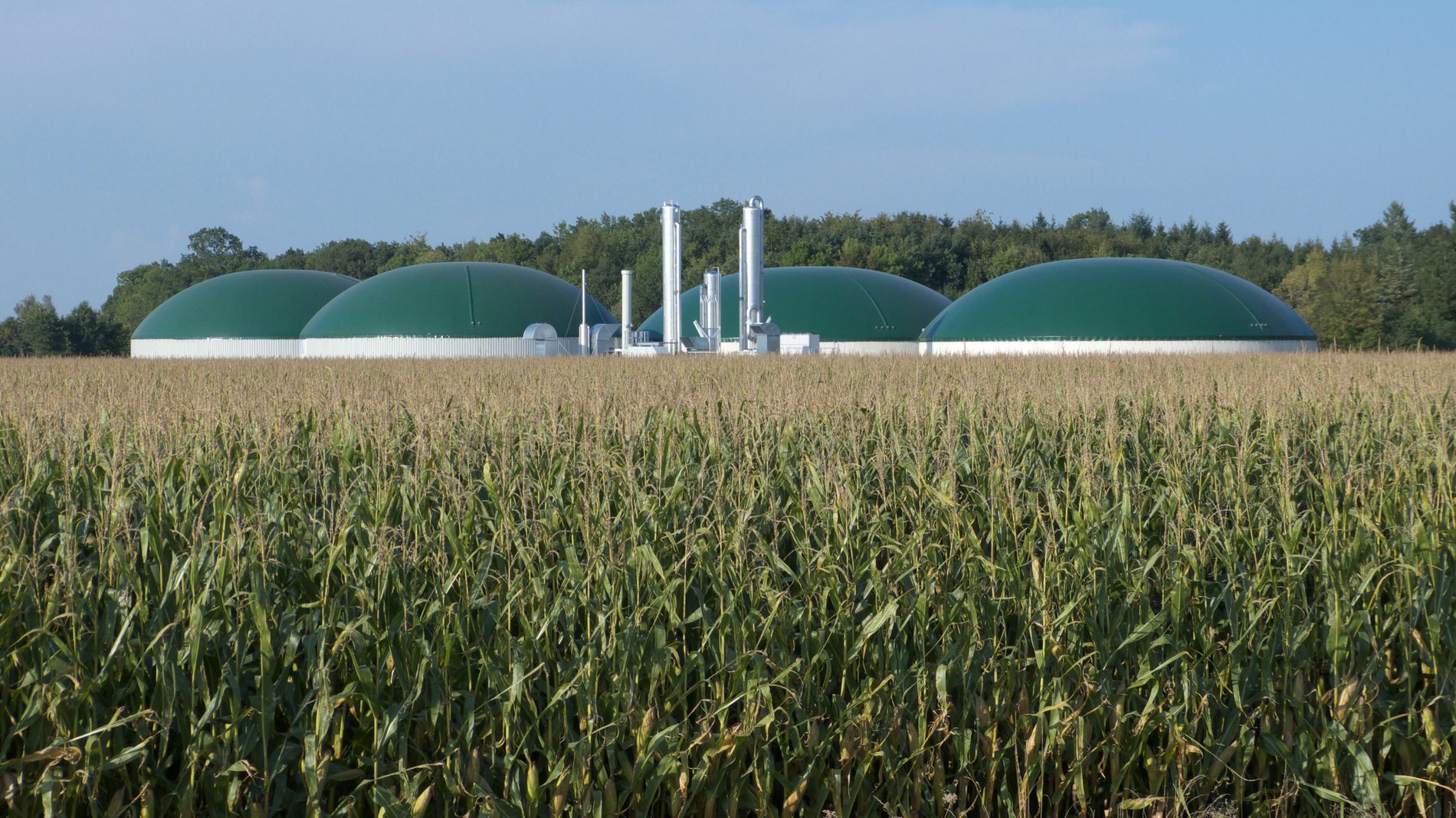
Image: Shutterstock
Biomethane can be used as a substitute for fossil natural gas. According to a study by the Oeko-Institut, conducted in collaboration with the Fraunhofer Institute for Solar Energy Systems (ISE), Germany has a technical potential for biomethane—derived from liquid manure, solid manure, crop residues, or organic waste—of approximately 105 terawatt-hours per year. About 57 terawatt-hours of this potential currently remain untapped.
“In the scenario examined for 2045, this is contrasted by a demand for 187 terawatt-hours of methane,” the researchers explained. Furthermore, there are significant regional disparities in the distribution of available quantities: “While around 12.6 terawatt-hours of biomethane could be produced annually in Bavaria from previously untapped residual materials, the figures for Hesse and Saxony are only 2.5 and 2.3 terawatt-hours, respectively.”
Consequently, the potential for biomethane does not always align with the regions where there is a high demand for methane. Moreover, the Öko-Institut noted that the future transportability of the gas is questionable, given the anticipated dismantling of the gas grid. In any case, even in regions with high potential, the available supply would not be sufficient to meet the total future demand for methane.
“Biomethane should therefore be used strategically for industrial processes that are difficult to power with electricity—such as cement production—as well as for gas-fired power plants that can generate electricity when needed and help stabilize the power grid,” explained Benjamin Köhler, an author of the study at the Öko-Institut.
A more problematic aspect, however, is the “green gas quota” enshrined in the new Heating Act. “For buildings with new gas boilers subject to the statutory quotas under consideration, approximately 35 terawatt-hours of green gases could be required by 2045,” the experts calculate. “This is equivalent to more than three times current biomethane production and about 65 percent of the additional biomethane potential that could be mobilized.”
“In the building sector, energy-efficient solutions such as heat pumps should therefore generally be given priority,” explained Christoph Kost of the Fraunhofer ISE. Otherwise, competition for limited biomass resources—between the building sector, industry, and the energy sector—will only intensify.
Author: AFP – pe/ilo
Sources: AFP Press Portal