Less than five percent of Germany’s total land area is considered suitable for the final disposal of high-level radioactive waste. According to an interim report published on Tuesday by the Federal Company for Radioactive Waste Disposal (BGE), five federal states have now been ruled out in the search for a suitable disposal site. While Federal Environment Minister Carsten Schneider (SPD) described this as an important step in the search process, opponents of nuclear power called for greater transparency in the selection procedure.
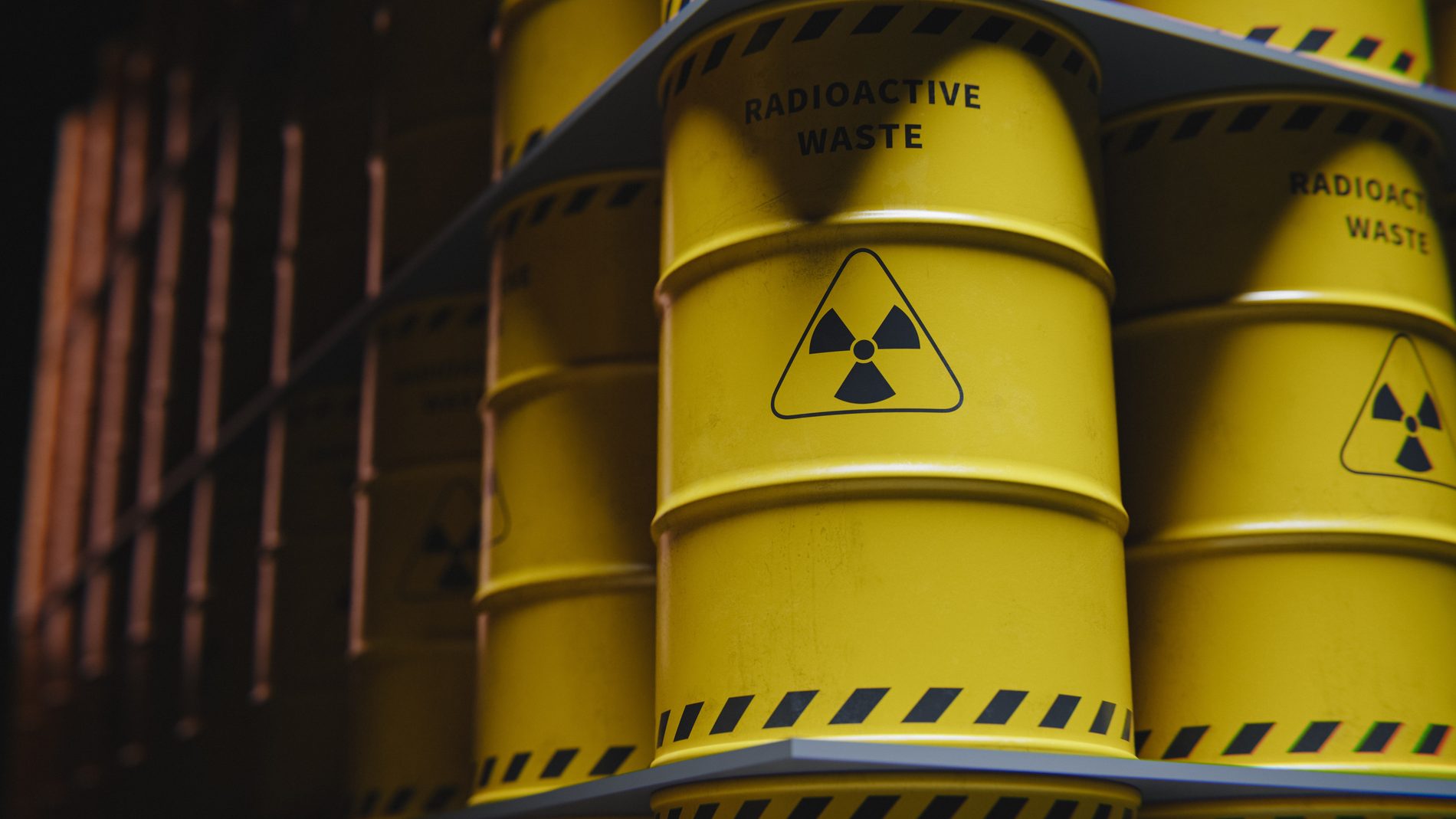
Image: Shutterstock
The goal of the search for a final repository is to identify a site that offers the highest possible level of safety for the storage of high-level radioactive waste. To evaluate potential host rock formations, experts at the BGE (Federal Company for Radioactive Waste Disposal) state that they have analyzed millions of geological data sets concerning Germany’s subsurface.
The federal company has now released a final update on the current status of the repository search, ahead of the planned proposal—due by the end of 2027—of a select few regions in Germany for further exploration.
The areas still under consideration for a final nuclear waste repository are primarily located within a belt stretching from western Lower Saxony to Saxony-Anhalt. Other potential locations include specific areas in southern Brandenburg, western Baden-Württemberg, eastern Bavaria, and parts of Schleswig-Holstein. Rhineland-Palatinate, Saarland, Hesse, Saxony, and Berlin have been entirely ruled out in the search for a repository site. As of 2025, approximately one-quarter of Germany’s total land area remained under consideration.
Federal Environment Minister Schneider believes Germany is on track to reach the “first major milestone in the search for a final repository.” The Federal Ministry for the Environment stated that the published interim findings allow “everyone to verify that the regions in question are being selected transparently, based on scientific criteria.” The goal of the process is to identify, step by step, the site that offers the highest possible level of safety.
“We are confident that the ongoing site-selection process will lead us to an excellent location for Germany’s high-level radioactive waste,” said Iris Graffunder, Chair of the management board of the Federal Company for Radioactive Waste Disposal (BGE).
The anti-nuclear initiative ausgestrahlt has accused the BGE of a lack of transparency in how it classifies suitable regions. The group criticized the fact that the necessary geological data remain “kept under wraps” and inaccessible to the public. They argued that only a critical public can prevent a scenario where “an unsuitable site ends up being chosen—just as happened previously with Gorleben, the Asse mine, and the Konrad shaft.”
Jakob Blankenburg, environmental policy spokesperson for the SPD parliamentary group in the Bundestag, emphasized that nuclear waste is “the shared legacy of an entire generation.” Consequently, no one can “evade their responsibility” in the search for a final repository, Blankenburg told AFP. He noted that he represents a constituency where highly radioactive waste has been stored in “Castor” casks inside a facility “for decades.” The people living there, he added, have “a right to see an end to this provisional arrangement.”
Harald Ebner, the Green Party’s parliamentary spokesperson on nuclear policy, described the progress as an “important milestone” in the search for a nuclear waste repository. Moving beyond a “blank slate” approach for all of Germany, the process has now identified regions that are fundamentally suitable for storing “1,900 Castor casks containing highly radioactive waste underground for 30,000 generations.”
Ebner stressed that an expeditious search for a repository is “important and urgent, especially given the current tense global situation and the growing threat of hybrid warfare.” However, he cautioned that anyone seeking to build public acceptance for the repository search must “stop spinning fairy tales about a potential return to nuclear power.”
Mareike Hermeier, spokesperson for nuclear safety for The Left party, urged Environment Minister Schneider to finally present the draft amendment to the Site Selection Act—a document that has been promised for months. She insisted that the ongoing selection process must ensure “complete transparency” and “reliable public participation.”
Author: AFP – hei/hcy
Sources: AFP Press Portal