
Tunis – On August 5, 2026, the state-owned utility STEG announced potential rolling power outages across the country. Individual sectors were scheduled to be taken off the grid sequentially between 12:30 p.m. and 5:00 p.m., for a maximum of two hours at a time. The measure constitutes controlled load shedding in response to excessive demand; consequently, STEG distributed available power by region on a rotating basis. Households, businesses, the agricultural sector, and industry—spanning from the Greater Tunis area to the south—were affected. The situation is particularly striking given the country’s natural endowment: Tunisia enjoys around 3,000 hours of sunshine annually, yet has so far made only limited use of this potential.
Rolling blackouts are a form of state-organized load shedding
In the Greater Tunis area, STEG listed locations including Ennasr, La Soukra, La Goulette, Ben Arous, and La Manouba. The warning also covered Cap Bon, Zaghouan, and Bizerte, as well as numerous towns in the northwest. In the central region, Sousse, Monastir, Mahdia, Kairouan, and Kasserine were on the list. For Sfax, the announcement encompassed both the city itself and surrounding industrial and coastal towns.
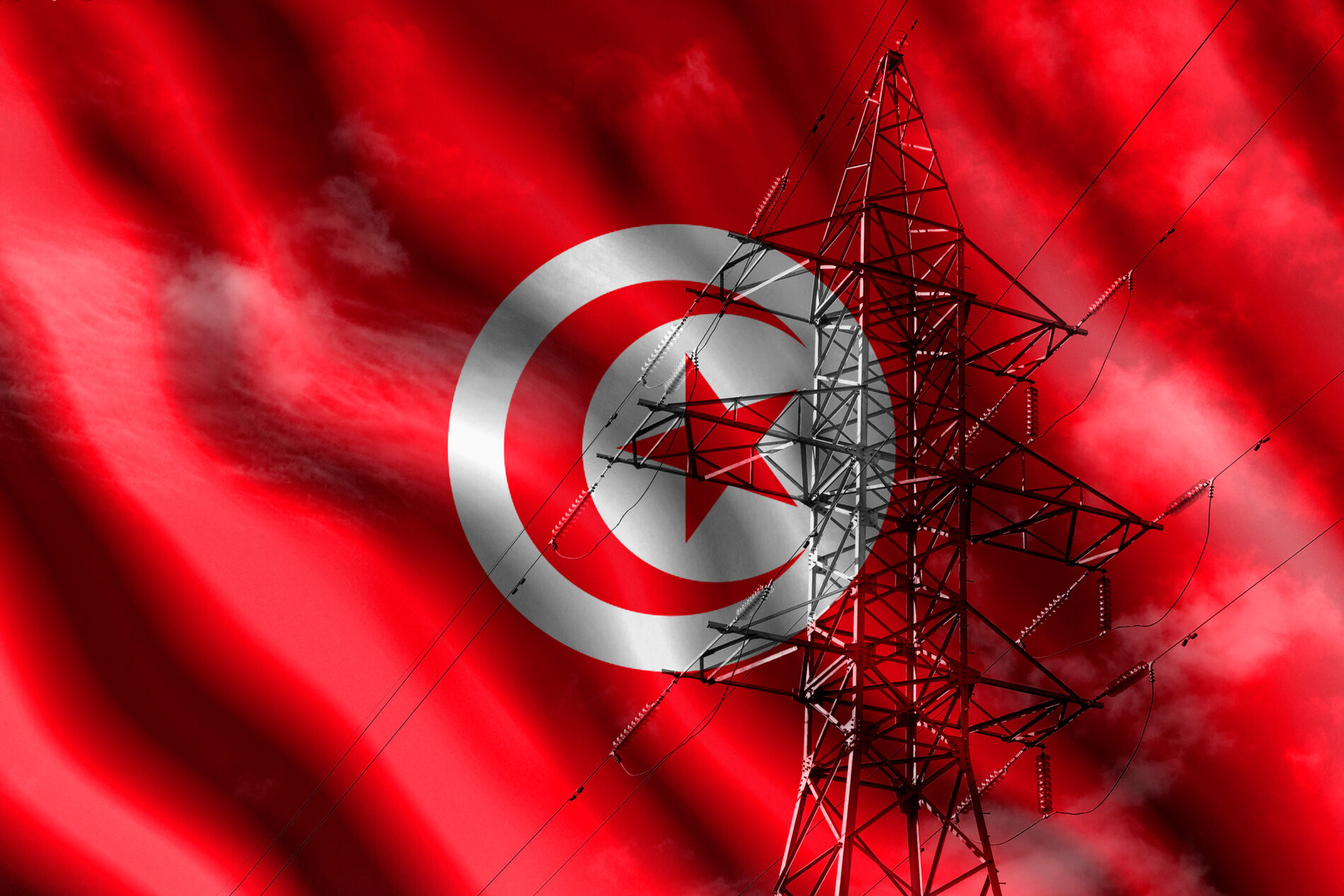
Image: Shutterstock
In the south, the potential sequence of power cuts extended from Gabès, Djerba, and Médenine to Zarzis, Ben Guerdane, and Tataouine. STEG also listed Kébili, Gafsa, Tozeur, and Sidi Bouzid. The list of affected areas remained open-ended and could expand as the load increased. The utility company is permitted to restore the power supply without further notice. This specific procedure is characteristic of rolling blackouts: the grid operator deliberately rations electricity to prevent the entire system from collapsing.
Abundant sunshine is no substitute for reliable power generation capacity
However, the sun only generates electricity when the necessary photovoltaic systems, transmission lines, and control technology are in place. According to the KfW, Tunisia enjoys roughly twice as many hours of sunshine as Germany. Despite this, renewable sources recently accounted for only about five percent of electricity production. Tunisia continues to generate the bulk of its power using natural gas, importing approximately 60 percent of that gas from Algeria.
At the same time, high temperatures drive up electricity consumption due to air conditioning. Consequently, STEG is required to provide more power during peak hours than its fragile system can reliably deliver. Thus, the rolling blackouts reflect a lack of usable generation capacity rather than a shortage of sunlight. Compounding the issue are an aging grid, financial constraints, and years of underinvestment. In July and August, repeated power outages caused damage across the agricultural, refrigeration, hospitality, and industrial sectors.
Europe Plans Imports, but Tunisia Must First Meet Its Own Needs
While Tunisia rations electricity, Europe and Germany are pushing ahead with plans to link North Africa to the European power market. The ELMED project aims to connect Tunisia to Sicily via a 600-megawatt undersea cable. In June 2026, STEG and the Italian grid operator Terna awarded a contract worth approximately 770 million euros for the converter stations. Additionally, Germany’s KfW is participating in the financing on behalf of the Federal Ministry for Economic Cooperation and Development. KfW explicitly identifies North Africa as a potential source of future green electricity imports for Europe.
However, the link operates in both directions and can also supply Tunisia with European electricity. Consequently, the connection is not automatically an export project that comes at the expense of the local population. Yet, the events of August 5th highlight the critical limitation of such plans: if regions must be cut off from the grid during peak midday demand, there is no exportable surplus available at that moment. Therefore, Tunisia’s population and economy must be reliably supplied first. Only then can genuine surpluses flow to Europe without further undermining the domestic power supply.
Author: Blackout News
Sources: Directinfo (05.08.26) – Steg (05.08.26) – Financial Times (05.08.26)