
More than three years after the shutdown of the last German reactors, the reactivation of nuclear power is once again gaining traction. Under the Electricity Supply Security and Capacity Act (StromVKG), the federal government will fund new, reliable power plant capacity for periods of low wind and solar output. New gas-fired power plants are expected to play a central role in this effort. In doing so, Germany is replacing a portion of the dispatchable capacity lost from its generation fleet following the nuclear phase-out. At the same time, however, these new facilities require imported fuel and emit CO2 when operating on natural gas. Ulrich Gräber describes precisely this development in his book Kniefall vor der Unvernunft – Der lange Schatten des Atomausstiegs (Kowtowing to Irrationality: The Long Shadow of the Nuclear Phase-Out), characterizing it as the consequence of an energy policy that abandoned nuclear power before a technically equivalent replacement was ready.
Nuclear phase-out eliminates firm capacity – replacement now required
The Electricity Supply Security Act (StromVKG) highlights the need for action. Tenders for two batches of 4.5 gigawatts of long-term capacity are scheduled for 2026, with a further two gigawatts planned for 2027. These plants are intended to step in during periods of low wind and solar output—so-called “dark doldrums”—and remain available for up to 15 years. The Bundestag itself anticipates around 20 new power plants to provide the initial nine gigawatts.
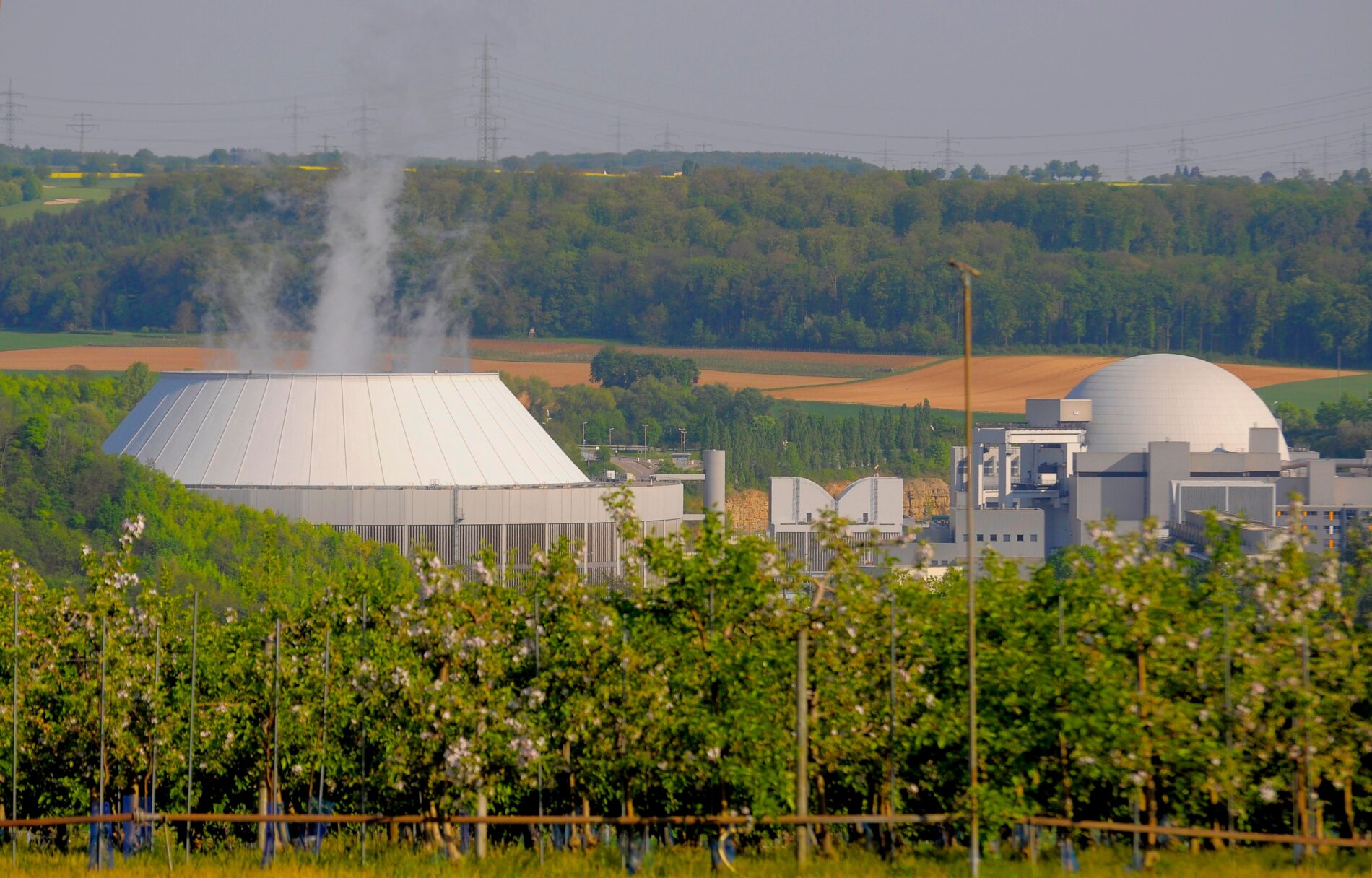
Image: Shutterstock
Gräber identifies precisely this as a fundamental flaw in German energy policy. In his book, he traces how political symbolism has displaced technical and economic considerations. Nuclear power plants were phased out before adequate grid capacity, storage systems, and reliable backup power were in place. Consequently, the nuclear phase-out does not end with the decommissioning of the reactors; instead, the costs shift to new power plants, infrastructure, and the need to secure supply against weather-dependent generation.
Baden-Württemberg illustrates the consequences particularly clearly
Baden-Württemberg provides a striking example of this. As recently as 2022, the state generated 53.9 terawatt-hours of electricity. However, following the shutdown of the Neckarwestheim II plant, production dropped drastically in 2023. By 2024, it had fallen to just 34.1 terawatt-hours. The State Statistical Office explicitly cites the nuclear phase-out as a reason for this decline.
At the same time, Baden-Württemberg consumed 61.7 terawatt-hours of electricity. As a result, 27.6 terawatt-hours had to be imported from other German states and abroad. Although renewable energy accounted for 59 percent of domestic generation, total electricity production fell to a level last seen around 1980.
Reactivating nuclear power instead of further dismantling
Paul Schmidt, an AfD Member of the Bundestag, is therefore calling for an immediate halt to the dismantling process. He advocates for reactivating nuclear power as an alternative to the multi-billion-euro subsidies currently earmarked for new gas-fired power plants. Schmidt points to calculations by the Radiant Energy Group; the study estimates that restoring the Neckarwestheim II plant would cost around 1.7 billion euros and take approximately 47 months. However, these figures are based on models rather than binding offers from an operator.
Radiant is now calling for an independent technical assessment of the decommissioned facilities, warning that further dismantling could irreversibly eliminate potential options for the future. This precise point lies at the heart of Graeber’s criticism. Once technical infrastructure has been destroyed, it cannot be restored at short notice should political assumptions later prove to be incorrect.
New Gas-Fired Power Plants Create New Dependencies
Gas-fired power plants can supply electricity flexibly, making them suitable as a reserve source. However, their fuel requires continuous procurement. Currently, Germany imports gas primarily via pipelines and LNG terminals. While the Federal Network Agency assesses the supply situation as stable, it points to global market risks and persistently high price levels. Furthermore, international conflicts can have an immediate impact on European wholesale prices.
Added to this is the conflict regarding climate policy. The decommissioned nuclear power plants generated electricity with very low CO2 emissions, whereas burning natural gas releases carbon dioxide. Although the new power plants must be hydrogen-ready and operate in a climate-neutral manner by 2045, they can utilize natural gas in the interim. Consequently, for a period of years, Germany is partially replacing reliable, low-carbon nuclear capacity with fossil-fuel-based generation.
The Long Shadow of the Nuclear Phase-Out Becomes Apparent
Against this backdrop, Gräber’s book takes on remarkable relevance. His criticism is directed not at renewable energy itself, but at the sequence of political decisions. Nuclear power plants were eliminated first, while reliable replacement capacity, grid infrastructure, and storage systems must now be built at great cost. The StromVKG (Electricity Supply Security Act) is now making precisely this cost equation visible.
Reactivating nuclear power would therefore be neither a simple path back nor a cost-free solution. Decommissioning, permitting processes, staffing requirements, and a lack of components make a restart significantly difficult. Nevertheless, it seems contradictory to permanently dismantle existing reactor sites while simultaneously pouring billions into new reserve power plants. This lends political weight to Gräber’s core thesis: the nuclear phase-out eliminated the power plants themselves, but not the need for the reliable capacity they provided.
Author: Blackout News
Sources (Web): Radiant Energy Group (11.08.26) – Dr. Paul Schmidt (08.08.26) – Deutscher Bundestag (08.07.26) – Statistisches Landesamt Baden-Württemberg (05.03.26) – Bundesnetzagentur (Stand 11.08.26)
Sources (Book): Ulrich Gräber: „Kniefall vor der Unvernunft – Der lange Schatten des Atomausstiegs“, Mentoren-Media-Verlag