
The expansion of Germany’s electricity grid is turning into a multi-billion-euro planning disaster. As of mid-October, only 2,929 kilometers of the 7,970 kilometers of high-voltage transmission lines originally planned—and long overdue—had been completed. More than 5,000 kilometers are still missing, even though the most critical links should have been operational years ago. Some major projects are running nine years behind their original schedules, while other grid expansion initiatives are delayed by more than a decade. At the same time, Germany has shut down its final nuclear power plants and ramped up the development of renewable energy. Consequently, grid operators are now forced to curtail wind and solar power generation due to a lack of transmission capacity. The result is a multi-billion-euro cost burden, which is being borne by both consumers and the economy.
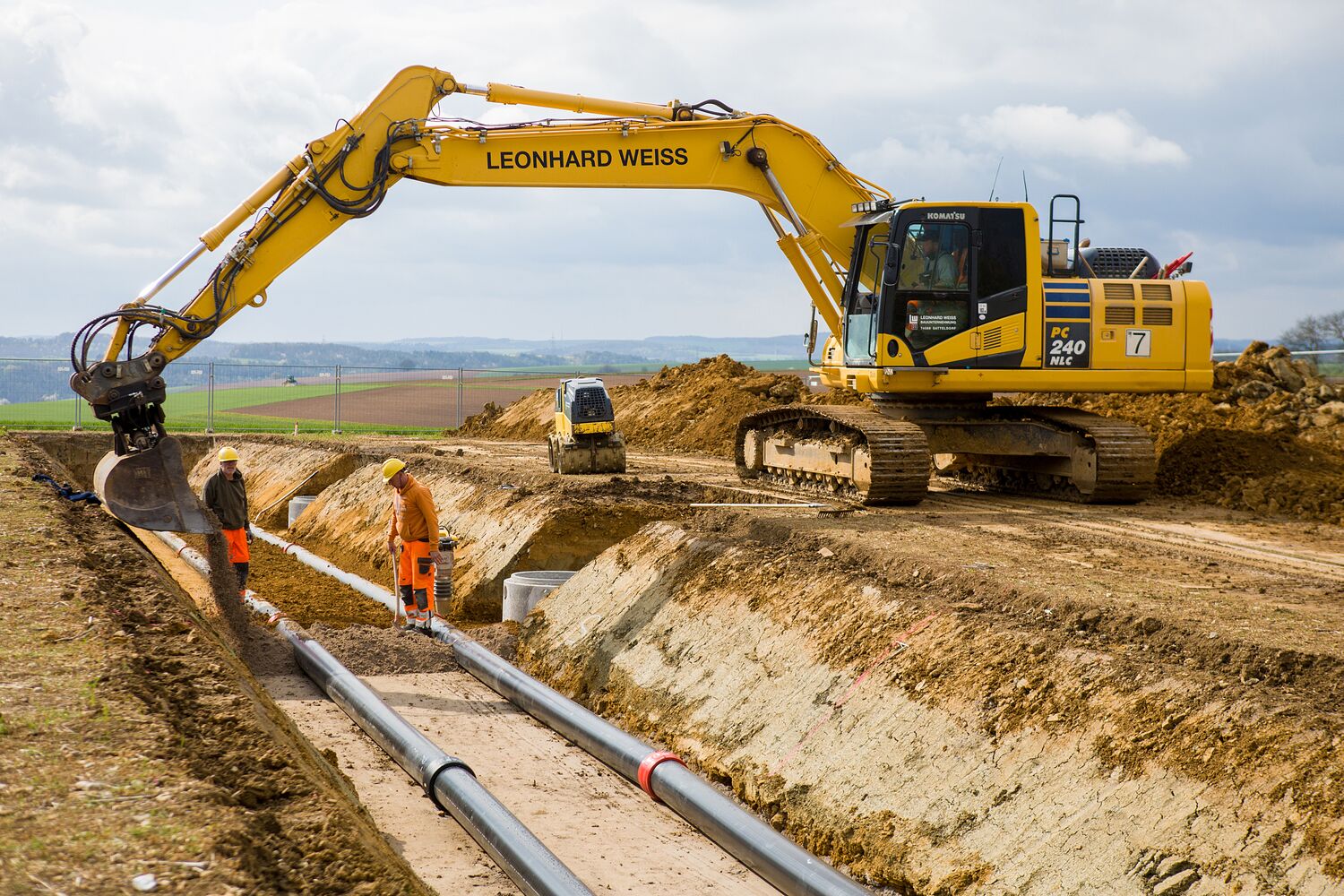
Image: ©Transnet BW
Power Grid Expansion Has Fallen Short of Its Own Targets for Years
An analysis of data from the Federal Network Agency (Bundesnetzagentur) reveals the extent of these delays. Only 37 percent of the power line segments originally scheduled for completion by now have actually been finished. Furthermore, the completion of a single construction phase does not necessarily mean that electricity can begin to flow; many lines only become operational once all their individual sections are finished. Consequently, the actual utility of the expansion completed to date falls short of what the raw kilometer figures might suggest.
The failure regarding the four major north-south power transmission lines is particularly significant. The Federal Government approved these core infrastructure projects as early as 2013, with the goal of providing ten gigawatts of transmission capacity to southern Germany by 2022 at the latest. Yet, full permits were not secured until 2025—by which time some of these lines should have already been delivering electricity for eight years. In this regard, energy policy has missed its own fundamental infrastructure targets by nearly a decade.
Nuclear power plants shut down – critical power lines still missing
The original timelines reveal a stark gap between planning and reality. The “Ultranet” project was supposed to be completed by 2017, but it will now not go into operation until the end of 2026 at the earliest. The “A-Nord” project has been pushed back from 2020 to mid-2027. For “SuedLink,” the initial completion targets of 2019 and 2022 have now shifted to an expected completion date of late 2028. “SuedOstLink” is now slated for 2027 rather than 2022, with an additional extension not expected until 2032.
Meanwhile, in April 2023, Germany shut down its final nuclear power plants. This removed further reliable generation capacity from the southern German power system—at a time when the planned north-south transmission links were still missing. Consequently, Bavaria, Baden-Württemberg, and Hesse have become particularly dependent on electricity supplied from other regions. While the integrated European power grid continues to ensure a stable supply, the lack of domestic transmission capacity increases the complexity and effort required for grid operations. In effect, Germany implemented fundamental changes to its electricity generation before the essential prerequisites for transporting that power were in place.
Political decisions made grid expansion more expensive and slower
The years of delays are by no means solely due to technical difficulties. In 2015, the federal government fundamentally altered the planning for major power transmission corridors. The policy shifted toward a greater use of underground cables instead of the previously planned overhead lines—a move intended to reduce public opposition to new pylons. However, this decision necessitated extensive re-planning and significantly drove up construction costs. In addition, there were lengthy approval processes, complex planning procedures, and shortages of skilled labor and components. Although policymakers have since accelerated various procedures, the original completion dates remain out of reach. The statutory expansion program now encompasses more than 100 individual projects. Most of these were completed behind schedule or remain subject to further delays. Consequently, the total planned expansion—covering nearly 17,000 kilometers—is unlikely to be finished before the 2030s at the earliest.
Billions in costs for electricity consumers – due to a lack of infrastructure
The planning disaster is already causing tangible economic damage. In 2025, grid operators were forced to prevent the feed-in of nearly 9.4 terawatt-hours of renewable electricity due to grid bottlenecks—equivalent to about four percent of total renewable power generation. At the same time, other power plants had to adjust their output to keep the electricity grid stable. Furthermore, compensation payments must be made for the curtailed facilities. Ultimately, a significant portion of these costs is borne by electricity consumers and the state.
The Institute of Energy Economics at the University of Cologne estimates that completing north-south power lines on schedule could yield annual savings of at least 1.4 billion euros—amounting to more than four billion euros over a three-year period. In the second quarter of 2026 alone, grid congestion management incurred an additional 673 million euros in costs. While these figures encompass all grid bottlenecks—and cannot be attributed solely to delayed major projects—they nonetheless illustrate the economic scale of an infrastructure policy whose core initiatives are, in some cases, a decade behind schedule.
Although the delayed power lines are now being completed incrementally, the backlog remains immense. On October 15, TenneT and TransnetBW officially commissioned an upgraded connection between Grafenrheinfeld and Großgartach. Meanwhile, the most critical new north-south transmission lines will not be completed for several more years. Consequently, Germany continues to pay the price for political planning where the technical implementation has failed to keep pace with the speed of the energy transition.
Author: Blackout News
Sources: NDR (15.10.26) – Bundesnetzzagentur (12.10.26) – Tagesschau (29.09.26) – Deutschlandfunk (28.09.26)