
Two new scientific studies reveal a vulnerability in the planning of future power systems. Historical weather data may no longer adequately reflect critical gaps in generation. A study published in Nature calculates that, under a specific climate scenario, periods of low combined wind and solar output would last 155.7 percent longer. Another study, analyzing 35 years of weather data, simultaneously demonstrates significant variations in security of supply. Consequently, a “dunkelflaute” (a period of low wind and solar generation) could require substantially more reserve energy than models based on overly optimistic weather assumptions indicate. This is particularly relevant for Germany, as the country is currently fundamentally changing the weather data basis used for grid planning.
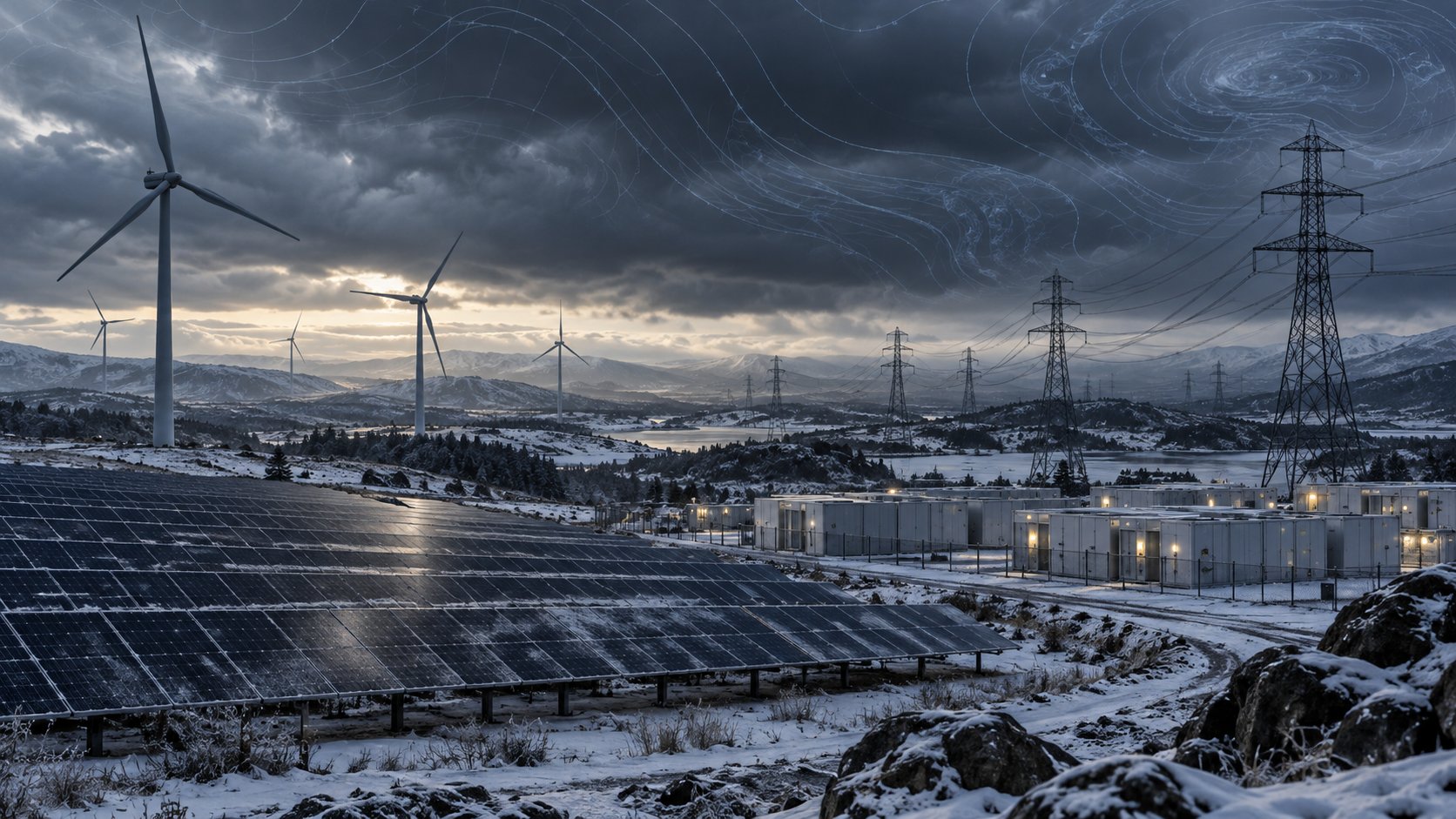
Image: AI-generated
New studies on “dark doldrums” call historical weather data into question
The Nature study examines so-called “flash energy droughts,” events where wind or solar power generation drops rapidly and subsequently remains unusually low for several days. Under the SSP1-2.6 scenario, the modeled duration of these events increases by 25.6 percent for wind and 29.8 percent for solar. In cases of simultaneously low wind and solar output, the duration rises by as much as 155.7 percent.
The crucial factor, therefore, is not so much the historical reference period itself, but rather the underlying assumption that past weather patterns adequately describe future stresses. It is precisely this assumption that may lose its validity. If the duration and frequency of extreme weather conditions change, models may underestimate the necessary buffer. Consequently, the phenomenon of “dark doldrums” also becomes an issue regarding input data.
35 Years of Weather Data Yield Significantly Different Results
A study published on September 30 in the journal Energy reinforces this finding. Researchers modeled the electricity supply of the Nordic and Baltic countries using 35 years of weather data, finding that weather conditions significantly influenced supply and demand. Finland, in particular, faced an average of 2.6 to 9.1 hours of annual electricity shortages in the model. Additional power plant and transmission line outages significantly exacerbated the situation.
However, this study does not utilize future climate projections and therefore does not directly confirm the Nature forecast. Nevertheless, it highlights a fundamental modeling issue: different weather years produce varying results regarding security of supply. Consequently, the choice of the weather dataset used as a baseline can determine the amount of dispatchable capacity and flexibility a model requires. The more the system is shaped by wind and solar power, the more critical this choice becomes.
Germany is already changing the weather basis for its grid planning
German transmission system operators are also responding to this methodological issue. Previously, they relied on a historical weather year for long-term grid planning. In the draft scenario framework for 2027, they are using weather and climate projections from climate models for the first time. This approach aims to provide a more nuanced assessment of future impacts on electricity generation, consumption, and grid utilization. The Federal Network Agency is currently reviewing this draft following the conclusion of the consultation process.
However, the implications extend far beyond the construction of new power lines. If a period of low wind and solar output—often referred to as a “dark doldrum”—persists, backup sources must supply energy for a correspondingly longer time. Batteries require greater stored energy capacity for this, while dispatchable power plants consume fuel over a longer period. Furthermore, imports must remain available for an extended duration. Consequently, Germany is planning approximately nine gigawatts of long-duration capacity to safeguard against prolonged periods of low generation. While the new studies do not prove that this capacity is insufficient, they demonstrate why adequate sizing depends on realistic weather assumptions.
This shifts the central question regarding security of supply. It is no longer sufficient simply to have enough gigawatts available to cover a brief drop in output; the system must be capable of delivering that power throughout the entire duration of an exceptional period of low generation. If planning models underestimate this duration, the calculated energy requirements for storage and reserves will also be too low. Historical weather data therefore remain valuable, but they can no longer serve as the sole basis for stress-testing the power system of the coming decades.
Author: Blackout News
Sources: Nature Climate Change (21.09.26) – sciencedirect (30.09.26) – Fraunhofer (01.10.26)