
In Bakum, in the district of Vechta, the stalling of grid expansion is becoming apparent at the end of June—despite the significant amount of renewable electricity being generated locally. Although the Lower Saxony municipality operates its own photovoltaic systems, storage units, and charging points, the 110-kilovolt grid lacks the necessary additional capacity. Consequently, new charging stations, planned commercial grid connections, wind power projects, and potential business relocations are all facing delays.
110-kilovolt grid holds Bakum back
Bakum has technically interconnected five municipal buildings and uses its own solar power to supply them. Furthermore, the municipality stores surplus energy rather than feeding it immediately into the grid. Consequently, when market prices are deeply negative, the electricity can be directed straight to a municipal charging station.
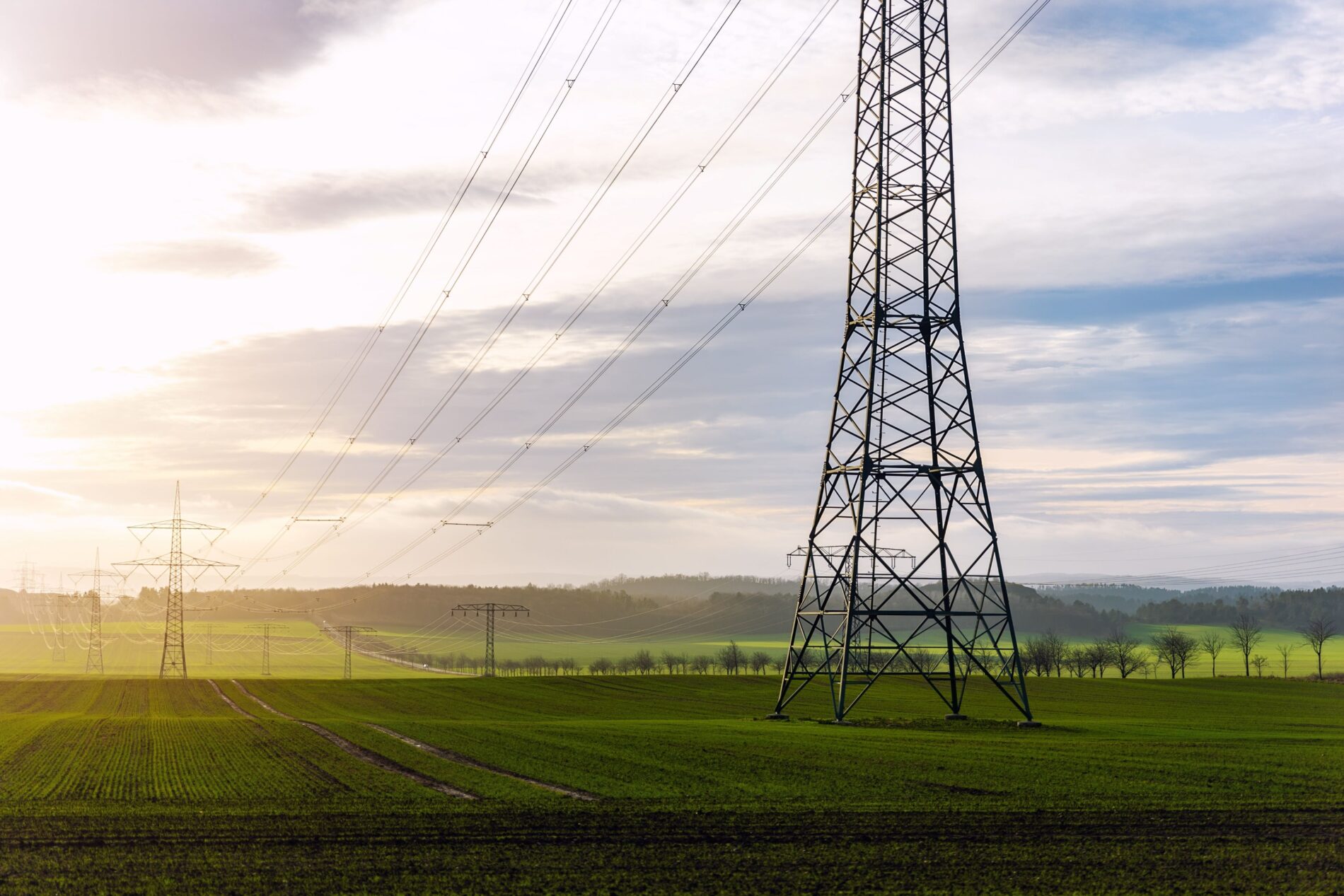
Image: Shutterstock
However, demand is rising faster than grid capacity. Since Whitsun, more electricity has already flowed through two charging points than during the entire previous year. Nevertheless, the municipality cannot connect a second charging station because the grid operator cannot guarantee the necessary additional power capacity.
Grid expansion stalls despite existing lines
The bottleneck is not due to a lack of generation. Wind and solar power are being produced in the region, and companies are planning new projects. Instead, the problem lies at the high-voltage level, as the 110-kilovolt grid cannot reliably absorb or distribute the additional electricity.
From a technical standpoint, the solution initially appears straightforward: adding another conductor cable to existing pylons could increase capacity. Yet even such measures trigger complex procedures, which is why Tobias Averbeck, the mayor of Bakum, anticipates a delay of three to four years.
Bureaucracy Turns Grid Upgrades into a Marathon
Procedures for reinforcing existing power lines are often treated almost like the construction of entirely new ones. Consequently, grid operators must commission expert reports, evaluate routes, and resolve environmental issues. Averbeck sums up the problem succinctly: “Before I can even deal with the power line, I have to map the local birdlife.”
These requirements have implications for investment. An electrical component recycling company plans to set up operations in Bakum, and other businesses have also expressed interest in the available land. However, without reliable power connections, the municipality cannot approve every proposed development.
Companies Need Connections, Not Waiting Lists
The phrase “grid expansion is stalling” describes not merely an abstract national issue, but a tangible disadvantage for the local area. Businesses require electricity under predictable conditions while municipalities prepare sites, roads, and permits. If the connection is missing, even an energy-rich region loses out on economic opportunities.
Charging infrastructure faces the same bottleneck. Bakum is conveniently located near the motorway, making it an ideal spot for fast-charging stations for passenger cars—and eventually trucks. Yet, without a high-capacity grid, infrastructure development stalls in precisely the locations where demand could arise.
Public acceptance alone does not solve the grid problem
A similar pattern is evident with wind power. In the past, several projects in Bakum failed due to local opposition. Today, the situation appears different, as financial participation for citizens and municipalities can boost acceptance.
Nevertheless, public support is not enough. Grid expansion continues to stall if transmission lines, zoning plans, and expert assessments fail to keep pace with the energy transition. Ultimately, security of supply depends not only on the number of new installations but also on the ability to actually utilize the electricity they generate.
Author: Blackout News
Sources: Ntv (28.06.26) – Rundblick (06.05.26) – Klimaschutz und Energieagentur Niedersachsen (26.03.26) – Energie Zukunft (05.05.26)